#128 – Chris Blattman on the five reasons wars happen

#128 – Chris Blattman on the five reasons wars happen

In nature, animals roar and bare their teeth to intimidate adversaries — but one side usually backs down, and real fights are rare. The wisdom of evolution is that the risk of violence is just too great.

Which might make one wonder: if war is so destructive, why does it happen? The question may sound naïve, but in fact it represents a deep puzzle. If a war will cost trillions and kill tens of thousands, it should be easy for either side to make a peace offer that both they and their opponents prefer to actually fighting it out.

The conundrum of how humans can engage in incredibly costly and protracted conflicts has occupied academics across the social sciences for years. In today's episode, we speak with economist Chris Blattman about his new book, Why We Fight: The Roots of War and the Paths to Peace, which summarises what they think they've learned.

Links to learn more, summary and full transcript.

Chris's first point is that while organised violence may feel like it's all around us, it's actually very rare in humans, just as it is with other animals. Across the world, hundreds of groups dislike one another — but knowing the cost of war, they prefer to simply loathe one another in peace.

In order to understand what’s wrong with a sick patient, a doctor needs to know what a healthy person looks like. And to understand war, social scientists need to study all the wars that could have happened but didn't — so they can see what a healthy society looks like and what's missing in the places where war does take hold.

Chris argues that social scientists have generated five cogent models of when war can be 'rational' for both sides of a conflict:

1. Unchecked interests — such as national leaders who bear few of the costs of launching a war.
2. Intangible incentives — such as an intrinsic desire for revenge.
3. Uncertainty — such as both sides underestimating each other's resolve to fight.
4. Commitment problems — such as the inability to credibly promise not to use your growing military might to attack others in future.
5. Misperceptions — such as our inability to see the world through other people's eyes.

In today's interview, we walk through how each of the five explanations work and what specific wars or actions they might explain.

In the process, Chris outlines how many of the most popular explanations for interstate war are wildly overused (e.g. leaders who are unhinged or male) or misguided from the outset (e.g. resource scarcity).

The interview also covers:

• What Chris and Rob got wrong about the war in Ukraine
• What causes might not fit into these five categories
• The role of people's choice to escalate or deescalate a conflict
• How great power wars or nuclear wars are different, and what can be done to prevent them
• How much representative government helps to prevent war
• And much more

Chapters:

  • Rob’s intro (00:00:00)
  • The interview begins (00:01:43)
  • What people get wrong about violence (00:04:40)
  • Medellín gangs (00:11:48)
  • Overrated causes of violence (00:23:53)
  • Cause of war #1: Unchecked interests (00:36:40)
  • Cause of war #2: Intangible incentives (00:41:40)
  • Cause of war #3: Uncertainty (00:53:04)
  • Cause of war #4: Commitment problems (01:02:24)
  • Cause of war #5: Misperceptions (01:12:18)
  • Weaknesses of the model (01:26:08)
  • Dancing on the edge of a cliff (01:29:06)
  • Confusion around escalation (01:35:26)
  • Applying the model to the war between Russia and Ukraine (01:42:34)
  • Great power wars (02:01:46)
  • Preventing nuclear war (02:18:57)
  • Why undirected approaches won't work (02:22:51)
  • Democratic peace theory (02:31:10)
  • Exchanging hostages (02:37:21)
  • What you can actually do to help (02:41:25)

Producer: Keiran Harris
Audio mastering: Ben Cordell
Transcriptions: Katy Moore

Jaksot(332)

Will MacAskill – AI character, surviving the intelligence explosion, and the case against utopia

Will MacAskill – AI character, surviving the intelligence explosion, and the case against utopia

Hundreds of millions already turn to AI on the most personal of topics — therapy, political opinions, and how to treat others. And as AI takes over more of the economy, the character of these systems ...

22 Huhti 3h 9min
Risks from power-seeking AI systems (article narration by Zershaaneh Qureshi)

Risks from power-seeking AI systems (article narration by Zershaaneh Qureshi)

Hundreds of prominent AI scientists and other notable figures signed a statement in 2023 saying that mitigating the risk of extinction from AI should be a global priority. At 80,000 Hours, we’ve consi...

16 Huhti 1h 29min
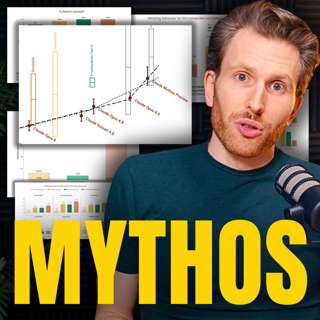
How scary is Claude Mythos? 303 pages in 21 minutes

How scary is Claude Mythos? 303 pages in 21 minutes

With Claude Mythos we have an AI that knows when it's being tested, can obscure its reasoning when it wants, and is better at breaking into (and out of) computers than any human alive. Rob Wiblin work...

10 Huhti 21min
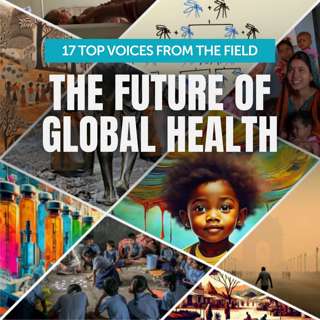
Village gossip, pesticide bans, and gene drives: 17 experts on the future of global health

Village gossip, pesticide bans, and gene drives: 17 experts on the future of global health

What does it really take to lift millions out of poverty and prevent needless deaths?In this special compilation episode, 17 past guests — including economists, nonprofit founders, and policy advisors...

7 Huhti 4h 6min
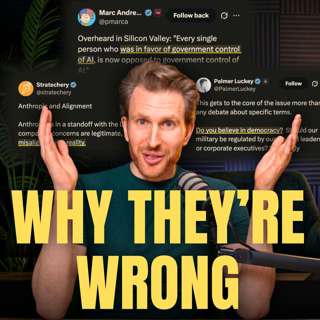
What everyone is missing about Anthropic vs the Pentagon. And: The Meta leaks are worse than you think.

What everyone is missing about Anthropic vs the Pentagon. And: The Meta leaks are worse than you think.

When the Pentagon tried to strong-arm Anthropic into dropping its ban on AI-only kill decisions and mass domestic surveillance, the company refused. Its critics went on the attack: Anthropic and its s...

3 Huhti 20min

#241 – Richard Moulange on how now AI codes viable genomes from scratch and outperforms virologists at lab work — what could go wrong?

#241 – Richard Moulange on how now AI codes viable genomes from scratch and outperforms virologists at lab work — what could go wrong?

Last September, scientists used an AI model to design genomes for entirely new bacteriophages (viruses that infect bacteria). They then built them in a lab. Many were viable. And despite being entirel...

31 Maalis 3h 7min
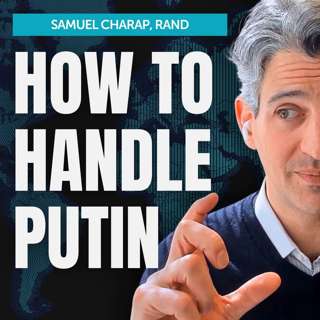
#240 – Samuel Charap on how a Ukraine ceasefire could accidentally set Europe up for a bigger war

#240 – Samuel Charap on how a Ukraine ceasefire could accidentally set Europe up for a bigger war

Many people believe a ceasefire in Ukraine will leave Europe safer. But today's guest lays out how a deal could potentially generate insidious new risks — leaving us in a situation that's equally dang...

24 Maalis 1h 12min
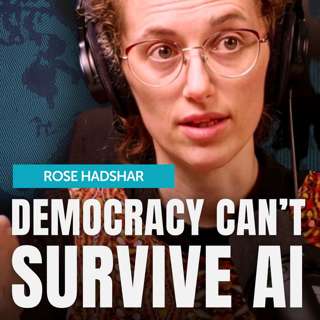
#239 – Rose Hadshar on why automating all human labour will break our political system

#239 – Rose Hadshar on why automating all human labour will break our political system

The most important political question in the age of advanced AI might not be who wins elections. It might be whether elections continue to matter at all.That’s the view of Rose Hadshar, researcher at ...

17 Maalis 2h 14min

Suosittua kategoriassa Koulutus

rss-murhan-anatomia
psykopodiaa-podcast
voi-hyvin-meditaatiot-2
psykologia
adhd-podi
rss-rahamania
rss-liian-kuuma-peruna
rss-valo-minussa-2
rss-tietoinen-yhteys-podcast-2
kesken
rss-arkea-ja-aurinkoa-podcast-espanjasta
rahapuhetta
rss-niinku-asia-on
rss-narsisti
dear-ladies
rss-duodecim-lehti
rss-eron-alkemiaa
rss-vapaudu-voimaasi
koodikahvit
leikitaanko-laakaria