#128 – Chris Blattman on the five reasons wars happen

#128 – Chris Blattman on the five reasons wars happen

In nature, animals roar and bare their teeth to intimidate adversaries — but one side usually backs down, and real fights are rare. The wisdom of evolution is that the risk of violence is just too great.

Which might make one wonder: if war is so destructive, why does it happen? The question may sound naïve, but in fact it represents a deep puzzle. If a war will cost trillions and kill tens of thousands, it should be easy for either side to make a peace offer that both they and their opponents prefer to actually fighting it out.

The conundrum of how humans can engage in incredibly costly and protracted conflicts has occupied academics across the social sciences for years. In today's episode, we speak with economist Chris Blattman about his new book, Why We Fight: The Roots of War and the Paths to Peace, which summarises what they think they've learned.

Links to learn more, summary and full transcript.

Chris's first point is that while organised violence may feel like it's all around us, it's actually very rare in humans, just as it is with other animals. Across the world, hundreds of groups dislike one another — but knowing the cost of war, they prefer to simply loathe one another in peace.

In order to understand what’s wrong with a sick patient, a doctor needs to know what a healthy person looks like. And to understand war, social scientists need to study all the wars that could have happened but didn't — so they can see what a healthy society looks like and what's missing in the places where war does take hold.

Chris argues that social scientists have generated five cogent models of when war can be 'rational' for both sides of a conflict:

1. Unchecked interests — such as national leaders who bear few of the costs of launching a war.
2. Intangible incentives — such as an intrinsic desire for revenge.
3. Uncertainty — such as both sides underestimating each other's resolve to fight.
4. Commitment problems — such as the inability to credibly promise not to use your growing military might to attack others in future.
5. Misperceptions — such as our inability to see the world through other people's eyes.

In today's interview, we walk through how each of the five explanations work and what specific wars or actions they might explain.

In the process, Chris outlines how many of the most popular explanations for interstate war are wildly overused (e.g. leaders who are unhinged or male) or misguided from the outset (e.g. resource scarcity).

The interview also covers:

• What Chris and Rob got wrong about the war in Ukraine
• What causes might not fit into these five categories
• The role of people's choice to escalate or deescalate a conflict
• How great power wars or nuclear wars are different, and what can be done to prevent them
• How much representative government helps to prevent war
• And much more

Chapters:

  • Rob’s intro (00:00:00)
  • The interview begins (00:01:43)
  • What people get wrong about violence (00:04:40)
  • Medellín gangs (00:11:48)
  • Overrated causes of violence (00:23:53)
  • Cause of war #1: Unchecked interests (00:36:40)
  • Cause of war #2: Intangible incentives (00:41:40)
  • Cause of war #3: Uncertainty (00:53:04)
  • Cause of war #4: Commitment problems (01:02:24)
  • Cause of war #5: Misperceptions (01:12:18)
  • Weaknesses of the model (01:26:08)
  • Dancing on the edge of a cliff (01:29:06)
  • Confusion around escalation (01:35:26)
  • Applying the model to the war between Russia and Ukraine (01:42:34)
  • Great power wars (02:01:46)
  • Preventing nuclear war (02:18:57)
  • Why undirected approaches won't work (02:22:51)
  • Democratic peace theory (02:31:10)
  • Exchanging hostages (02:37:21)
  • What you can actually do to help (02:41:25)

Producer: Keiran Harris
Audio mastering: Ben Cordell
Transcriptions: Katy Moore

Jaksot(326)

Rob & Howie on what we do and don't know about 2019-nCoV

Rob & Howie on what we do and don't know about 2019-nCoV

Two 80,000 Hours researchers, Robert Wiblin and Howie Lempel, record an experimental bonus episode about the new 2019-nCoV virus.See this list of resources, including many discussed in the episode, to...

3 Helmi 20201h 18min

#68 - Will MacAskill on the paralysis argument, whether we're at the hinge of history, & his new priorities

#68 - Will MacAskill on the paralysis argument, whether we're at the hinge of history, & his new priorities

You’re given a box with a set of dice in it. If you roll an even number, a person's life is saved. If you roll an odd number, someone else will die. Each time you shake the box you get $10. Should you...

24 Tammi 20203h 25min
#44 Classic episode - Paul Christiano on finding real solutions to the AI alignment problem

#44 Classic episode - Paul Christiano on finding real solutions to the AI alignment problem

Rebroadcast: this episode was originally released in October 2018. Paul Christiano is one of the smartest people I know. After our first session produced such great material, we decided to do a seco...

15 Tammi 20203h 51min
#33 Classic episode - Anders Sandberg on cryonics, solar flares, and the annual odds of nuclear war

#33 Classic episode - Anders Sandberg on cryonics, solar flares, and the annual odds of nuclear war

Rebroadcast: this episode was originally released in May 2018. Joseph Stalin had a life-extension program dedicated to making himself immortal. What if he had succeeded? According to Bryan Caplan ...

8 Tammi 20201h 25min
#17 Classic episode - Will MacAskill on moral uncertainty, utilitarianism & how to avoid being a moral monster

#17 Classic episode - Will MacAskill on moral uncertainty, utilitarianism & how to avoid being a moral monster

Rebroadcast: this episode was originally released in January 2018. Immanuel Kant is a profoundly influential figure in modern philosophy, and was one of the earliest proponents for universal democracy...

31 Joulu 20191h 52min
#67 – David Chalmers on the nature and ethics of consciousness

#67 – David Chalmers on the nature and ethics of consciousness

What is it like to be you right now? You're seeing this text on the screen, smelling the coffee next to you, and feeling the warmth of the cup. There’s a lot going on in your head — your conscious exp...

16 Joulu 20194h 41min
#66 – Peter Singer on being provocative, effective altruism, & how his moral views have changed

#66 – Peter Singer on being provocative, effective altruism, & how his moral views have changed

In 1989, the professor of moral philosophy Peter Singer was all over the news for his inflammatory opinions about abortion. But the controversy stemmed from Practical Ethics — a book he’d actually rel...

5 Joulu 20192h 1min
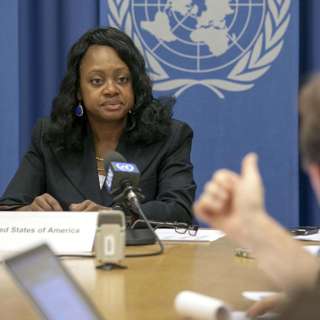
#65 – Ambassador Bonnie Jenkins on 8 years pursuing WMD arms control, & diversity in diplomacy

#65 – Ambassador Bonnie Jenkins on 8 years pursuing WMD arms control, & diversity in diplomacy

"…it started when the Soviet Union fell apart and there was a real desire to ensure security of nuclear materials and pathogens, and that scientists with [WMD-related] knowledge could get paid so that...

19 Marras 20191h 40min

Suosittua kategoriassa Koulutus

rss-murhan-anatomia
psykopodiaa-podcast
voi-hyvin-meditaatiot-2
rss-narsisti
adhd-podi
rahapuhetta
rss-rahamania
kesken
psykologia
rss-liian-kuuma-peruna
rss-vapaudu-voimaasi
rss-niinku-asia-on
esa-saarinen-filosofia-ja-systeemiajattelu
rss-arkea-ja-aurinkoa-podcast-espanjasta
filocast-filosofian-perusteet
rss-eron-alkemiaa
rss-valo-minussa-2
rss-luonnollinen-synnytys-podcast
rss-koira-haudattuna
rss-helppoa-suomea-learn-finnish-through-comprehensible-input