#162 – Mustafa Suleyman on getting Washington and Silicon Valley to tame AI

#162 – Mustafa Suleyman on getting Washington and Silicon Valley to tame AI

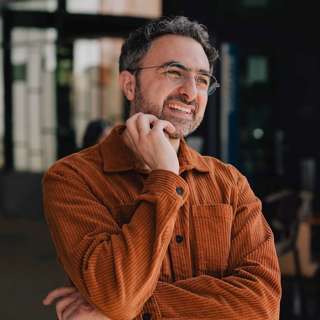
Mustafa Suleyman was part of the trio that founded DeepMind, and his new AI project is building one of the world's largest supercomputers to train a large language model on 10–100x the compute used to train ChatGPT.

But far from the stereotype of the incorrigibly optimistic tech founder, Mustafa is deeply worried about the future, for reasons he lays out in his new book The Coming Wave: Technology, Power, and the 21st Century's Greatest Dilemma (coauthored with Michael Bhaskar). The future could be really good, but only if we grab the bull by the horns and solve the new problems technology is throwing at us.

Links to learn more, summary and full transcript.

On Mustafa's telling, AI and biotechnology will soon be a huge aid to criminals and terrorists, empowering small groups to cause harm on previously unimaginable scales. Democratic countries have learned to walk a 'narrow path' between chaos on the one hand and authoritarianism on the other, avoiding the downsides that come from both extreme openness and extreme closure. AI could easily destabilise that present equilibrium, throwing us off dangerously in either direction. And ultimately, within our lifetimes humans may not need to work to live any more -- or indeed, even have the option to do so.

And those are just three of the challenges confronting us. In Mustafa's view, 'misaligned' AI that goes rogue and pursues its own agenda won't be an issue for the next few years, and it isn't a problem for the current style of large language models. But he thinks that at some point -- in eight, ten, or twelve years -- it will become an entirely legitimate concern, and says that we need to be planning ahead.

In The Coming Wave, Mustafa lays out a 10-part agenda for 'containment' -- that is to say, for limiting the negative and unforeseen consequences of emerging technologies:

1. Developing an Apollo programme for technical AI safety
2. Instituting capability audits for AI models
3. Buying time by exploiting hardware choke points
4. Getting critics involved in directly engineering AI models
5. Getting AI labs to be guided by motives other than profit
6. Radically increasing governments’ understanding of AI and their capabilities to sensibly regulate it
7. Creating international treaties to prevent proliferation of the most dangerous AI capabilities
8. Building a self-critical culture in AI labs of openly accepting when the status quo isn't working
9. Creating a mass public movement that understands AI and can demand the necessary controls
10. Not relying too much on delay, but instead seeking to move into a new somewhat-stable equilibria

As Mustafa put it, "AI is a technology with almost every use case imaginable" and that will demand that, in time, we rethink everything.

Rob and Mustafa discuss the above, as well as:

  • Whether we should be open sourcing AI models
  • Whether Mustafa's policy views are consistent with his timelines for transformative AI
  • How people with very different views on these issues get along at AI labs
  • The failed efforts (so far) to get a wider range of people involved in these decisions
  • Whether it's dangerous for Mustafa's new company to be training far larger models than GPT-4
  • Whether we'll be blown away by AI progress over the next year
  • What mandatory regulations government should be imposing on AI labs right now
  • Appropriate priorities for the UK's upcoming AI safety summit

Get this episode by subscribing to our podcast on the world’s most pressing problems and how to solve them: type ‘80,000 Hours’ into your podcasting app. Or read the transcript.

Producer and editor: Keiran Harris
Audio Engineering Lead: Ben Cordell
Technical editing: Milo McGuire
Transcriptions: Katy Moore

Jaksot(323)

#49 - Rachel Glennerster on a year's worth of education for 30c & other development 'best buys'

#49 - Rachel Glennerster on a year's worth of education for 30c & other development 'best buys'

If I told you it's possible to deliver an extra year of ideal primary-level education for under $1, would you believe me? Hopefully not - the claim is absurd on its face. But it may be true nonetheles...

20 Joulu 20181h 35min
#48 - Brian Christian on better living through the wisdom of computer science

#48 - Brian Christian on better living through the wisdom of computer science

Please let us know if we've helped you: Fill out our annual impact survey Ever felt that you were so busy you spent all your time paralysed trying to figure out where to start, and couldn't get much ...

22 Marras 20183h 15min

#47 - Catherine Olsson & Daniel Ziegler on the fast path into high-impact ML engineering roles

#47 - Catherine Olsson & Daniel Ziegler on the fast path into high-impact ML engineering roles

After dropping out of a machine learning PhD at Stanford, Daniel Ziegler needed to decide what to do next. He’d always enjoyed building stuff and wanted to shape the development of AI, so he thought a...

2 Marras 20182h 4min
#46 - Hilary Greaves on moral cluelessness & tackling crucial questions in academia

#46 - Hilary Greaves on moral cluelessness & tackling crucial questions in academia

The barista gives you your coffee and change, and you walk away from the busy line. But you suddenly realise she gave you $1 less than she should have. Do you brush your way past the people now waitin...

23 Loka 20182h 49min
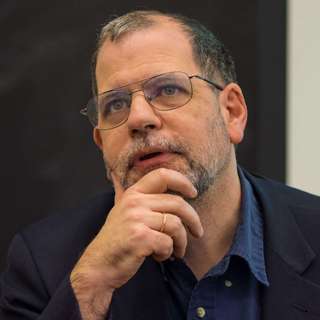
#45 - Tyler Cowen's case for maximising econ growth, stabilising civilization & thinking long-term

#45 - Tyler Cowen's case for maximising econ growth, stabilising civilization & thinking long-term

I've probably spent more time reading Tyler Cowen - Professor of Economics at George Mason University - than any other author. Indeed it's his incredibly popular blog Marginal Revolution that prompted...

17 Loka 20182h 30min
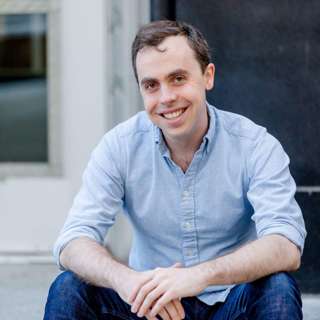
#44 - Paul Christiano on how we'll hand the future off to AI, & solving the alignment problem

#44 - Paul Christiano on how we'll hand the future off to AI, & solving the alignment problem

Paul Christiano is one of the smartest people I know. After our first session produced such great material, we decided to do a second recording, resulting in our longest interview so far. While challe...

2 Loka 20183h 51min
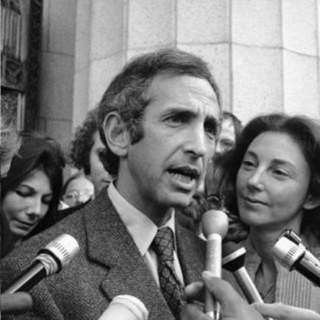
#43 - Daniel Ellsberg on the institutional insanity that maintains nuclear doomsday machines

#43 - Daniel Ellsberg on the institutional insanity that maintains nuclear doomsday machines

In Stanley Kubrick’s iconic film Dr. Strangelove, the American president is informed that the Soviet Union has created a secret deterrence system which will automatically wipe out humanity upon detect...

25 Syys 20182h 44min

#42 - Amanda Askell on moral empathy, the value of information & the ethics of infinity

#42 - Amanda Askell on moral empathy, the value of information & the ethics of infinity

Consider two familiar moments at a family reunion. Our host, Uncle Bill, takes pride in his barbecuing skills. But his niece Becky says that she now refuses to eat meat. A groan goes round the table; ...

11 Syys 20182h 46min

Suosittua kategoriassa Koulutus

rss-murhan-anatomia
voi-hyvin-meditaatiot-2
rss-narsisti
psykopodiaa-podcast
psykologia
rss-uskonto-on-tylsaa
rss-vapaudu-voimaasi
rss-liian-kuuma-peruna
kesken
rahapuhetta
rss-niinku-asia-on
adhd-podi
rss-taloustaito-podcast
jari-sarasvuo-podcast
rss-the-amicast
rss-valo-minussa-2
rss-xamk-podcast
rss-arkea-ja-aurinkoa-podcast-espanjasta
rss-opi-espanjaa
rss-hereilla