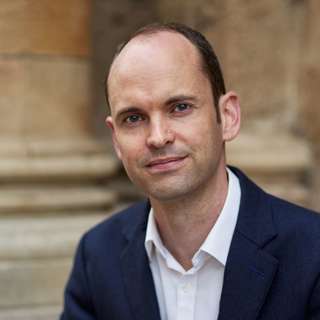

#163 – Toby Ord on the perils of maximising the good that you do

#163 – Toby Ord on the perils of maximising the good that you do

Effective altruism is associated with the slogan "do the most good." On one level, this has to be unobjectionable: What could be bad about helping people more and more?

But in today's interview, Toby Ord — moral philosopher at the University of Oxford and one of the founding figures of effective altruism — lays out three reasons to be cautious about the idea of maximising the good that you do. He suggests that rather than “doing the most good that we can,” perhaps we should be happy with a more modest and manageable goal: “doing most of the good that we can.”

Links to learn more, summary and full transcript.

Toby was inspired to revisit these ideas by the possibility that Sam Bankman-Fried, who stands accused of committing severe fraud as CEO of the cryptocurrency exchange FTX, was motivated to break the law by a desire to give away as much money as possible to worthy causes.

Toby's top reason not to fully maximise is the following: if the goal you're aiming at is subtly wrong or incomplete, then going all the way towards maximising it will usually cause you to start doing some very harmful things.

This result can be shown mathematically, but can also be made intuitive, and may explain why we feel instinctively wary of going “all-in” on any idea, or goal, or way of living — even something as benign as helping other people as much as possible.

Toby gives the example of someone pursuing a career as a professional swimmer. Initially, as our swimmer takes their training and performance more seriously, they adjust their diet, hire a better trainer, and pay more attention to their technique. While swimming is the main focus of their life, they feel fit and healthy and also enjoy other aspects of their life as well — family, friends, and personal projects.

But if they decide to increase their commitment further and really go all-in on their swimming career, holding back nothing back, then this picture can radically change. Their effort was already substantial, so how can they shave those final few seconds off their racing time? The only remaining options are those which were so costly they were loath to consider them before.

To eke out those final gains — and go from 80% effort to 100% — our swimmer must sacrifice other hobbies, deprioritise their relationships, neglect their career, ignore food preferences, accept a higher risk of injury, and maybe even consider using steroids.

Now, if maximising one's speed at swimming really were the only goal they ought to be pursuing, there'd be no problem with this. But if it's the wrong goal, or only one of many things they should be aiming for, then the outcome is disastrous. In going from 80% to 100% effort, their swimming speed was only increased by a tiny amount, while everything else they were accomplishing dropped off a cliff.

The bottom line is simple: a dash of moderation makes you much more robust to uncertainty and error.

As Toby notes, this is similar to the observation that a sufficiently capable superintelligent AI, given any one goal, would ruin the world if it maximised it to the exclusion of everything else. And it follows a similar pattern to performance falling off a cliff when a statistical model is 'overfit' to its data.

In the full interview, Toby also explains the “moral trade” argument against pursuing narrow goals at the expense of everything else, and how consequentialism changes if you judge not just outcomes or acts, but everything according to its impacts on the world.

Toby and Rob also discuss:

  • The rise and fall of FTX and some of its impacts
  • What Toby hoped effective altruism would and wouldn't become when he helped to get it off the ground
  • What utilitarianism has going for it, and what's wrong with it in Toby's view
  • How to mathematically model the importance of personal integrity
  • Which AI labs Toby thinks have been acting more responsibly than others
  • How having a young child affects Toby’s feelings about AI risk
  • Whether infinities present a fundamental problem for any theory of ethics that aspire to be fully impartial
  • How Toby ended up being the source of the highest quality images of the Earth from space

Get this episode by subscribing to our podcast on the world’s most pressing problems and how to solve them: type ‘80,000 Hours’ into your podcasting app. Or read the transcript.

Producer and editor: Keiran Harris
Audio Engineering Lead: Ben Cordell
Technical editing: Simon Monsour
Transcriptions: Katy Moore

Jaksot(326)

#35 Classic episode - Tara Mac Aulay on the audacity to fix the world without asking permission

#35 Classic episode - Tara Mac Aulay on the audacity to fix the world without asking permission

Rebroadcast: this episode was originally released in June 2018. How broken is the world? How inefficient is a typical organisation? Looking at Tara Mac Aulay’s life, the answer seems to be ‘very’. A...

10 Tammi 20221h 23min
#67 Classic episode – David Chalmers on the nature and ethics of consciousness

#67 Classic episode – David Chalmers on the nature and ethics of consciousness

Rebroadcast: this episode was originally released in December 2019. What is it like to be you right now? You're seeing this text on the screen, smelling the coffee next to you, and feeling the warmth...

3 Tammi 20224h 42min

#59 Classic episode - Cass Sunstein on how change happens, and why it's so often abrupt & unpredictable

#59 Classic episode - Cass Sunstein on how change happens, and why it's so often abrupt & unpredictable

Rebroadcast: this episode was originally released in June 2019. It can often feel hopeless to be an activist seeking social change on an obscure issue where most people seem opposed or at best indiff...

27 Joulu 20211h 43min

#119 – Andrew Yang on our very long-term future, and other topics most politicians won’t touch

#119 – Andrew Yang on our very long-term future, and other topics most politicians won’t touch

Andrew Yang — past presidential candidate, founder of the Forward Party, and leader of the 'Yang Gang' — is kind of a big deal, but is particularly popular among listeners to The 80,000 Hours Podcast....

20 Joulu 20211h 25min

#118 – Jaime Yassif on safeguarding bioscience to prevent catastrophic lab accidents and bioweapons development

#118 – Jaime Yassif on safeguarding bioscience to prevent catastrophic lab accidents and bioweapons development

If a rich country were really committed to pursuing an active biological weapons program, there’s not much we could do to stop them. With enough money and persistence, they’d be able to buy equipment,...

13 Joulu 20212h 15min
#117 – David Denkenberger on using paper mills and seaweed to feed everyone in a catastrophe, ft Sahil Shah

#117 – David Denkenberger on using paper mills and seaweed to feed everyone in a catastrophe, ft Sahil Shah

If there's a nuclear war followed by nuclear winter, and the sun is blocked out for years, most of us are going to starve, right? Well, currently, probably we would, because humanity hasn't done much ...

29 Marras 20213h 8min

#116 – Luisa Rodriguez on why global catastrophes seem unlikely to kill us all

#116 – Luisa Rodriguez on why global catastrophes seem unlikely to kill us all

If modern human civilisation collapsed — as a result of nuclear war, severe climate change, or a much worse pandemic than COVID-19 — billions of people might die.That's terrible enough to contemplate....

19 Marras 20213h 45min
#115 – David Wallace on the many-worlds theory of quantum mechanics and its implications

#115 – David Wallace on the many-worlds theory of quantum mechanics and its implications

Quantum mechanics — our best theory of atoms, molecules, and the subatomic particles that make them up — underpins most of modern physics. But there are varying interpretations of what it means, all o...

12 Marras 20213h 9min

Suosittua kategoriassa Koulutus

rss-murhan-anatomia
voi-hyvin-meditaatiot-2
psykopodiaa-podcast
rss-narsisti
adhd-podi
rahapuhetta
rss-rahamania
kesken
psykologia
rss-liian-kuuma-peruna
rss-niinku-asia-on
rss-eron-alkemiaa
rss-arkea-ja-aurinkoa-podcast-espanjasta
esa-saarinen-filosofia-ja-systeemiajattelu
rss-duodecim-lehti
rss-vapaudu-voimaasi
rss-luonnollinen-synnytys-podcast
rss-tietoinen-yhteys-podcast-2
rss-finnish-daily-dialogues
ihminen-tavattavissa-tommy-hellsten-instituutti