#166 – Tantum Collins on what he’s learned as an AI policy insider at the White House, DeepMind and elsewhere

#166 – Tantum Collins on what he’s learned as an AI policy insider at the White House, DeepMind and elsewhere

"If you and I and 100 other people were on the first ship that was going to go settle Mars, and were going to build a human civilisation, and we have to decide what that government looks like, and we have all of the technology available today, how do we think about choosing a subset of that design space?

That space is huge and it includes absolutely awful things, and mixed-bag things, and maybe some things that almost everyone would agree are really wonderful, or at least an improvement on the way that things work today. But that raises all kinds of tricky questions.

My concern is that if we don't approach the evolution of collective decision making and government in a deliberate way, we may end up inadvertently backing ourselves into a corner, where we have ended up on some slippery slope -- and all of a sudden we have, let's say, autocracies on the global stage are strengthened relative to democracies." — Tantum Collins

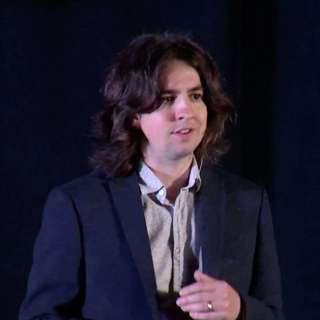
In today’s episode, host Rob Wiblin gets the rare chance to interview someone with insider AI policy experience at the White House and DeepMind who’s willing to speak openly — Tantum Collins.

Links to learn more, highlights, and full transcript.

They cover:

  • How AI could strengthen government capacity, and how that's a double-edged sword
  • How new technologies force us to confront tradeoffs in political philosophy that we were previously able to pretend weren't there
  • To what extent policymakers take different threats from AI seriously
  • Whether the US and China are in an AI arms race or not
  • Whether it's OK to transform the world without much of the world agreeing to it
  • The tyranny of small differences in AI policy
  • Disagreements between different schools of thought in AI policy, and proposals that could unite them
  • How the US AI Bill of Rights could be improved
  • Whether AI will transform the labour market, and whether it will become a partisan political issue
  • The tensions between the cultures of San Francisco and DC, and how to bridge the divide between them
  • What listeners might be able to do to help with this whole mess
  • Panpsychism
  • Plenty more

Chapters:

  • Cold open (00:00:00)
  • Rob's intro (00:01:00)
  • The interview begins (00:04:01)
  • The risk of autocratic lock-in due to AI (00:10:02)
  • The state of play in AI policymaking (00:13:40)
  • China and AI (00:32:12)
  • The most promising regulatory approaches (00:57:51)
  • Transforming the world without the world agreeing (01:04:44)
  • AI Bill of Rights (01:17:32)
  • Who’s ultimately responsible for the consequences of AI? (01:20:39)
  • Policy ideas that could appeal to many different groups (01:29:08)
  • Tension between those focused on x-risk and those focused on AI ethics (01:38:56)
  • Communicating with policymakers (01:54:22)
  • Is AI going to transform the labour market in the next few years? (01:58:51)
  • Is AI policy going to become a partisan political issue? (02:08:10)
  • The value of political philosophy (02:10:53)
  • Tantum’s work at DeepMind (02:21:20)
  • CSET (02:32:48)
  • Career advice (02:35:21)
  • Panpsychism (02:55:24)


Producer and editor: Keiran Harris
Audio Engineering Lead: Ben Cordell
Technical editing: Simon Monsour and Milo McGuire
Transcriptions: Katy Moore

Jaksot(325)

#28 - Owen Cotton-Barratt on why scientists should need insurance, PhD strategy & fast AI progresses

#28 - Owen Cotton-Barratt on why scientists should need insurance, PhD strategy & fast AI progresses

A researcher is working on creating a new virus – one more dangerous than any that exist naturally. They believe they’re being as careful as possible. After all, if things go wrong, their own life and...

27 Huhti 20181h 3min
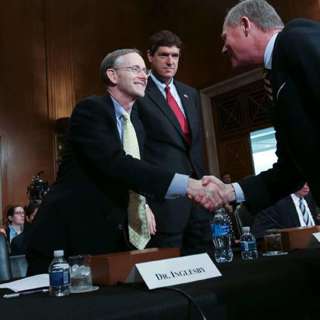
#27 - Dr Tom Inglesby on careers and policies that reduce global catastrophic biological risks

#27 - Dr Tom Inglesby on careers and policies that reduce global catastrophic biological risks

How about this for a movie idea: a main character has to prevent a new contagious strain of Ebola spreading around the world. She’s the best of the best. So good in fact, that her work on early detect...

18 Huhti 20182h 16min
#26 - Marie Gibbons on how exactly clean meat is made & what's needed to get it in every supermarket

#26 - Marie Gibbons on how exactly clean meat is made & what's needed to get it in every supermarket

First, decide on the type of animal. Next, pick the cell type. Then take a small, painless biopsy, and put the cells in a solution that makes them feel like they’re still in the body. Once the cells a...

10 Huhti 20181h 44min

#25 - Robin Hanson on why we have to lie to ourselves about why we do what we do

#25 - Robin Hanson on why we have to lie to ourselves about why we do what we do

On February 2, 1685, England’s King Charles II was struck by a sudden illness. Fortunately his physicians were the best of the best. To reassure the public they kept them abreast of the King’s treatme...

28 Maalis 20182h 39min
#24 - Stefan Schubert on why it’s a bad idea to break the rules, even if it’s for a good cause

#24 - Stefan Schubert on why it’s a bad idea to break the rules, even if it’s for a good cause

How honest should we be? How helpful? How friendly? If our society claims to value honesty, for instance, but in reality accepts an awful lot of lying – should we go along with those lax standards? Or...

20 Maalis 201855min
#23 - How to actually become an AI alignment researcher, according to Dr Jan Leike

#23 - How to actually become an AI alignment researcher, according to Dr Jan Leike

Want to help steer the 21st century’s most transformative technology? First complete an undergrad degree in computer science and mathematics. Prioritize harder courses over easier ones. Publish at lea...

16 Maalis 201845min
#22 - Leah Utyasheva on the non-profit that figured out how to massively cut suicide rates

#22 - Leah Utyasheva on the non-profit that figured out how to massively cut suicide rates

How people kill themselves varies enormously depending on which means are most easily available. In the United States, suicide by firearm stands out. In Hong Kong, where most people live in high rise ...

7 Maalis 20181h 8min
#21 - Holden Karnofsky on times philanthropy transformed the world & Open Phil’s plan to do the same

#21 - Holden Karnofsky on times philanthropy transformed the world & Open Phil’s plan to do the same

The Green Revolution averted mass famine during the 20th century. The contraceptive pill gave women unprecedented freedom in planning their own lives. Both are widely recognised as scientific breakthr...

27 Helmi 20182h 35min

Suosittua kategoriassa Koulutus

rss-murhan-anatomia
voi-hyvin-meditaatiot-2
rss-narsisti
adhd-podi
psykopodiaa-podcast
rss-rahamania
rss-uskonto-on-tylsaa
rss-valo-minussa-2
mielipaivakirja
rss-vapaudu-voimaasi
rss-niinku-asia-on
rss-duodecim-lehti
rahapuhetta
ilona-rauhala
aamukahvilla
aloita-meditaatio
kesken
dear-ladies
rss-eron-alkemiaa
rss-arkea-ja-aurinkoa-podcast-espanjasta