#175 – Lucia Coulter on preventing lead poisoning for $1.66 per child

#175 – Lucia Coulter on preventing lead poisoning for $1.66 per child

Lead is one of the most poisonous things going. A single sugar sachet of lead, spread over a park the size of an American football field, is enough to give a child that regularly plays there lead poisoning. For life they’ll be condemned to a ~3-point-lower IQ; a 50% higher risk of heart attacks; and elevated risk of kidney disease, anaemia, and ADHD, among other effects.

We’ve known lead is a health nightmare for at least 50 years, and that got lead out of car fuel everywhere. So is the situation under control? Not even close.

Around half the kids in poor and middle-income countries have blood lead levels above 5 micrograms per decilitre; the US declared a national emergency when just 5% of the children in Flint, Michigan exceeded that level. The collective damage this is doing to children’s intellectual potential, health, and life expectancy is vast — the health damage involved is around that caused by malaria, tuberculosis, and HIV combined.

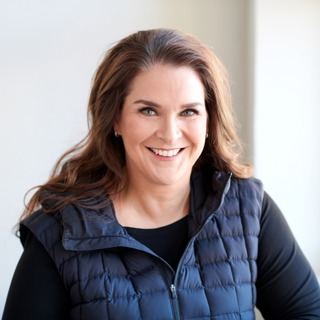
This week’s guest, Lucia Coulter — cofounder of the incredibly successful Lead Exposure Elimination Project (LEEP) — speaks about how LEEP has been reducing childhood lead exposure in poor countries by getting bans on lead in paint enforced.

Links to learn more, summary, and full transcript.

Various estimates suggest the work is absurdly cost effective. LEEP is in expectation preventing kids from getting lead poisoning for under $2 per child (explore the analysis here). Or, looking at it differently, LEEP is saving a year of healthy life for $14, and in the long run is increasing people’s lifetime income anywhere from $300–1,200 for each $1 it spends, by preventing intellectual stunting.

Which raises the question: why hasn’t this happened already? How is lead still in paint in most poor countries, even when that’s oftentimes already illegal? And how is LEEP able to get bans on leaded paint enforced in a country while spending barely tens of thousands of dollars? When leaded paint is gone, what should they target next?

With host Robert Wiblin, Lucia answers all those questions and more:

  • Why LEEP isn’t fully funded, and what it would do with extra money (you can donate here).
  • How bad lead poisoning is in rich countries.
  • Why lead is still in aeroplane fuel.
  • How lead got put straight in food in Bangladesh, and a handful of people got it removed.
  • Why the enormous damage done by lead mostly goes unnoticed.
  • The other major sources of lead exposure aside from paint.
  • Lucia’s story of founding a highly effective nonprofit, despite having no prior entrepreneurship experience, through Charity Entrepreneurship’s Incubation Program.
  • Why Lucia pledges 10% of her income to cost-effective charities.
  • Lucia’s take on why GiveWell didn’t support LEEP earlier on.
  • How the invention of cheap, accessible lead testing for blood and consumer products would be a game changer.
  • Generalisable lessons LEEP has learned from coordinating with governments in poor countries.
  • And plenty more.

Producer and editor: Keiran Harris
Audio Engineering Lead: Ben Cordell
Technical editing: Milo McGuire and Dominic Armstrong
Transcriptions: Katy Moore

Jaksot(325)

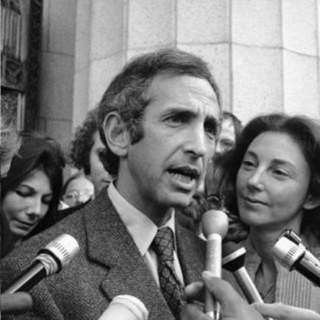
#43 - Daniel Ellsberg on the institutional insanity that maintains nuclear doomsday machines

#43 - Daniel Ellsberg on the institutional insanity that maintains nuclear doomsday machines

In Stanley Kubrick’s iconic film Dr. Strangelove, the American president is informed that the Soviet Union has created a secret deterrence system which will automatically wipe out humanity upon detect...

25 Syys 20182h 44min
#42 - Amanda Askell on moral empathy, the value of information & the ethics of infinity

#42 - Amanda Askell on moral empathy, the value of information & the ethics of infinity

Consider two familiar moments at a family reunion. Our host, Uncle Bill, takes pride in his barbecuing skills. But his niece Becky says that she now refuses to eat meat. A groan goes round the table; ...

11 Syys 20182h 46min
#41 - David Roodman on incarceration, geomagnetic storms, & becoming a world-class researcher

#41 - David Roodman on incarceration, geomagnetic storms, & becoming a world-class researcher

With 698 inmates per 100,000 citizens, the U.S. is by far the leader among large wealthy nations in incarceration. But what effect does imprisonment actually have on crime? According to David Roodman...

28 Elo 20182h 18min

#40 - Katja Grace on forecasting future technology & how much we should trust expert predictions

#40 - Katja Grace on forecasting future technology & how much we should trust expert predictions

Experts believe that artificial intelligence will be better than humans at driving trucks by 2027, working in retail by 2031, writing bestselling books by 2049, and working as surgeons by 2053. But ho...

21 Elo 20182h 11min

#39 - Spencer Greenberg on the scientific approach to solving difficult everyday questions

#39 - Spencer Greenberg on the scientific approach to solving difficult everyday questions

Will Trump be re-elected? Will North Korea give up their nuclear weapons? Will your friend turn up to dinner? Spencer Greenberg, founder of ClearerThinking.org has a process for working out such real...

7 Elo 20182h 17min
#38 - Yew-Kwang Ng on anticipating effective altruism decades ago & how to make a much happier world

#38 - Yew-Kwang Ng on anticipating effective altruism decades ago & how to make a much happier world

Will people who think carefully about how to maximize welfare eventually converge on the same views? The effective altruism community has spent a lot of time over the past 10 years debating how best t...

26 Heinä 20181h 59min

#37 - GiveWell picks top charities by estimating the unknowable. James Snowden on how they do it.

#37 - GiveWell picks top charities by estimating the unknowable. James Snowden on how they do it.

What’s the value of preventing the death of a 5-year-old child, compared to a 20-year-old, or an 80-year-old? The global health community has generally regarded the value as proportional to the numbe...

16 Heinä 20181h 44min
#36 - Tanya Singh on ending the operations management bottleneck in effective altruism

#36 - Tanya Singh on ending the operations management bottleneck in effective altruism

Almost nobody is able to do groundbreaking physics research themselves, and by the time his brilliance was appreciated, Einstein was hardly limited by funding. But what if you could find a way to unlo...

11 Heinä 20182h 4min

Suosittua kategoriassa Koulutus

rss-murhan-anatomia
voi-hyvin-meditaatiot-2
rss-narsisti
psykopodiaa-podcast
adhd-podi
rss-rahamania
rss-valo-minussa-2
rss-vapaudu-voimaasi
rss-niinku-asia-on
mielipaivakirja
rss-uskonto-on-tylsaa
aamukahvilla
rss-duodecim-lehti
ilona-rauhala
kesken
psykologia
rss-eron-alkemiaa
rss-koira-haudattuna
rss-arkea-ja-aurinkoa-podcast-espanjasta
ihminen-tavattavissa-tommy-hellsten-instituutti