#175 – Lucia Coulter on preventing lead poisoning for $1.66 per child

#175 – Lucia Coulter on preventing lead poisoning for $1.66 per child

Lead is one of the most poisonous things going. A single sugar sachet of lead, spread over a park the size of an American football field, is enough to give a child that regularly plays there lead poisoning. For life they’ll be condemned to a ~3-point-lower IQ; a 50% higher risk of heart attacks; and elevated risk of kidney disease, anaemia, and ADHD, among other effects.

We’ve known lead is a health nightmare for at least 50 years, and that got lead out of car fuel everywhere. So is the situation under control? Not even close.

Around half the kids in poor and middle-income countries have blood lead levels above 5 micrograms per decilitre; the US declared a national emergency when just 5% of the children in Flint, Michigan exceeded that level. The collective damage this is doing to children’s intellectual potential, health, and life expectancy is vast — the health damage involved is around that caused by malaria, tuberculosis, and HIV combined.

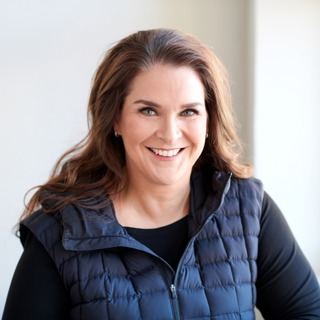
This week’s guest, Lucia Coulter — cofounder of the incredibly successful Lead Exposure Elimination Project (LEEP) — speaks about how LEEP has been reducing childhood lead exposure in poor countries by getting bans on lead in paint enforced.

Links to learn more, summary, and full transcript.

Various estimates suggest the work is absurdly cost effective. LEEP is in expectation preventing kids from getting lead poisoning for under $2 per child (explore the analysis here). Or, looking at it differently, LEEP is saving a year of healthy life for $14, and in the long run is increasing people’s lifetime income anywhere from $300–1,200 for each $1 it spends, by preventing intellectual stunting.

Which raises the question: why hasn’t this happened already? How is lead still in paint in most poor countries, even when that’s oftentimes already illegal? And how is LEEP able to get bans on leaded paint enforced in a country while spending barely tens of thousands of dollars? When leaded paint is gone, what should they target next?

With host Robert Wiblin, Lucia answers all those questions and more:

  • Why LEEP isn’t fully funded, and what it would do with extra money (you can donate here).
  • How bad lead poisoning is in rich countries.
  • Why lead is still in aeroplane fuel.
  • How lead got put straight in food in Bangladesh, and a handful of people got it removed.
  • Why the enormous damage done by lead mostly goes unnoticed.
  • The other major sources of lead exposure aside from paint.
  • Lucia’s story of founding a highly effective nonprofit, despite having no prior entrepreneurship experience, through Charity Entrepreneurship’s Incubation Program.
  • Why Lucia pledges 10% of her income to cost-effective charities.
  • Lucia’s take on why GiveWell didn’t support LEEP earlier on.
  • How the invention of cheap, accessible lead testing for blood and consumer products would be a game changer.
  • Generalisable lessons LEEP has learned from coordinating with governments in poor countries.
  • And plenty more.

Producer and editor: Keiran Harris
Audio Engineering Lead: Ben Cordell
Technical editing: Milo McGuire and Dominic Armstrong
Transcriptions: Katy Moore

Jaksot(324)

Rob Wiblin on the art/science of a high impact career

Rob Wiblin on the art/science of a high impact career

Today's episode is a cross-post of an interview I did with The Jolly Swagmen Podcast which came out this week. I recommend regular listeners skip to 24 minutes in to avoid hearing things they already ...

8 Kesä 20181h 31min
#34 - We use the worst voting system that exists. Here's how Aaron Hamlin is going to fix it.

#34 - We use the worst voting system that exists. Here's how Aaron Hamlin is going to fix it.

In 1991 Edwin Edwards won the Louisiana gubernatorial election. In 2001, he was found guilty of racketeering and received a 10 year invitation to Federal prison. The strange thing about that election?...

1 Kesä 20182h 18min
#33 - Anders Sandberg on what if we ended ageing, solar flares & the annual risk of nuclear war

#33 - Anders Sandberg on what if we ended ageing, solar flares & the annual risk of nuclear war

Joseph Stalin had a life-extension program dedicated to making himself immortal. What if he had succeeded?  According to our last guest, Bryan Caplan, there’s an 80% chance that Stalin would still be ...

29 Touko 20181h 24min
#32 - Bryan Caplan on whether his Case Against Education holds up, totalitarianism, & open borders

#32 - Bryan Caplan on whether his Case Against Education holds up, totalitarianism, & open borders

Bryan Caplan’s claim in *The Case Against Education* is striking: education doesn’t teach people much, we use little of what we learn, and college is mostly about trying to seem smarter than other peo...

22 Touko 20182h 25min
#31 - Allan Dafoe on defusing the political & economic risks posed by existing AI capabilities

#31 - Allan Dafoe on defusing the political & economic risks posed by existing AI capabilities

The debate around the impacts of artificial intelligence often centres on ‘superintelligence’ - a general intellect that is much smarter than the best humans, in practically every field. But according...

18 Touko 201848min
#30 - Eva Vivalt on how little social science findings generalize from one study to another

#30 - Eva Vivalt on how little social science findings generalize from one study to another

If we have a study on the impact of a social program in a particular place and time, how confident can we be that we’ll get a similar result if we study the same program again somewhere else? Dr Eva V...

15 Touko 20182h 1min
#29 - Anders Sandberg on 3 new resolutions for the Fermi paradox & how to colonise the universe

#29 - Anders Sandberg on 3 new resolutions for the Fermi paradox & how to colonise the universe

Part 2 out now: #33 - Dr Anders Sandberg on what if we ended ageing, solar flares & the annual risk of nuclear war The universe is so vast, yet we don’t see any alien civilizations. If they exist, whe...

8 Touko 20181h 21min
#28 - Owen Cotton-Barratt on why scientists should need insurance, PhD strategy & fast AI progresses

#28 - Owen Cotton-Barratt on why scientists should need insurance, PhD strategy & fast AI progresses

A researcher is working on creating a new virus – one more dangerous than any that exist naturally. They believe they’re being as careful as possible. After all, if things go wrong, their own life and...

27 Huhti 20181h 3min

Suosittua kategoriassa Koulutus

rss-murhan-anatomia
rss-narsisti
voi-hyvin-meditaatiot-2
psykopodiaa-podcast
adhd-podi
rss-rahamania
rss-niinku-asia-on
rss-valo-minussa-2
rss-vapaudu-voimaasi
psykologia
aamukahvilla
kesken
rss-koira-haudattuna
koulu-podcast-2
mielipaivakirja
rss-uskonto-on-tylsaa
rss-tietoinen-yhteys-podcast-2
ilona-rauhala
rss-duodecim-lehti
rss-opi-espanjaa