
#175 – Lucia Coulter on preventing lead poisoning for $1.66 per child

#175 – Lucia Coulter on preventing lead poisoning for $1.66 per child

Lead is one of the most poisonous things going. A single sugar sachet of lead, spread over a park the size of an American football field, is enough to give a child that regularly plays there lead poisoning. For life they’ll be condemned to a ~3-point-lower IQ; a 50% higher risk of heart attacks; and elevated risk of kidney disease, anaemia, and ADHD, among other effects.

We’ve known lead is a health nightmare for at least 50 years, and that got lead out of car fuel everywhere. So is the situation under control? Not even close.

Around half the kids in poor and middle-income countries have blood lead levels above 5 micrograms per decilitre; the US declared a national emergency when just 5% of the children in Flint, Michigan exceeded that level. The collective damage this is doing to children’s intellectual potential, health, and life expectancy is vast — the health damage involved is around that caused by malaria, tuberculosis, and HIV combined.

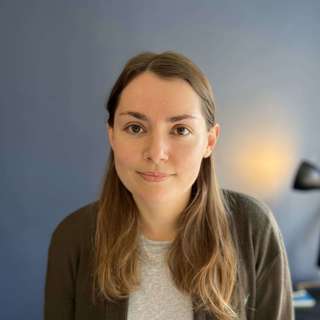
This week’s guest, Lucia Coulter — cofounder of the incredibly successful Lead Exposure Elimination Project (LEEP) — speaks about how LEEP has been reducing childhood lead exposure in poor countries by getting bans on lead in paint enforced.

Links to learn more, summary, and full transcript.

Various estimates suggest the work is absurdly cost effective. LEEP is in expectation preventing kids from getting lead poisoning for under $2 per child (explore the analysis here). Or, looking at it differently, LEEP is saving a year of healthy life for $14, and in the long run is increasing people’s lifetime income anywhere from $300–1,200 for each $1 it spends, by preventing intellectual stunting.

Which raises the question: why hasn’t this happened already? How is lead still in paint in most poor countries, even when that’s oftentimes already illegal? And how is LEEP able to get bans on leaded paint enforced in a country while spending barely tens of thousands of dollars? When leaded paint is gone, what should they target next?

With host Robert Wiblin, Lucia answers all those questions and more:

  • Why LEEP isn’t fully funded, and what it would do with extra money (you can donate here).
  • How bad lead poisoning is in rich countries.
  • Why lead is still in aeroplane fuel.
  • How lead got put straight in food in Bangladesh, and a handful of people got it removed.
  • Why the enormous damage done by lead mostly goes unnoticed.
  • The other major sources of lead exposure aside from paint.
  • Lucia’s story of founding a highly effective nonprofit, despite having no prior entrepreneurship experience, through Charity Entrepreneurship’s Incubation Program.
  • Why Lucia pledges 10% of her income to cost-effective charities.
  • Lucia’s take on why GiveWell didn’t support LEEP earlier on.
  • How the invention of cheap, accessible lead testing for blood and consumer products would be a game changer.
  • Generalisable lessons LEEP has learned from coordinating with governments in poor countries.
  • And plenty more.

Producer and editor: Keiran Harris
Audio Engineering Lead: Ben Cordell
Technical editing: Milo McGuire and Dominic Armstrong
Transcriptions: Katy Moore

Jaksot(320)

#7 - Julia Galef on making humanity more rational, what EA does wrong, and why Twitter isn’t all bad

#7 - Julia Galef on making humanity more rational, what EA does wrong, and why Twitter isn’t all bad

The scientific revolution in the 16th century was one of the biggest societal shifts in human history, driven by the discovery of new and better methods of figuring out who was right and who was wrong...

13 Syys 20171h 14min
#6 - Toby Ord on why the long-term future matters more than anything else & what to do about it

#6 - Toby Ord on why the long-term future matters more than anything else & what to do about it

Of all the people whose well-being we should care about, only a small fraction are alive today. The rest are members of future generations who are yet to exist. Whether they’ll be born into a world th...

6 Syys 20172h 8min

#5 - Alex Gordon-Brown on how to donate millions in your 20s working in quantitative trading

#5 - Alex Gordon-Brown on how to donate millions in your 20s working in quantitative trading

Quantitative financial trading is one of the highest paying parts of the world’s highest paying industry. 25 to 30 year olds with outstanding maths skills can earn millions a year in an obscure set of...

28 Elo 20171h 45min

#4 - Howie Lempel on pandemics that kill hundreds of millions and how to stop them

#4 - Howie Lempel on pandemics that kill hundreds of millions and how to stop them

What disaster is most likely to kill more than 10 million human beings in the next 20 years? Terrorism? Famine? An asteroid? Actually it’s probably a pandemic: a deadly new disease that spreads out o...

23 Elo 20172h 35min

#3 - Dario Amodei on OpenAI and how AI will change the world for good and ill

#3 - Dario Amodei on OpenAI and how AI will change the world for good and ill

Just two years ago OpenAI didn’t exist. It’s now among the most elite groups of machine learning researchers. They’re trying to make an AI that’s smarter than humans and have $1b at their disposal. Ev...

21 Heinä 20171h 38min

#2 - David Spiegelhalter on risk, stats and improving understanding of science

#2 - David Spiegelhalter on risk, stats and improving understanding of science

Recorded in 2015 by Robert Wiblin with colleague Jess Whittlestone at the Centre for Effective Altruism, and recovered from the dusty 80,000 Hours archives. David Spiegelhalter is a statistician at th...

21 Kesä 201733min

#1 - Miles Brundage on the world's desperate need for AI strategists and policy experts

#1 - Miles Brundage on the world's desperate need for AI strategists and policy experts

Robert Wiblin, Director of Research at 80,000 Hours speaks with Miles Brundage, research fellow at the University of Oxford's Future of Humanity Institute. Miles studies the social implications surrou...

5 Kesä 201755min

#0 – Introducing the 80,000 Hours Podcast

#0 – Introducing the 80,000 Hours Podcast

80,000 Hours is a non-profit that provides research and other support to help people switch into careers that effectively tackle the world's most pressing problems. This podcast is just one of many th...

1 Touko 20173min

Suosittua kategoriassa Koulutus

rss-murhan-anatomia
psykopodiaa-podcast
rss-narsisti
voi-hyvin-meditaatiot-2
aamukahvilla
rss-vapaudu-voimaasi
psykologia
rss-liian-kuuma-peruna
dear-ladies
leveli
adhd-podi
kesken
rss-duodecim-lehti
aloita-meditaatio
ihminen-tavattavissa-tommy-hellsten-instituutti
rss-koira-haudattuna
rahapuhetta
ilona-rauhala
rss-niinku-asia-on
rss-luonnollinen-synnytys-podcast