
#185 – Lewis Bollard on the 7 most promising ways to end factory farming, and whether AI is going to be good or bad for animals

#185 – Lewis Bollard on the 7 most promising ways to end factory farming, and whether AI is going to be good or bad for animals

"The constraint right now on factory farming is how far can you push the biology of these animals? But AI could remove that constraint. It could say, 'Actually, we can push them further in these ways and these ways, and they still stay alive. And we’ve modelled out every possibility and we’ve found that it works.' I think another possibility, which I don’t understand as well, is that AI could lock in current moral values. And I think in particular there’s a risk that if AI is learning from what we do as humans today, the lesson it’s going to learn is that it’s OK to tolerate mass cruelty, so long as it occurs behind closed doors. I think there’s a risk that if it learns that, then it perpetuates that value, and perhaps slows human moral progress on this issue." —Lewis Bollard

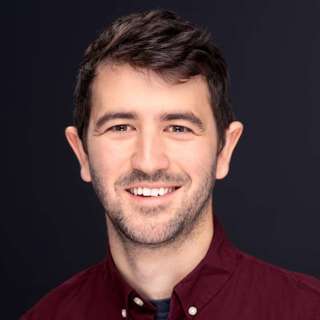
In today’s episode, host Luisa Rodriguez speaks to Lewis Bollard — director of the Farm Animal Welfare programme at Open Philanthropy — about the promising progress and future interventions to end the worst factory farming practices still around today.

Links to learn more, highlights, and full transcript.

They cover:

  • The staggering scale of animal suffering in factory farms, and how it will only get worse without intervention.
  • Work to improve farmed animal welfare that Open Philanthropy is excited about funding.
  • The amazing recent progress made in farm animal welfare — including regulatory attention in the EU and a big win at the US Supreme Court — and the work that still needs to be done.
  • The occasional tension between ending factory farming and curbing climate change
  • How AI could transform factory farming for better or worse — and Lewis’s fears that the technology will just help us maximise cruelty in the name of profit.
  • How Lewis has updated his opinions or grantmaking as a result of new research on the “moral weights” of different species.
  • Lewis’s personal journey working on farm animal welfare, and how he copes with the emotional toll of confronting the scale of animal suffering.
  • How listeners can get involved in the growing movement to end factory farming — from career and volunteer opportunities to impactful donations.
  • And much more.

Chapters:

  • Common objections to ending factory farming (00:13:21)
  • Potential solutions (00:30:55)
  • Cage-free reforms (00:34:25)
  • Broiler chicken welfare (00:46:48)
  • Do companies follow through on these commitments? (01:00:21)
  • Fish welfare (01:05:02)
  • Alternatives to animal proteins (01:16:36)
  • Farm animal welfare in Asia (01:26:00)
  • Farm animal welfare in Europe (01:30:45)
  • Animal welfare science (01:42:09)
  • Approaches Lewis is less excited about (01:52:10)
  • Will we end factory farming in our lifetimes? (01:56:36)
  • Effect of AI (01:57:59)
  • Recent big wins for farm animals (02:07:38)
  • How animal advocacy has changed since Lewis first got involved (02:15:57)
  • Response to the Moral Weight Project (02:19:52)
  • How to help (02:28:14)

Producer and editor: Keiran Harris
Audio engineering lead: Ben Cordell
Technical editing: Simon Monsour, Milo McGuire, and Dominic Armstrong
Additional content editing: Katy Moore and Luisa Rodriguez
Transcriptions: Katy Moore

Jaksot(332)

#105 – Alexander Berger on improving global health and wellbeing in clear and direct ways

#105 – Alexander Berger on improving global health and wellbeing in clear and direct ways

The effective altruist research community tries to identify the highest impact things people can do to improve the world. Unsurprisingly, given the difficulty of such a massive and open-ended project,...

12 Heinä 20212h 54min

#104 – Pardis Sabeti on the Sentinel system for detecting and stopping pandemics

#104 – Pardis Sabeti on the Sentinel system for detecting and stopping pandemics

When the first person with COVID-19 went to see a doctor in Wuhan, nobody could tell that it wasn’t a familiar disease like the flu — that we were dealing with something new. How much death and destru...

29 Kesä 20212h 20min
#103 – Max Roser on building the world's best source of COVID-19 data at Our World in Data

#103 – Max Roser on building the world's best source of COVID-19 data at Our World in Data

History is filled with stories of great people stepping up in times of crisis. Presidents averting wars; soldiers leading troops away from certain death; data scientists sleeping on the office floor t...

21 Kesä 20212h 22min
#102 – Tom Moynihan on why prior generations missed some of the biggest priorities of all

#102 – Tom Moynihan on why prior generations missed some of the biggest priorities of all

It can be tough to get people to truly care about reducing existential risks today. But spare a thought for the longtermist of the 17th century: they were surrounded by people who thought extinction w...

11 Kesä 20213h 56min
#101 – Robert Wright on using cognitive empathy to save the world

#101 – Robert Wright on using cognitive empathy to save the world

In 2003, Saddam Hussein refused to let Iraqi weapons scientists leave the country to be interrogated. Given the overwhelming domestic support for an invasion at the time, most key figures in the U.S. ...

28 Touko 20211h 36min
#100 – Having a successful career with depression, anxiety and imposter syndrome

#100 – Having a successful career with depression, anxiety and imposter syndrome

Today's episode is one of the most remarkable and really, unique, pieces of content we’ve ever produced (and I can say that because I had almost nothing to do with making it!). The producer of this ...

19 Touko 20212h 51min

#99 – Leah Garcés on turning adversaries into allies to change the chicken industry

#99 – Leah Garcés on turning adversaries into allies to change the chicken industry

For a chance to prevent enormous amounts of suffering, would you be brave enough to drive five hours to a remote location to meet a man who seems likely to be your enemy, knowing that it might be an a...

13 Touko 20212h 26min

#98 – Christian Tarsney on future bias and a possible solution to moral fanaticism

#98 – Christian Tarsney on future bias and a possible solution to moral fanaticism

Imagine that you’re in the hospital for surgery. This kind of procedure is always safe, and always successful — but it can take anywhere from one to ten hours. You can’t be knocked out for the operati...

5 Touko 20212h 38min

Suosittua kategoriassa Koulutus

rss-murhan-anatomia
psykopodiaa-podcast
voi-hyvin-meditaatiot-2
adhd-podi
psykologia
rss-valo-minussa-2
rss-tietoinen-yhteys-podcast-2
rss-rahamania
rss-niinku-asia-on
kesken
rss-arkea-ja-aurinkoa-podcast-espanjasta
rahapuhetta
rss-liian-kuuma-peruna
rss-narsisti
dear-ladies
rss-eron-alkemiaa
rss-vapaudu-voimaasi
leikitaanko-laakaria
aamukahvilla
rss-uskonto-on-tylsaa