

#187 – Zach Weinersmith on how researching his book turned him from a space optimist into a "space bastard"

#187 – Zach Weinersmith on how researching his book turned him from a space optimist into a "space bastard"

"Earth economists, when they measure how bad the potential for exploitation is, they look at things like, how is labour mobility? How much possibility do labourers have otherwise to go somewhere else? Well, if you are on the one company town on Mars, your labour mobility is zero, which has never existed on Earth. Even in your stereotypical West Virginian company town run by immigrant labour, there’s still, by definition, a train out. On Mars, you might not even be in the launch window. And even if there are five other company towns or five other settlements, they’re not necessarily rated to take more humans. They have their own oxygen budget, right?

"And so economists use numbers like these, like labour mobility, as a way to put an equation and estimate the ability of a company to set noncompetitive wages or to set noncompetitive work conditions. And essentially, on Mars you’re setting it to infinity." — Zach Weinersmith

In today’s episode, host Luisa Rodriguez speaks to Zach Weinersmith — the cartoonist behind Saturday Morning Breakfast Cereal — about the latest book he wrote with his wife Kelly: A City on Mars: Can We Settle Space, Should We Settle Space, and Have We Really Thought This Through?

Links to learn more, highlights, and full transcript.

They cover:

  • Why space travel is suddenly getting a lot cheaper and re-igniting enthusiasm around space settlement.
  • What Zach thinks are the best and worst arguments for settling space.
  • Zach’s journey from optimistic about space settlement to a self-proclaimed “space bastard” (pessimist).
  • How little we know about how microgravity and radiation affects even adults, much less the children potentially born in a space settlement.
  • A rundown of where we could settle in the solar system, and the major drawbacks of even the most promising candidates.
  • Why digging bunkers or underwater cities on Earth would beat fleeing to Mars in a catastrophe.
  • How new space settlements could look a lot like old company towns — and whether or not that’s a bad thing.
  • The current state of space law and how it might set us up for international conflict.
  • How space cannibalism legal loopholes might work on the International Space Station.
  • And much more.

Chapters:

  • Space optimism and space bastards (00:03:04)
  • Bad arguments for why we should settle space (00:14:01)
  • Superficially plausible arguments for why we should settle space (00:28:54)
  • Is settling space even biologically feasible? (00:32:43)
  • Sex, pregnancy, and child development in space (00:41:41)
  • Where’s the best space place to settle? (00:55:02)
  • Creating self-sustaining habitats (01:15:32)
  • What about AI advances? (01:26:23)
  • A roadmap for settling space (01:33:45)
  • Space law (01:37:22)
  • Space signalling and propaganda (01:51:28)
  • Space war (02:00:40)
  • Mining asteroids (02:06:29)
  • Company towns and communes in space (02:10:55)
  • Sending digital minds into space (02:26:37)
  • The most promising space governance models (02:29:07)
  • The tragedy of the commons (02:35:02)
  • The tampon bandolier and other bodily functions in space (02:40:14)
  • Is space cannibalism legal? (02:47:09)
  • The pregnadrome and other bizarre proposals (02:50:02)
  • Space sexism (02:58:38)
  • What excites Zach about the future (03:02:57)

Producer and editor: Keiran Harris
Audio engineering lead: Ben Cordell
Technical editing: Simon Monsour, Milo McGuire, and Dominic Armstrong
Additional content editing: Katy Moore and Luisa Rodriguez
Transcriptions: Katy Moore

Jaksot(321)

#47 - Catherine Olsson & Daniel Ziegler on the fast path into high-impact ML engineering roles

#47 - Catherine Olsson & Daniel Ziegler on the fast path into high-impact ML engineering roles

After dropping out of a machine learning PhD at Stanford, Daniel Ziegler needed to decide what to do next. He’d always enjoyed building stuff and wanted to shape the development of AI, so he thought a...

2 Marras 20182h 4min
#46 - Hilary Greaves on moral cluelessness & tackling crucial questions in academia

#46 - Hilary Greaves on moral cluelessness & tackling crucial questions in academia

The barista gives you your coffee and change, and you walk away from the busy line. But you suddenly realise she gave you $1 less than she should have. Do you brush your way past the people now waitin...

23 Loka 20182h 49min
#45 - Tyler Cowen's case for maximising econ growth, stabilising civilization & thinking long-term

#45 - Tyler Cowen's case for maximising econ growth, stabilising civilization & thinking long-term

I've probably spent more time reading Tyler Cowen - Professor of Economics at George Mason University - than any other author. Indeed it's his incredibly popular blog Marginal Revolution that prompted...

17 Loka 20182h 30min
#44 - Paul Christiano on how we'll hand the future off to AI, & solving the alignment problem

#44 - Paul Christiano on how we'll hand the future off to AI, & solving the alignment problem

Paul Christiano is one of the smartest people I know. After our first session produced such great material, we decided to do a second recording, resulting in our longest interview so far. While challe...

2 Loka 20183h 51min
#43 - Daniel Ellsberg on the institutional insanity that maintains nuclear doomsday machines

#43 - Daniel Ellsberg on the institutional insanity that maintains nuclear doomsday machines

In Stanley Kubrick’s iconic film Dr. Strangelove, the American president is informed that the Soviet Union has created a secret deterrence system which will automatically wipe out humanity upon detect...

25 Syys 20182h 44min

#42 - Amanda Askell on moral empathy, the value of information & the ethics of infinity

#42 - Amanda Askell on moral empathy, the value of information & the ethics of infinity

Consider two familiar moments at a family reunion. Our host, Uncle Bill, takes pride in his barbecuing skills. But his niece Becky says that she now refuses to eat meat. A groan goes round the table; ...

11 Syys 20182h 46min
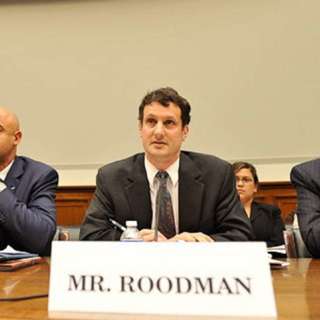
#41 - David Roodman on incarceration, geomagnetic storms, & becoming a world-class researcher

#41 - David Roodman on incarceration, geomagnetic storms, & becoming a world-class researcher

With 698 inmates per 100,000 citizens, the U.S. is by far the leader among large wealthy nations in incarceration. But what effect does imprisonment actually have on crime? According to David Roodman...

28 Elo 20182h 18min

#40 - Katja Grace on forecasting future technology & how much we should trust expert predictions

#40 - Katja Grace on forecasting future technology & how much we should trust expert predictions

Experts believe that artificial intelligence will be better than humans at driving trucks by 2027, working in retail by 2031, writing bestselling books by 2049, and working as surgeons by 2053. But ho...

21 Elo 20182h 11min

Suosittua kategoriassa Koulutus

rss-murhan-anatomia
rss-narsisti
psykopodiaa-podcast
voi-hyvin-meditaatiot-2
rss-liian-kuuma-peruna
rss-vapaudu-voimaasi
rss-hereilla
rss-valo-minussa-2
rss-uskonto-on-tylsaa
psykologia
kesken
dear-ladies
rss-luonnollinen-synnytys-podcast
rahapuhetta
rss-niinku-asia-on
ihminen-tavattavissa-tommy-hellsten-instituutti
leveli
rss-duodecim-lehti
rss-tietoinen-yhteys-podcast-2
rss-arkea-ja-aurinkoa-podcast-espanjasta