
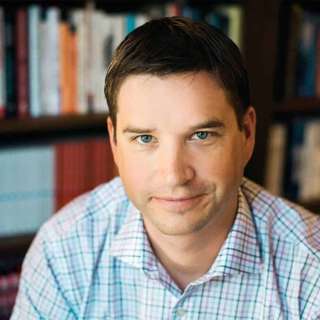
#188 – Matt Clancy on whether science is good

#188 – Matt Clancy on whether science is good

"Suppose we make these grants, we do some of those experiments I talk about. We discover, for example — I’m just making this up — but we give people superforecasting tests when they’re doing peer review, and we find that you can identify people who are super good at picking science. And then we have this much better targeted science, and we’re making progress at a 10% faster rate than we normally would have. Over time, that aggregates up, and maybe after 10 years, we’re a year ahead of where we would have been if we hadn’t done this kind of stuff.

"Now, suppose in 10 years we’re going to discover a cheap new genetic engineering technology that anyone can use in the world if they order the right parts off of Amazon. That could be great, but could also allow bad actors to genetically engineer pandemics and basically try to do terrible things with this technology. And if we’ve brought that forward, and that happens at year nine instead of year 10 because of some of these interventions we did, now we start to think that if that’s really bad, if these people using this technology causes huge problems for humanity, it begins to sort of wash out the benefits of getting the science a little bit faster." —Matt Clancy

In today’s episode, host Luisa Rodriguez speaks to Matt Clancy — who oversees Open Philanthropy’s Innovation Policy programme — about his recent work modelling the risks and benefits of the increasing speed of scientific progress.

Links to learn more, highlights, and full transcript.

They cover:

  • Whether scientific progress is actually net positive for humanity.
  • Scenarios where accelerating science could lead to existential risks, such as advanced biotechnology being used by bad actors.
  • Why Matt thinks metascience research and targeted funding could improve the scientific process and better incentivise outcomes that are good for humanity.
  • Whether Matt trusts domain experts or superforecasters more when estimating how the future will turn out.
  • Why Matt is sceptical that AGI could really cause explosive economic growth.
  • And much more.

Chapters:

  • Is scientific progress net positive for humanity? (00:03:00)
  • The time of biological perils (00:17:50)
  • Modelling the benefits of science (00:25:48)
  • Income and health gains from scientific progress (00:32:49)
  • Discount rates (00:42:14)
  • How big are the returns to science? (00:51:08)
  • Forecasting global catastrophic biological risks from scientific progress (01:05:20)
  • What’s the value of scientific progress, given the risks? (01:15:09)
  • Factoring in extinction risk (01:21:56)
  • How science could reduce extinction risk (01:30:18)
  • Are we already too late to delay the time of perils? (01:42:38)
  • Domain experts vs superforecasters (01:46:03)
  • What Open Philanthropy’s Innovation Policy programme settled on (01:53:47)
  • Explosive economic growth (02:06:28)
  • Matt’s favourite thought experiment (02:34:57)

Producer and editor: Keiran Harris
Audio engineering lead: Ben Cordell
Technical editing: Simon Monsour, Milo McGuire, and Dominic Armstrong
Additional content editing: Katy Moore and Luisa Rodriguez
Transcriptions: Katy Moore

Jaksot(333)

#106 – Cal Newport on an industrial revolution for office work

#106 – Cal Newport on an industrial revolution for office work

If you wanted to start a university department from scratch, and attract as many superstar researchers as possible, what’s the most attractive perk you could offer?How about just not needing an email ...

28 Heinä 20211h 53min
#105 – Alexander Berger on improving global health and wellbeing in clear and direct ways

#105 – Alexander Berger on improving global health and wellbeing in clear and direct ways

The effective altruist research community tries to identify the highest impact things people can do to improve the world. Unsurprisingly, given the difficulty of such a massive and open-ended project,...

12 Heinä 20212h 54min

#104 – Pardis Sabeti on the Sentinel system for detecting and stopping pandemics

#104 – Pardis Sabeti on the Sentinel system for detecting and stopping pandemics

When the first person with COVID-19 went to see a doctor in Wuhan, nobody could tell that it wasn’t a familiar disease like the flu — that we were dealing with something new. How much death and destru...

29 Kesä 20212h 20min
#103 – Max Roser on building the world's best source of COVID-19 data at Our World in Data

#103 – Max Roser on building the world's best source of COVID-19 data at Our World in Data

History is filled with stories of great people stepping up in times of crisis. Presidents averting wars; soldiers leading troops away from certain death; data scientists sleeping on the office floor t...

21 Kesä 20212h 22min

#102 – Tom Moynihan on why prior generations missed some of the biggest priorities of all

#102 – Tom Moynihan on why prior generations missed some of the biggest priorities of all

It can be tough to get people to truly care about reducing existential risks today. But spare a thought for the longtermist of the 17th century: they were surrounded by people who thought extinction w...

11 Kesä 20213h 56min
#101 – Robert Wright on using cognitive empathy to save the world

#101 – Robert Wright on using cognitive empathy to save the world

In 2003, Saddam Hussein refused to let Iraqi weapons scientists leave the country to be interrogated. Given the overwhelming domestic support for an invasion at the time, most key figures in the U.S. ...

28 Touko 20211h 36min
#100 – Having a successful career with depression, anxiety and imposter syndrome

#100 – Having a successful career with depression, anxiety and imposter syndrome

Today's episode is one of the most remarkable and really, unique, pieces of content we’ve ever produced (and I can say that because I had almost nothing to do with making it!). The producer of this ...

19 Touko 20212h 51min
#99 – Leah Garcés on turning adversaries into allies to change the chicken industry

#99 – Leah Garcés on turning adversaries into allies to change the chicken industry

For a chance to prevent enormous amounts of suffering, would you be brave enough to drive five hours to a remote location to meet a man who seems likely to be your enemy, knowing that it might be an a...

13 Touko 20212h 26min

Suosittua kategoriassa Koulutus

rss-murhan-anatomia
psykopodiaa-podcast
voi-hyvin-meditaatiot-2
adhd-podi
rss-rahamania
rss-niinku-asia-on
rss-liian-kuuma-peruna
rss-valo-minussa-2
rss-tietoinen-yhteys-podcast-2
jari-sarasvuo-podcast
rss-vapaudu-voimaasi
kesken
rss-uskonto-on-tylsaa
rss-narsisti
psykologia
rss-arkea-ja-aurinkoa-podcast-espanjasta
rahapuhetta
ihminen-tavattavissa-tommy-hellsten-instituutti
rss-luonnollinen-synnytys-podcast
rss-hereilla


















