#189 – Rachel Glennerster on why we still don’t have vaccines that could save millions

#189 – Rachel Glennerster on why we still don’t have vaccines that could save millions

"You can’t charge what something is worth during a pandemic. So we estimated that the value of one course of COVID vaccine in January 2021 was over $5,000. They were selling for between $6 and $40. So nothing like their social value. Now, don’t get me wrong. I don’t think that they should have charged $5,000 or $6,000. That’s not ethical. It’s also not economically efficient, because they didn’t cost $5,000 at the marginal cost. So you actually want low price, getting out to lots of people.

"But it shows you that the market is not going to reward people who do the investment in preparation for a pandemic — because when a pandemic hits, they’re not going to get the reward in line with the social value. They may even have to charge less than they would in a non-pandemic time. So prepping for a pandemic is not an efficient market strategy if I’m a firm, but it’s a very efficient strategy for society, and so we’ve got to bridge that gap." —Rachel Glennerster

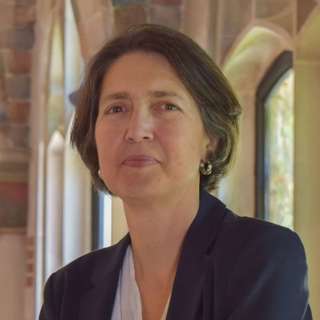
In today’s episode, host Luisa Rodriguez speaks to Rachel Glennerster — associate professor of economics at the University of Chicago and a pioneer in the field of development economics — about how her team’s new Market Shaping Accelerator aims to leverage market forces to drive innovations that can solve pressing world problems.

Links to learn more, highlights, and full transcript.

They cover:

  • How market failures and misaligned incentives stifle critical innovations for social goods like pandemic preparedness, climate change interventions, and vaccine development.
  • How “pull mechanisms” like advance market commitments (AMCs) can help overcome these challenges — including concrete examples like how one AMC led to speeding up the development of three vaccines which saved around 700,000 lives in low-income countries.
  • The challenges in designing effective pull mechanisms, from design to implementation.
  • Why it’s important to tie innovation incentives to real-world impact and uptake, not just the invention of a new technology.
  • The massive benefits of accelerating vaccine development, in some cases, even if it’s only by a few days or weeks.
  • The case for a $6 billion advance market commitment to spur work on a universal COVID-19 vaccine.
  • The shortlist of ideas from the Market Shaping Accelerator’s recent Innovation Challenge that use pull mechanisms to address market failures around improving indoor air quality, repurposing generic drugs for alternative uses, and developing eco-friendly air conditioners for a warming planet.
  • “Best Buys” and “Bad Buys” for improving education systems in low- and middle-income countries, based on evidence from over 400 studies.
  • Lessons from Rachel’s career at the forefront of global development, and how insights from economics can drive transformative change.
  • And much more.

Chapters:

  • The Market Shaping Accelerator (00:03:33)
  • Pull mechanisms for innovation (00:13:10)
  • Accelerating the pneumococcal and COVID vaccines (00:19:05)
  • Advance market commitments (00:41:46)
  • Is this uncertainty hard for funders to plan around? (00:49:17)
  • The story of the malaria vaccine that wasn’t (00:57:15)
  • Challenges with designing and implementing AMCs and other pull mechanisms (01:01:40)
  • Universal COVID vaccine (01:18:14)
  • Climate-resilient crops (01:34:09)
  • The Market Shaping Accelerator’s Innovation Challenge (01:45:40)
  • Indoor air quality to reduce respiratory infections (01:49:09)
  • Repurposing generic drugs (01:55:50)
  • Clean air conditioning units (02:02:41)
  • Broad-spectrum antivirals for pandemic prevention (02:09:11)
  • Improving education in low- and middle-income countries (02:15:53)
  • What’s still weird for Rachel about living in the US? (02:45:06)

Producer and editor: Keiran Harris
Audio Engineering Lead: Ben Cordell
Technical editing: Simon Monsour, Milo McGuire, and Dominic Armstrong
Additional content editing: Katy Moore and Luisa Rodriguez
Transcriptions: Katy Moore

Jaksot(317)

#225 – Daniel Kokotajlo on what a hyperspeed robot economy might look like

#225 – Daniel Kokotajlo on what a hyperspeed robot economy might look like

When Daniel Kokotajlo talks to security experts at major AI labs, they tell him something chilling: “Of course we’re probably penetrated by the CCP already, and if they really wanted something, they c...

27 Loka 20252h 12min

#224 – There's a cheap and low-tech way to save humanity from any engineered disease | Andrew Snyder-Beattie

#224 – There's a cheap and low-tech way to save humanity from any engineered disease | Andrew Snyder-Beattie

Conventional wisdom is that safeguarding humanity from the worst biological risks — microbes optimised to kill as many as possible — is difficult bordering on impossible, making bioweapons humanity’s ...

2 Loka 20252h 31min

Inside the Biden admin’s AI policy approach | Jake Sullivan, Biden’s NSA | via The Cognitive Revolution

Inside the Biden admin’s AI policy approach | Jake Sullivan, Biden’s NSA | via The Cognitive Revolution

Jake Sullivan was the US National Security Advisor from 2021-2025. He joined our friends on The Cognitive Revolution podcast in August to discuss AI as a critical national security issue. We thought i...

26 Syys 20251h 5min

#223 – Neel Nanda on leading a Google DeepMind team at 26 – and advice if you want to work at an AI company (part 2)

#223 – Neel Nanda on leading a Google DeepMind team at 26 – and advice if you want to work at an AI company (part 2)

At 26, Neel Nanda leads an AI safety team at Google DeepMind, has published dozens of influential papers, and mentored 50 junior researchers — seven of whom now work at major AI companies. His secret?...

15 Syys 20251h 46min

#222 – Can we tell if an AI is loyal by reading its mind? DeepMind's Neel Nanda (part 1)

#222 – Can we tell if an AI is loyal by reading its mind? DeepMind's Neel Nanda (part 1)

We don’t know how AIs think or why they do what they do. Or at least, we don’t know much. That fact is only becoming more troubling as AIs grow more capable and appear on track to wield enormous cultu...

8 Syys 20253h 1min

#221 – Kyle Fish on the most bizarre findings from 5 AI welfare experiments

#221 – Kyle Fish on the most bizarre findings from 5 AI welfare experiments

What happens when you lock two AI systems in a room together and tell them they can discuss anything they want?According to experiments run by Kyle Fish — Anthropic’s first AI welfare researcher — som...

28 Elo 20252h 28min

How not to lose your job to AI (article by Benjamin Todd)

How not to lose your job to AI (article by Benjamin Todd)

About half of people are worried they’ll lose their job to AI. They’re right to be concerned: AI can now complete real-world coding tasks on GitHub, generate photorealistic video, drive a taxi more sa...

31 Heinä 202551min

Rebuilding after apocalypse: What 13 experts say about bouncing back

Rebuilding after apocalypse: What 13 experts say about bouncing back

What happens when civilisation faces its greatest tests?This compilation brings together insights from researchers, defence experts, philosophers, and policymakers on humanity’s ability to survive and...

15 Heinä 20254h 26min

Suosittua kategoriassa Koulutus

rss-murhan-anatomia
psykopodiaa-podcast
voi-hyvin-meditaatiot-2
rss-niinku-asia-on
kesken
rss-duodecim-lehti
adhd-podi
aamukahvilla
aloita-meditaatio
rss-liian-kuuma-peruna
rss-valo-minussa-2
ihminen-tavattavissa-tommy-hellsten-instituutti
rss-elamankoulu
rss-psykalab
rss-narsisti
rahapuhetta
salainen-paivakirja
rss-uskonto-on-tylsaa
rss-vapaudu-voimaasi
rss-hereilla