#197 – Nick Joseph on whether Anthropic's AI safety policy is up to the task

#197 – Nick Joseph on whether Anthropic's AI safety policy is up to the task

The three biggest AI companies — Anthropic, OpenAI, and DeepMind — have now all released policies designed to make their AI models less likely to go rogue or cause catastrophic damage as they approach, and eventually exceed, human capabilities. Are they good enough?

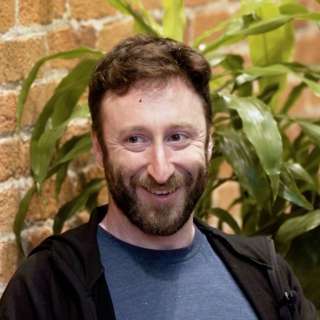
That’s what host Rob Wiblin tries to hash out in this interview (recorded May 30) with Nick Joseph — one of the original cofounders of Anthropic, its current head of training, and a big fan of Anthropic’s “responsible scaling policy” (or “RSP”). Anthropic is the most safety focused of the AI companies, known for a culture that treats the risks of its work as deadly serious.

Links to learn more, highlights, video, and full transcript.

As Nick explains, these scaling policies commit companies to dig into what new dangerous things a model can do — after it’s trained, but before it’s in wide use. The companies then promise to put in place safeguards they think are sufficient to tackle those capabilities before availability is extended further. For instance, if a model could significantly help design a deadly bioweapon, then its weights need to be properly secured so they can’t be stolen by terrorists interested in using it that way.

As capabilities grow further — for example, if testing shows that a model could exfiltrate itself and spread autonomously in the wild — then new measures would need to be put in place to make that impossible, or demonstrate that such a goal can never arise.

Nick points out what he sees as the biggest virtues of the RSP approach, and then Rob pushes him on some of the best objections he’s found to RSPs being up to the task of keeping AI safe and beneficial. The two also discuss whether it's essential to eventually hand over operation of responsible scaling policies to external auditors or regulatory bodies, if those policies are going to be able to hold up against the intense commercial pressures that might end up arrayed against them.

In addition to all of that, Nick and Rob talk about:

  • What Nick thinks are the current bottlenecks in AI progress: people and time (rather than data or compute).
  • What it’s like working in AI safety research at the leading edge, and whether pushing forward capabilities (even in the name of safety) is a good idea.
  • What it’s like working at Anthropic, and how to get the skills needed to help with the safe development of AI.

And as a reminder, if you want to let us know your reaction to this interview, or send any other feedback, our inbox is always open at podcast@80000hours.org.

Chapters:

  • Cold open (00:00:00)
  • Rob’s intro (00:01:00)
  • The interview begins (00:03:44)
  • Scaling laws (00:04:12)
  • Bottlenecks to further progress in making AIs helpful (00:08:36)
  • Anthropic’s responsible scaling policies (00:14:21)
  • Pros and cons of the RSP approach for AI safety (00:34:09)
  • Alternatives to RSPs (00:46:44)
  • Is an internal audit really the best approach? (00:51:56)
  • Making promises about things that are currently technically impossible (01:07:54)
  • Nick’s biggest reservations about the RSP approach (01:16:05)
  • Communicating “acceptable” risk (01:19:27)
  • Should Anthropic’s RSP have wider safety buffers? (01:26:13)
  • Other impacts on society and future work on RSPs (01:34:01)
  • Working at Anthropic (01:36:28)
  • Engineering vs research (01:41:04)
  • AI safety roles at Anthropic (01:48:31)
  • Should concerned people be willing to take capabilities roles? (01:58:20)
  • Recent safety work at Anthropic (02:10:05)
  • Anthropic culture (02:14:35)
  • Overrated and underrated AI applications (02:22:06)
  • Rob’s outro (02:26:36)

Producer and editor: Keiran Harris
Audio engineering by Ben Cordell, Milo McGuire, Simon Monsour, and Dominic Armstrong
Video engineering: Simon Monsour
Transcriptions: Katy Moore

Jaksot(326)

#163 – Toby Ord on the perils of maximising the good that you do

#163 – Toby Ord on the perils of maximising the good that you do

Effective altruism is associated with the slogan "do the most good." On one level, this has to be unobjectionable: What could be bad about helping people more and more?But in today's interview, Toby O...

8 Syys 20233h 7min
The 80,000 Hours Career Guide (2023)

The 80,000 Hours Career Guide (2023)

An audio version of the 2023 80,000 Hours career guide, also available on our website, on Amazon, and on Audible.If you know someone who might find our career guide helpful, you can get a free copy se...

4 Syys 20234h 41min
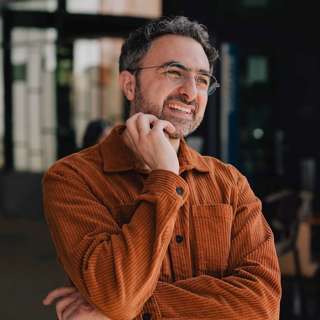
#162 – Mustafa Suleyman on getting Washington and Silicon Valley to tame AI

#162 – Mustafa Suleyman on getting Washington and Silicon Valley to tame AI

Mustafa Suleyman was part of the trio that founded DeepMind, and his new AI project is building one of the world's largest supercomputers to train a large language model on 10–100x the compute used to...

1 Syys 202359min
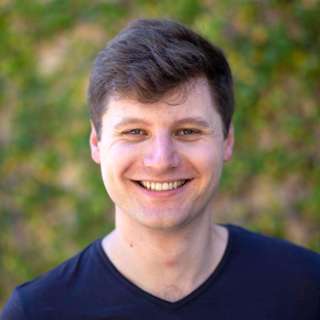
#161 – Michael Webb on whether AI will soon cause job loss, lower incomes, and higher inequality — or the opposite

#161 – Michael Webb on whether AI will soon cause job loss, lower incomes, and higher inequality — or the opposite

"Do you remember seeing these photographs of generally women sitting in front of these huge panels and connecting calls, plugging different calls between different numbers? The automated version of th...

23 Elo 20233h 30min

#160 – Hannah Ritchie on why it makes sense to be optimistic about the environment

#160 – Hannah Ritchie on why it makes sense to be optimistic about the environment

"There's no money to invest in education elsewhere, so they almost get trapped in the cycle where they don't get a lot from crop production, but everyone in the family has to work there to just stay a...

14 Elo 20232h 36min
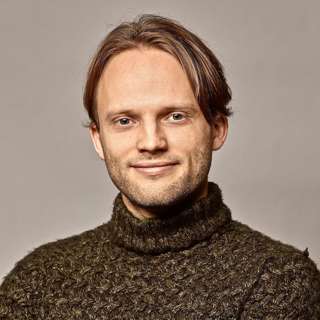
#159 – Jan Leike on OpenAI's massive push to make superintelligence safe in 4 years or less

#159 – Jan Leike on OpenAI's massive push to make superintelligence safe in 4 years or less

In July, OpenAI announced a new team and project: Superalignment. The goal is to figure out how to make superintelligent AI systems aligned and safe to use within four years, and the lab is putting a ...

7 Elo 20232h 51min
We now offer shorter 'interview highlights' episodes

We now offer shorter 'interview highlights' episodes

Over on our other feed, 80k After Hours, you can now find 20-30 minute highlights episodes of our 80,000 Hours Podcast interviews. These aren’t necessarily the most important parts of the interview, a...

5 Elo 20236min
#158 – Holden Karnofsky on how AIs might take over even if they're no smarter than humans, and his 4-part playbook for AI risk

#158 – Holden Karnofsky on how AIs might take over even if they're no smarter than humans, and his 4-part playbook for AI risk

Back in 2007, Holden Karnofsky cofounded GiveWell, where he sought out the charities that most cost-effectively helped save lives. He then cofounded Open Philanthropy, where he oversaw a team making b...

31 Heinä 20233h 13min

Suosittua kategoriassa Koulutus

rss-murhan-anatomia
voi-hyvin-meditaatiot-2
rss-narsisti
adhd-podi
psykopodiaa-podcast
rss-uskonto-on-tylsaa
rss-rahamania
rss-duodecim-lehti
rss-valo-minussa-2
rss-vapaudu-voimaasi
rss-liian-kuuma-peruna
rahapuhetta
rss-niinku-asia-on
aloita-meditaatio
kesken
dear-ladies
mielipaivakirja
rss-eron-alkemiaa
rss-tietoinen-yhteys-podcast-2
aamukahvilla