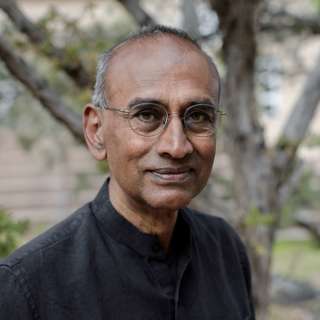

#202 – Venki Ramakrishnan on the cutting edge of anti-ageing science

#202 – Venki Ramakrishnan on the cutting edge of anti-ageing science

"For every far-out idea that turns out to be true, there were probably hundreds that were simply crackpot ideas. In general, [science] advances building on the knowledge we have, and seeing what the next questions are, and then getting to the next stage and the next stage and so on. And occasionally there’ll be revolutionary ideas which will really completely change your view of science. And it is possible that some revolutionary breakthrough in our understanding will come about and we might crack this problem, but there’s no evidence for that. It doesn’t mean that there isn’t a lot of promising work going on. There are many legitimate areas which could lead to real improvements in health in old age. So I’m fairly balanced: I think there are promising areas, but there’s a lot of work to be done to see which area is going to be promising, and what the risks are, and how to make them work." —Venki Ramakrishnan

In today’s episode, host Luisa Rodriguez speaks to Venki Ramakrishnan — molecular biologist and Nobel Prize winner — about his new book, Why We Die: The New Science of Aging and the Quest for Immortality.

Links to learn more, highlights, and full transcript.

They cover:

  • What we can learn about extending human lifespan — if anything — from “immortal” aquatic animal species, cloned sheep, and the oldest people to have ever lived.
  • Which areas of anti-ageing research seem most promising to Venki — including caloric restriction, removing senescent cells, cellular reprogramming, and Yamanaka factors — and which Venki thinks are overhyped.
  • Why eliminating major age-related diseases might only extend average lifespan by 15 years.
  • The social impacts of extending healthspan or lifespan in an ageing population — including the potential danger of massively increasing inequality if some people can access life-extension interventions while others can’t.
  • And plenty more.

Chapters:

  • Cold open (00:00:00)
  • Luisa's intro (00:01:04)
  • The interview begins (00:02:21)
  • Reasons to explore why we age and die (00:02:35)
  • Evolutionary pressures and animals that don't biologically age (00:06:55)
  • Why does ageing cause us to die? (00:12:24)
  • Is there a hard limit to the human lifespan? (00:17:11)
  • Evolutionary tradeoffs between fitness and longevity (00:21:01)
  • How ageing resets with every generation, and what we can learn from clones (00:23:48)
  • Younger blood (00:31:20)
  • Freezing cells, organs, and bodies (00:36:47)
  • Are the goals of anti-ageing research even realistic? (00:43:44)
  • Dementia (00:49:52)
  • Senescence (01:01:58)
  • Caloric restriction and metabolic pathways (01:11:45)
  • Yamanaka factors (01:34:07)
  • Cancer (01:47:44)
  • Mitochondrial dysfunction (01:58:40)
  • Population effects of extended lifespan (02:06:12)
  • Could increased longevity increase inequality? (02:11:48)
  • What’s surprised Venki about this research (02:16:06)
  • Luisa's outro (02:19:26)

Producer: Keiran Harris
Audio engineering: Ben Cordell, Milo McGuire, Simon Monsour, and Dominic Armstrong
Content editing: Luisa Rodriguez, Katy Moore, and Keiran Harris
Transcriptions: Katy Moore

Jaksot(326)

#181 – Laura Deming on the science that could keep us healthy in our 80s and beyond

#181 – Laura Deming on the science that could keep us healthy in our 80s and beyond

"The question I care about is: What do I want to do? Like, when I'm 80, how strong do I want to be? OK, and then if I want to be that strong, how well do my muscles have to work? OK, and then if that'...

1 Maalis 20241h 37min

#180 – Hugo Mercier on why gullibility and misinformation are overrated

#180 – Hugo Mercier on why gullibility and misinformation are overrated

The World Economic Forum’s global risks survey of 1,400 experts, policymakers, and industry leaders ranked misinformation and disinformation as the number one global risk over the next two years — ran...

21 Helmi 20242h 36min
#179 – Randy Nesse on why evolution left us so vulnerable to depression and anxiety

#179 – Randy Nesse on why evolution left us so vulnerable to depression and anxiety

Mental health problems like depression and anxiety affect enormous numbers of people and severely interfere with their lives. By contrast, we don’t see similar levels of physical ill health in young p...

12 Helmi 20242h 56min

#178 – Emily Oster on what the evidence actually says about pregnancy and parenting

#178 – Emily Oster on what the evidence actually says about pregnancy and parenting

"I think at various times — before you have the kid, after you have the kid — it's useful to sit down and think about: What do I want the shape of this to look like? What time do I want to be spending...

1 Helmi 20242h 22min

#177 – Nathan Labenz on recent AI breakthroughs and navigating the growing rift between AI safety and accelerationist camps

#177 – Nathan Labenz on recent AI breakthroughs and navigating the growing rift between AI safety and accelerationist camps

Back in December we spoke with Nathan Labenz — AI entrepreneur and host of The Cognitive Revolution Podcast — about the speed of progress towards AGI and OpenAI's leadership drama, drawing on Nathan's...

24 Tammi 20242h 47min

#90 Classic episode – Ajeya Cotra on worldview diversification and how big the future could be

#90 Classic episode – Ajeya Cotra on worldview diversification and how big the future could be

You wake up in a mysterious box, and hear the booming voice of God: “I just flipped a coin. If it came up heads, I made ten boxes, labeled 1 through 10 — each of which has a human in it. If it came up...

12 Tammi 20242h 59min
#112 Classic episode – Carl Shulman on the common-sense case for existential risk work and its practical implications

#112 Classic episode – Carl Shulman on the common-sense case for existential risk work and its practical implications

Preventing the apocalypse may sound like an idiosyncratic activity, and it sometimes is justified on exotic grounds, such as the potential for humanity to become a galaxy-spanning civilisation.But the...

8 Tammi 20243h 50min
#111 Classic episode – Mushtaq Khan on using institutional economics to predict effective government reforms

#111 Classic episode – Mushtaq Khan on using institutional economics to predict effective government reforms

If you’re living in the Niger Delta in Nigeria, your best bet at a high-paying career is probably ‘artisanal refining’ — or, in plain language, stealing oil from pipelines.The resulting oil spills dam...

4 Tammi 20243h 22min

Suosittua kategoriassa Koulutus

rss-murhan-anatomia
voi-hyvin-meditaatiot-2
psykopodiaa-podcast
rss-narsisti
adhd-podi
rahapuhetta
rss-rahamania
kesken
psykologia
rss-liian-kuuma-peruna
rss-eron-alkemiaa
rss-arkea-ja-aurinkoa-podcast-espanjasta
rss-niinku-asia-on
rss-luonnollinen-synnytys-podcast
rss-vapaudu-voimaasi
ihminen-tavattavissa-tommy-hellsten-instituutti
rss-duodecim-lehti
rss-finnish-daily-dialogues
esa-saarinen-filosofia-ja-systeemiajattelu
rss-tietoinen-yhteys-podcast-2