

#138 Classic episode – Sharon Hewitt Rawlette on why pleasure and pain are the only things that intrinsically matter

#138 Classic episode – Sharon Hewitt Rawlette on why pleasure and pain are the only things that intrinsically matter

What in the world is intrinsically good — good in itself even if it has no other effects? Over the millennia, people have offered many answers: joy, justice, equality, accomplishment, loving god, wisdom, and plenty more.

The question is a classic that makes for great dorm-room philosophy discussion. But it’s hardly just of academic interest. The issue of what (if anything) is intrinsically valuable bears on every action we take, whether we’re looking to improve our own lives, or to help others. The wrong answer might lead us to the wrong project and render our efforts to improve the world entirely ineffective.

Today’s guest, Sharon Hewitt Rawlette — philosopher and author of The Feeling of Value: Moral Realism Grounded in Phenomenal Consciousness — wants to resuscitate an answer to this question that is as old as philosophy itself.

Rebroadcast: this episode was originally released in September 2022.

Links to learn more, highlights, and full transcript.

That idea, in a nutshell, is that there is only one thing of true intrinsic value: positive feelings and sensations. And similarly, there is only one thing that is intrinsically of negative value: suffering, pain, and other unpleasant sensations.

Lots of other things are valuable too: friendship, fairness, loyalty, integrity, wealth, patience, houses, and so on. But they are only instrumentally valuable — that is to say, they’re valuable as means to the end of ensuring that all conscious beings experience more pleasure and other positive sensations, and less suffering.

As Sharon notes, from Athens in 400 BC to Britain in 1850, the idea that only subjective experiences can be good or bad in themselves — a position known as ‘philosophical hedonism’ — has been one of the most enduringly popular ideas in ethics.

And few will be taken aback by the notion that, all else equal, more pleasure is good and less suffering is bad. But can they really be the only intrinsically valuable things?

Over the 20th century, philosophical hedonism became increasingly controversial in the face of some seemingly very counterintuitive implications. For this reason the famous philosopher of mind Thomas Nagel called The Feeling of Value “a radical and important philosophical contribution.”

So what convinces Sharon that philosophical hedonism deserves another go? In today’s interview with host Rob Wiblin, Sharon explains the case for a theory of value grounded in subjective experiences, and why she believes these counterarguments are misguided. A philosophical hedonist shouldn’t get in an experience machine, nor override an individual’s autonomy, except in situations so different from the classic thought experiments that it no longer seems strange they would do so.

Chapters:

  • Cold open (00:00:00)
  • Rob’s intro (00:00:41)
  • The interview begins (00:04:27)
  • Metaethics (00:05:58)
  • Anti-realism (00:12:21)
  • Sharon's theory of moral realism (00:17:59)
  • The history of hedonism (00:24:53)
  • Intrinsic value vs instrumental value (00:30:31)
  • Egoistic hedonism (00:38:12)
  • Single axis of value (00:44:01)
  • Key objections to Sharon’s brand of hedonism (00:58:00)
  • The experience machine (01:07:50)
  • Robot spouses (01:24:11)
  • Most common misunderstanding of Sharon’s view (01:28:52)
  • How might a hedonist actually live (01:39:28)
  • The organ transplant case (01:55:16)
  • Counterintuitive implications of hedonistic utilitarianism (02:05:22)
  • How could we discover moral facts? (02:19:47)
  • Rob’s outro (02:24:44)

Producer: Keiran Harris
Audio mastering: Ryan Kessler
Transcriptions: Katy Moore

Jaksot(317)

#51 - Martin Gurri on the revolt of the public & crisis of authority in the information age

#51 - Martin Gurri on the revolt of the public & crisis of authority in the information age

Politics in rich countries seems to be going nuts. What's the explanation? Rising inequality? The decline of manufacturing jobs? Excessive immigration? Martin Gurri spent decades as a CIA analyst and...

29 Tammi 20192h 31min
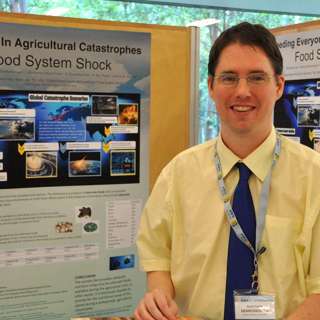
#50 - David Denkenberger on how to feed all 8b people through an asteroid/nuclear winter

#50 - David Denkenberger on how to feed all 8b people through an asteroid/nuclear winter

If an asteroid impact or nuclear winter blocked the sun for years, our inability to grow food would result in billions dying of starvation, right? According to Dr David Denkenberger, co-author of Feed...

27 Joulu 20182h 57min

#49 - Rachel Glennerster on a year's worth of education for 30c & other development 'best buys'

#49 - Rachel Glennerster on a year's worth of education for 30c & other development 'best buys'

If I told you it's possible to deliver an extra year of ideal primary-level education for under $1, would you believe me? Hopefully not - the claim is absurd on its face. But it may be true nonetheles...

20 Joulu 20181h 35min

#48 - Brian Christian on better living through the wisdom of computer science

#48 - Brian Christian on better living through the wisdom of computer science

Please let us know if we've helped you: Fill out our annual impact survey Ever felt that you were so busy you spent all your time paralysed trying to figure out where to start, and couldn't get much ...

22 Marras 20183h 15min

#47 - Catherine Olsson & Daniel Ziegler on the fast path into high-impact ML engineering roles

#47 - Catherine Olsson & Daniel Ziegler on the fast path into high-impact ML engineering roles

After dropping out of a machine learning PhD at Stanford, Daniel Ziegler needed to decide what to do next. He’d always enjoyed building stuff and wanted to shape the development of AI, so he thought a...

2 Marras 20182h 4min

#46 - Hilary Greaves on moral cluelessness & tackling crucial questions in academia

#46 - Hilary Greaves on moral cluelessness & tackling crucial questions in academia

The barista gives you your coffee and change, and you walk away from the busy line. But you suddenly realise she gave you $1 less than she should have. Do you brush your way past the people now waitin...

23 Loka 20182h 49min

#45 - Tyler Cowen's case for maximising econ growth, stabilising civilization & thinking long-term

#45 - Tyler Cowen's case for maximising econ growth, stabilising civilization & thinking long-term

I've probably spent more time reading Tyler Cowen - Professor of Economics at George Mason University - than any other author. Indeed it's his incredibly popular blog Marginal Revolution that prompted...

17 Loka 20182h 30min

#44 - Paul Christiano on how we'll hand the future off to AI, & solving the alignment problem

#44 - Paul Christiano on how we'll hand the future off to AI, & solving the alignment problem

Paul Christiano is one of the smartest people I know. After our first session produced such great material, we decided to do a second recording, resulting in our longest interview so far. While challe...

2 Loka 20183h 51min

Suosittua kategoriassa Koulutus

rss-murhan-anatomia
psykopodiaa-podcast
voi-hyvin-meditaatiot-2
rss-valo-minussa-2
rss-narsisti
adhd-podi
rss-niinku-asia-on
psykologia
aamukahvilla
aloita-meditaatio
rss-duodecim-lehti
rahapuhetta
kesken
salainen-paivakirja
rss-elamankoulu
rss-liian-kuuma-peruna
rss-psykalab
rss-selvat-savelet
rss-vapaudu-voimaasi
ihminen-tavattavissa-tommy-hellsten-instituutti