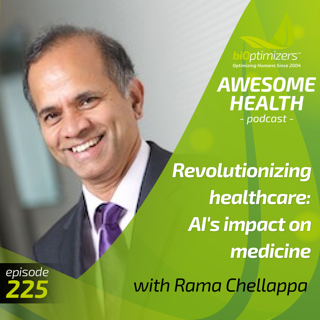
225: Revolutionizing healthcare: AI's impact on medicine - with Rama Chellappa

225: Revolutionizing healthcare: AI's impact on medicine - with Rama Chellappa

Artificial Intelligence (AI) has become an integral part of modern medicine, with its potential for helping diagnose and treat diseases and improve patient outcomes.

AI can be used in a variety of ways to improve medical care, from providing personalized medical advice to detecting medical errors.

Rama Chellappa, a computer vision researcher and professor at the University of Maryland, has been studying AI for nearly 40 years. He believes that AI can be used to provide better healthcare, with its ability to analyze vast amounts of data and make more accurate diagnoses.

AI can also be used to monitor and detect changes in patient health and alert doctors when changes occur.

For example, it can be used to monitor a patient's vital signs, such as pulse and blood pressure, and alert medical personnel if changes are detected.

It can also be used to analyze medical imaging, such as MRI and CT scans, for potential health issues.

In general, AI can be used to:

  • Detect tumors or other abnormalities in imaging.
  • Help with drug development and clinical trials, by monitoring patients and providing feedback to researchers.
  • Prevent and treat diseases, by providing personalized advice and recommendations to patients.
  • Track a patient's diet, exercise, and medication, and provide suggestions on how to improve their health.
  • Provide virtual counseling and therapy to patients, as well as provide support and resources to those in need.

AI can also be used to reduce medical errors, by providing more accurate diagnoses and monitoring patient health more closely.

In summary, AI is becoming increasingly important in the medical field, and its potential is only beginning to be realized.

As it continues to improve, it can provide medical professionals with more accurate diagnoses and provide patients with better care.

Can AI prevent pandemics in the future?

In today's world, the unpredictability of pandemics has become a major concern for many. AI has emerged as a potential solution to this problem, with many believing that it can be used to predict and prevent pandemics.

According to Rama Chellappa, when faced with a pandemic, it is difficult to expect that all decisions will be purely rational and perfect.

This is especially true in the case of the recent Covid-19 pandemic, where the full story and consequences were unclear.

Chellappa suggests that post-pandemic analysis is important in order to be better prepared for future pandemics. AI can be used to help with this analysis, by providing data-driven insights into the causes of pandemics and their effects.

AI can also be used to analyze data from social media sources, helping to identify potential pandemic-related trends and outbreaks.

AI can also be used to help with ethical considerations during pandemics. AI can be used to help ensure that decisions made by governments and private entities are fair and unbiased.

Additionally, AI can be used to monitor medical data and ensure that it is kept private and secure.

Finally, AI can also be used to help with the prevention of pandemics. AI can be used to analyze data on potential pandemic-causing agents, helping to identify and eliminate risks before they become a problem. AI can also be used to monitor health conditions and alert authorities to potential pandemic threats.

How AI can create harmony between Doctors and Patients

According to Chellappa, AI technology can help doctors provide more personalized care by continuously monitoring patient health data and providing reminders to take medications or exercise.

It can also help doctors remember important details about a patient's health by storing electronic health records, diagnostic images, and conversations between doctors and patients.

Chellappa believes that AI can help bridge the gap between patient and doctor by providing the doctor with quantitative data that can help inform decisions.

For example, AI can be used to analyze motion-related disorders or to determine how many calories are in a meal.

Chellappa also believes that AI can help foster trust between a doctor and patient by providing an impartial source of information.

On this podcast, you will learn about:

  • How can AI be used in medicine?
  • What is the difference between specific and general AI?
  • How can AI help doctors provide better care for their patients?
  • How can AI be used to create harmony?
    And so much more

EPISODE RESOURCES:

https://engineering.jhu.edu

https://www.press.jhu.edu

https://www.linkedin.com

https://scholar.google.com

Jaksot(304)

279: The Power of Slowing Down - with Lee Holden

279: The Power of Slowing Down - with Lee Holden

Lee Holden, a renowned Qigong master and author, shares insights about energy, healing, and the transformative power of slowing down in a fast-paced world. Finding Qigong Lee's journey with Qigong beg...

13 Maalis 202553min

282: Ancient Herbs, Modern Strength - with Logan Christopher

282: Ancient Herbs, Modern Strength - with Logan Christopher

In a world dominated by synthetic solutions, ancient herbalism offers a powerful alternative for health, performance, and longevity. Logan Christopher, strongman, herbalist, and educator, bridges trad...

5 Helmi 202548min
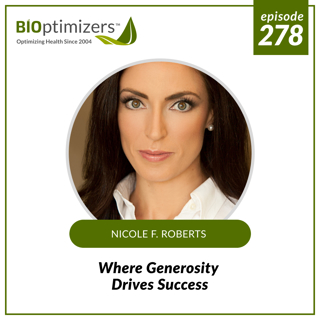
278: Where Generosity Drives Success - with Nicole F. Roberts

278: Where Generosity Drives Success - with Nicole F. Roberts

Dr. Nicole F. Roberts is a catalyst for change with a deep understanding of human behavior and public health systems. Her work spans diverse cultures and sectors, focusing on how generosity, authentic...

24 Tammi 20251h 33min
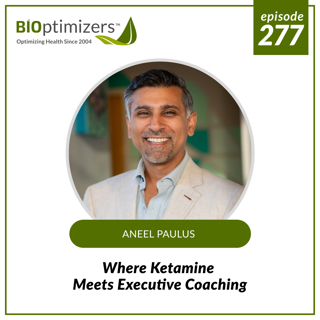
277: Where Ketamine Meets Executive Coaching - with Aneel Paulus

277: Where Ketamine Meets Executive Coaching - with Aneel Paulus

The convergence of ketamine therapy and executive coaching is an innovative approach to personal and professional growth, drawing from neuroscience, psychology, and leadership development. Ketamine fo...

16 Tammi 20251h 12min
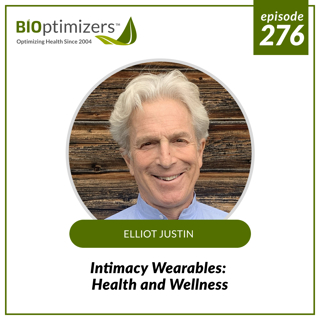
276: Intimacy Wearables: Health and Wellness - with Elliot Justin

276: Intimacy Wearables: Health and Wellness - with Elliot Justin

The Innovation Journey Elliot Justin, an emergency physician, was inspired to explore sexual health and rehabilitation techniques following a horseback riding accident in 2015. He experimented with ne...

19 Joulu 20241h 7min

275: From Corporate Stress to Holistic Healing - with Adam Parker

275: From Corporate Stress to Holistic Healing - with Adam Parker

Adam Parker's story begins in the bustling corporate environment of London. The high-stress lifestyle took its toll, manifesting in poor digestion, anxiety, and low testosterone. Symptoms like hair lo...

12 Joulu 202455min

274: Natural Facelifts with Bio-Photon Energy - with Cathy Goldstein

274: Natural Facelifts with Bio-Photon Energy - with Cathy Goldstein

Cathy Goldstein's Journey After battling Crohn's disease and finding traditional medicine insufficient, Cathy Goldstein discovered the power of energy medicine through acupuncture. This experience led...

5 Joulu 20241h 2min
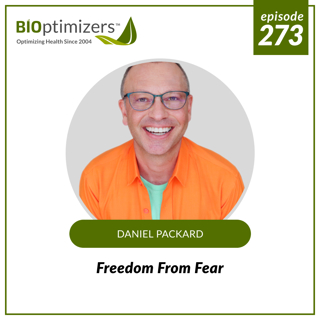
273: Freedom From Fear - with Daniel Packard

273: Freedom From Fear - with Daniel Packard

Daniel Packard, a mechanical engineer, spent eight years researching and developing a system to help people overcome the "funky 5": anxiety, perfectionism, procrastination, people-pleasing, and self-d...

21 Marras 20241h 14min

Suosittua kategoriassa Terveys ja hyvinvointi

unicast
voi-hyvin-meditaatiot-2
psykopodiaa-podcast
vakeva-elama-viisaampi-mieli-vahvempi-keho
tiedenaiset-podcast
rss-pitaisko-erota
puhu-muru
terapiassa
rss-narsisti
rss-kuumilla-aalloilla
rss-pt-paahtio
katilon-kahvitunti
meditaatiot-suomeksi
junnut-pelissa
rss-uplevel-by-sonja-hannus
rss-addiktit
rss-rentoudu-podcast-rentoutumiseen-hanna-viljanmaa
fitnesskulmapodcast
audio-sport-juoksu
rss-kyykkya-ja-kuoharia