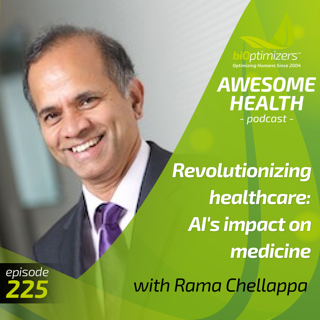
225: Revolutionizing healthcare: AI's impact on medicine - with Rama Chellappa

225: Revolutionizing healthcare: AI's impact on medicine - with Rama Chellappa

Artificial Intelligence (AI) has become an integral part of modern medicine, with its potential for helping diagnose and treat diseases and improve patient outcomes.

AI can be used in a variety of ways to improve medical care, from providing personalized medical advice to detecting medical errors.

Rama Chellappa, a computer vision researcher and professor at the University of Maryland, has been studying AI for nearly 40 years. He believes that AI can be used to provide better healthcare, with its ability to analyze vast amounts of data and make more accurate diagnoses.

AI can also be used to monitor and detect changes in patient health and alert doctors when changes occur.

For example, it can be used to monitor a patient's vital signs, such as pulse and blood pressure, and alert medical personnel if changes are detected.

It can also be used to analyze medical imaging, such as MRI and CT scans, for potential health issues.

In general, AI can be used to:

  • Detect tumors or other abnormalities in imaging.
  • Help with drug development and clinical trials, by monitoring patients and providing feedback to researchers.
  • Prevent and treat diseases, by providing personalized advice and recommendations to patients.
  • Track a patient's diet, exercise, and medication, and provide suggestions on how to improve their health.
  • Provide virtual counseling and therapy to patients, as well as provide support and resources to those in need.

AI can also be used to reduce medical errors, by providing more accurate diagnoses and monitoring patient health more closely.

In summary, AI is becoming increasingly important in the medical field, and its potential is only beginning to be realized.

As it continues to improve, it can provide medical professionals with more accurate diagnoses and provide patients with better care.

Can AI prevent pandemics in the future?

In today's world, the unpredictability of pandemics has become a major concern for many. AI has emerged as a potential solution to this problem, with many believing that it can be used to predict and prevent pandemics.

According to Rama Chellappa, when faced with a pandemic, it is difficult to expect that all decisions will be purely rational and perfect.

This is especially true in the case of the recent Covid-19 pandemic, where the full story and consequences were unclear.

Chellappa suggests that post-pandemic analysis is important in order to be better prepared for future pandemics. AI can be used to help with this analysis, by providing data-driven insights into the causes of pandemics and their effects.

AI can also be used to analyze data from social media sources, helping to identify potential pandemic-related trends and outbreaks.

AI can also be used to help with ethical considerations during pandemics. AI can be used to help ensure that decisions made by governments and private entities are fair and unbiased.

Additionally, AI can be used to monitor medical data and ensure that it is kept private and secure.

Finally, AI can also be used to help with the prevention of pandemics. AI can be used to analyze data on potential pandemic-causing agents, helping to identify and eliminate risks before they become a problem. AI can also be used to monitor health conditions and alert authorities to potential pandemic threats.

How AI can create harmony between Doctors and Patients

According to Chellappa, AI technology can help doctors provide more personalized care by continuously monitoring patient health data and providing reminders to take medications or exercise.

It can also help doctors remember important details about a patient's health by storing electronic health records, diagnostic images, and conversations between doctors and patients.

Chellappa believes that AI can help bridge the gap between patient and doctor by providing the doctor with quantitative data that can help inform decisions.

For example, AI can be used to analyze motion-related disorders or to determine how many calories are in a meal.

Chellappa also believes that AI can help foster trust between a doctor and patient by providing an impartial source of information.

On this podcast, you will learn about:

  • How can AI be used in medicine?
  • What is the difference between specific and general AI?
  • How can AI help doctors provide better care for their patients?
  • How can AI be used to create harmony?
    And so much more

EPISODE RESOURCES:

https://engineering.jhu.edu

https://www.press.jhu.edu

https://www.linkedin.com

https://scholar.google.com

Jaksot(304)

272: Ditch the Diets, Build a Foundation - with Joe Hoye

272: Ditch the Diets, Build a Foundation - with Joe Hoye

Joe Hoye, a health coach and author of The Diet Detox, challenges the traditional dieting mindset and its negative impacts on the body. He offers an alternative approach that emphasizes sustainable we...

14 Marras 20241h 6min
271: DNA: Your Health Blueprint - with Elwin Robinson

271: DNA: Your Health Blueprint - with Elwin Robinson

Have you ever wondered why some people seem to effortlessly maintain a healthy weight while others struggle despite their best efforts? Or why do certain individuals experience anxiety and depression ...

24 Loka 20241h 5min
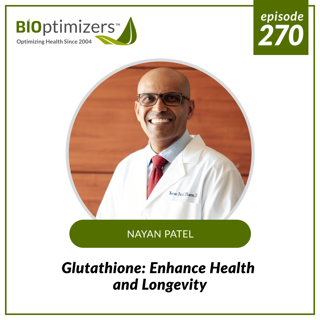
270: Glutathione: Enhance Health and Longevity - with Nayan Patel

270: Glutathione: Enhance Health and Longevity - with Nayan Patel

Dr. Nayan Patel is a pharmacist and wellness expert who has worked with physicians to develop custom medications and personalized drug and nutrition plans for patients. He has been the pharmacist of c...

17 Loka 202459min
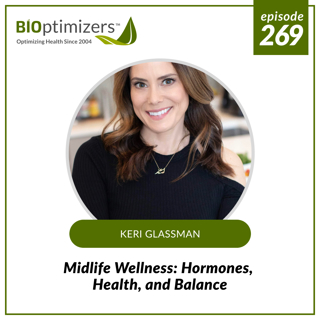
269: Midlife Wellness: Hormones, Health, and Balance - with Keri Glassman

269: Midlife Wellness: Hormones, Health, and Balance - with Keri Glassman

Keri Glassman, a nationally recognized Registered Dietitian, acclaimed author of four best-selling books, and media personality, has spent over two decades empowering individuals to lead healthier, ha...

3 Loka 20241h 1min

268: Mastering Sustainable Health - with Jessie Hehmeyer

268: Mastering Sustainable Health - with Jessie Hehmeyer

Jessie Hehmeyer's journey into functional medicine began with her personal struggles with weight and digestion. Searching for solutions beyond conventional methods, she discovered the importance of ma...

26 Syys 202458min
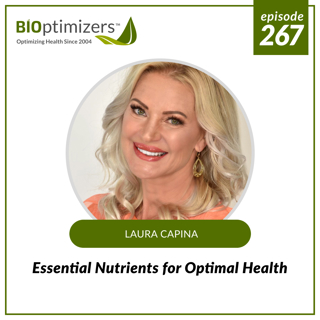
267: Essential Nutrients for Optimal Health - with Laura Capina

267: Essential Nutrients for Optimal Health - with Laura Capina

Dr. Laura Capina, a seasoned acupuncturist and health enthusiast, has eagerly anticipated the opportunity to share her insights on a podcast for three years. Growing up in Latvia, she was immersed in ...

18 Heinä 202456min

266: Path to Pain-Free Yoga - with Yogi Aaron

266: Path to Pain-Free Yoga - with Yogi Aaron

Yogi Aaron's journey in the yoga world began in the mid-1990s, a time when the practice was gaining traction globally. Practicing alongside notable individuals like Wade Morrison and witnessing the ri...

4 Heinä 20241h 9min

265: Championing Holistic Beauty - with Hannah Minardi

265: Championing Holistic Beauty - with Hannah Minardi

Hannah Minardi, a passionate advocate for health and wellness in skincare, offers profound insights into maintaining youthful beauty without compromising health. Recently, she emphasized the importanc...

27 Kesä 20241h

Suosittua kategoriassa Terveys ja hyvinvointi

unicast
voi-hyvin-meditaatiot-2
psykopodiaa-podcast
vakeva-elama-viisaampi-mieli-vahvempi-keho
tiedenaiset-podcast
rss-pitaisko-erota
puhu-muru
terapiassa
rss-narsisti
rss-kuumilla-aalloilla
rss-pt-paahtio
katilon-kahvitunti
meditaatiot-suomeksi
junnut-pelissa
rss-uplevel-by-sonja-hannus
rss-addiktit
rss-rentoudu-podcast-rentoutumiseen-hanna-viljanmaa
fitnesskulmapodcast
audio-sport-juoksu
rss-kyykkya-ja-kuoharia