President of Wave Neuroscience Dr. Erik Won on "Ground-Breaking Technology That is Changing the Future of Mental Health"

President of Wave Neuroscience Dr. Erik Won on "Ground-Breaking Technology That is Changing the Future of Mental Health"

Welcome back to the Neuroscience Meets Social and Emotional Learning podcast, episode #89 with Dr. Erik Won, a Harvard trained doc turned Navy flight surgeon before becoming CTO of Boeing Aerospace. Now he is the President and CMO of Wave Neuroscience, a company dedicated to creating a world where every individual—regardless of socioeconomic status, can improve their mind. Erik and the team at Wave Neuroscience are the world leading experts in Brain Health, Brain Injuries, PTSD, Depression/Anxiety among others. The tech they’ve pioneered involves using computational analytics to solve problems that have never been tackled before in the mental health space and they are doing it non-evasively, with no medications of any kind.

Watch the interview with Dr. Won on YouTube here.

I feel so lucky to have been introduced to Dr. Won, from another podcaster, Luke DePron,[i] a former actor, turned lifestyle and fitness entrepreneur who told me that I needed to take a look at the WaveNeuro[ii] Science Team. Luke sent me a link to the podcast he did with Dr. Erik Won and Navy Seal Ned Mason[iii], (if you want to listen to it, you can access it in the show notes). I was blown away with what Erik and his team are doing. If you have been interested in our past few episodes where we talk about the importance of looking at the brain, to improve performance, you will know that this is not just something that is for those involved in Special Operations in the military, elite athletes, or for people who are struggling with a brain disorder. The WaveNeuro Science Team is dealing more and more with mainstream people, like you and me, who are looking to improve their performance.

Welcome Dr. Won, thank you so much for agreeing to come on the podcast to share what you are doing to help the world to improve their brains and minds with this groundbreaking technology.

Before we get to the questions, I wanted to let you know that I watched your interview with Dhru Purohit (Proit) on his Broken Brain Podcast, and I’m so glad I watched that interview, prior to this one. My last podcast episode was with Dr. Andrew Newberg, the Director of Research at the Marcus Institute of Integrative Health at Thomas Jefferson University Hospital, who has dedicated his research to a topic he calls neurotheology, or connecting our brain to our spiritual and religious nature, so when I heard that you actually considered becoming a priest, early in your career, I didn’t think it was an accident that I have this opportunity to interview you after Dr. Newberg, and learn how you chose your current career path, driving you with your mission and purpose to help people with their mental health, which we need more than ever these days.

Dr. Won, to get straight into the questions, I was drawn to your work after listening to your interview with Luke DePron because my husband and I recently had a SPECT image brain scan, to see if we could learn anything about ways to improve our health. I was taking tons of notes and had to rewind the interview a few times to learn how you are measuring the activity in the brain and diagnosing ways to optimize brain health with your ground breaking technology.

    What is the difference between a SPECT image brain scan, and how you are scanning brains at WaveNeuro.com using EEG? Can you explain exactly how the EEG scans work? Let’s say, if I’m an athlete with a traumatic brain injury, and I come in to get an EEG scan, what would your technology and treatment program look like after the scan? From the brain scans that you have done, what are seeing in the brains of regular people vs elite athletes? Is a faster processing brain better? Can you look at someone and guess, oh they are healthy, I bet their brain is processing on the higher side? What has surprised you the most from the research you have been doing the past 10 years, and over 10,000 brain scans? I know that brain scans seem to be something that elite athletes do, to improve performance, and they have the reputation of being expensive. What do you think the future holds for people who want to “look” at their brain to optimize performance? Will it eventually be something everyone could do for a low cost, or even free, do you think? We are seeing loud and clear that there are some staples for brain health that we should all be aware of. (Improving sleep, Diet, Exercise, Optimizing Our Microbiome, and Intermittent Fasting). What are the most important health staples that you are seeing, with your work in this field? What about memory? I’ve mentioned that I scored low on my brain scan with memory recall. Is this something that you think we should just work on (to improve memory muscle?) What about processing speed. I also scored low on my ability to hit a key on a keyboard over and over again. What is processing speed important for with everyday life, and of all the people you come to see, what are most people worried about the most? Can you spot diseases like Alzheimer’s in the brain from your EEG scans? I was speaking with Sean Bartlett, your public relations manager, preparing for this interview, to capture your vision for the future with these questions, and he let me know that something that’s important to you is to find a more functional way of diagnosing mental health issues in the future. He shared with me an article by the former NIMH Director, Thomas Insel,[iv] that talks of the new direction for the Diagnostic and Statistical Manual for Mental Disorders (DSM-5). How is your work with the brain helping to take the subjectivity out of mental health and aiming for a new functional way of diagnosing mental health in the future? To bring this podcast to a close, is there anything important that we have missed, that you think is important to cover, to end on a positive note for those listening around the world?

Thank you so much Dr. Won for your time today, to explain this mind-blowing technology to us. To learn more about about WaveNeuro Science, I will post the links in the show notes, and anyone can go to www.waveneuro.com, find LinkedIn @wave-neuroscience, Instagram, Twitter and Facebook @Waveneuro.

https://waveneuro.com

Facebook: https://www.facebook.com/WaveNeuro/

Instagram: https://www.instagram.com/WaveNeuro/

Twitter: https://www.twitter.com/WaveNeuro/

LinkedIn: https://www.linkedin.com/company/wave-neuroscience

RESOURCES:

EEG vs MRI vs FMRI “What’s the Difference” by Bryn Farmsworth, Ph.D July 12, 2019 https://imotions.com/blog/eeg-vs-mri-vs-fmri-differences/

Dr. David Perlmutter’s “Alzheimer’s: The Science of Prevention” EPISODE 10 on Sleep https://scienceofprevention.com/

About Blue Light and Your Health https://rhythmoptics.com/pages/how-blue-light-effects-health

Health Benefits of Transcendental Meditation https://www.webmd.com/balance/guide/transcendental-meditation-benefits-technique

If You Feel Thankful, Write it Down. It’s Good for Your Health (Dec. 24th, 2018). https://www.npr.org/sections/health-shots/2018/12/24/678232331/if-you-feel-thankful-write-it-down-its-good-for-your-health

WOOP Device for Measuring Sleep https://www.whoop.com/thelocker/how-well-whoop-measures-sleep/

Oura Ring for Sleep Tracking https://ouraring.com/

Apple Watch Series 6 for Sleep Tracking https://www.youtube.com/watch?v=088iZo3grgM

Matthew Walker Why We Sleep (Oct. 3, 2017) https://www.amazon.com/Why-We-Sleep-Matthew-Walker-audiobook/dp/B0752XRB5F/ref=sr_1_1?dchild=1&keywords=why+we+sleep&qid=1602444165&sr=8-1

Ketones Improves Apolipoprotein E4-related memory deficiency via sirtuin 3

https://pubmed.ncbi.nlm.nih.gov/31280254/

2-Photon Excitation Microscopy https://www.ncbi.nlm.nih.gov/pmc/articles/PMC4004770/

How Sleep Cleans the Brain https://www.nih.gov/news-events/nih-research-matters/how-sleep-clears-brain

11 Ways Your Life Can Disrupt the Gut Microbiome https://atlasbiomed.com/blog/11-ways-your-life-can-disrupt-the-gut-microbiome/

REFERENCES:

[i] Luke Depron, former actor, turned lifestyle and fitness expert and host of The Live Great Lifestyle Podcast https://lukedepron.com/

[ii] WaveNeuro.com Team Understanding and Improving Your Cognitive Health https://www.waveneuro.com/

[iii] Luke Depron, host of Live Great Lifestyle on Understanding Your Brain Function and Performance https://podcasts.apple.com/us/podcast/neuroscience-brain-health-optimize-your-brain-function/id1375402072

[iv] Post by former NIMH Director Thomas Insel on Transforming Diagnosis. https://www.nimh.nih.gov/about/directors/thomas-insel/blog/2013/transforming-diagnosis.shtml

Tämä jakso on lisätty Podme-palveluun avoimen RSS-syötteen kautta eikä se ole Podmen omaa tuotantoa. Siksi jakso saattaa sisältää mainontaa.

Jaksot(406)

How Movement Builds the Brain, the Body & Human Performance (Phase 3 Introduction)

How Movement Builds the Brain, the Body & Human Performance (Phase 3 Introduction)

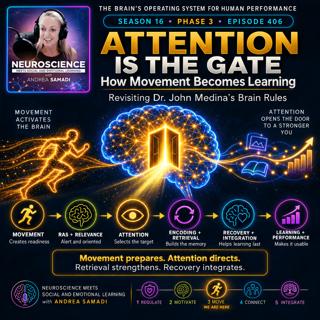
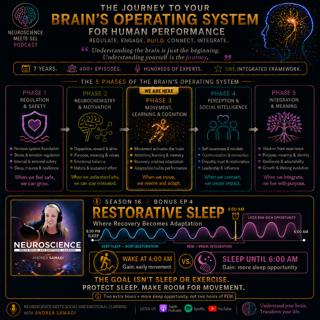
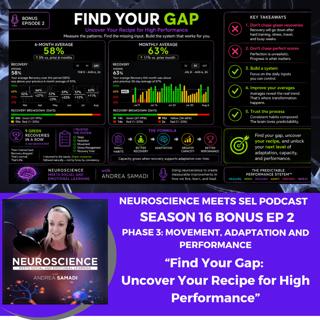
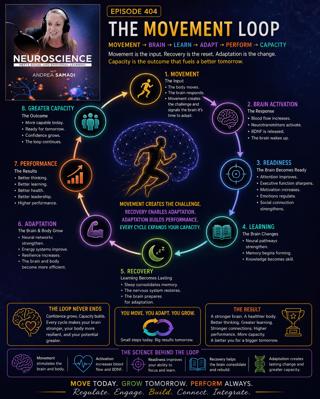
Season 16, Episode 402 explores the Brain's Operating System for Human Performance, focusing on Phase 3: movement, adaptation, and performance. Andrea Samadi explains how movement triggers neurochemic...

12 Heinä 25min

Trust as the Foundation with Greg Hill: How Great Leaders Create the Conditions for Learning, Growth and Performance

Trust as the Foundation with Greg Hill: How Great Leaders Create the Conditions for Learning, Growth and Performance

In episode 401 Andrea Samadi welcomes Greg Hill to explore why trust is the essential foundation for learning, growth, and high performance. They discuss how trust creates psychological safety, encour...

27 Kesä 37min

Episode 400: Sales Leadership Under Pressure with Majid Samadi: 7 Lessons Learned from 7 Years of Neuroscience

Episode 400: Sales Leadership Under Pressure with Majid Samadi: 7 Lessons Learned from 7 Years of Neuroscience

In this milestone episode (400), Andrea Samadi celebrates seven years of the Neuroscience Meets SEL Podcast with her husband Majid Samadi. They reflect on the journey of translating neuroscience into ...

20 Kesä 47min

Phase 2 Review: The Motivation Loop: How to Keep Effort Worthwhile

Phase 2 Review: The Motivation Loop: How to Keep Effort Worthwhile

Episode 399 reviews Phase 2 of Season 15 and introduces the Motivation Loop — the sequence of meaning, belief, attention, action, reward, and recovery that drives sustained effort. The episode explain...

14 Kesä 28min

Fun, Fear, Focus: Closing the Motivation Loop with Friederike Fabritius

Fun, Fear, Focus: Closing the Motivation Loop with Friederike Fabritius

Episode 398 revisits neuroscientist Friederike Fabritius (from November 2022) to explain how three ingredients — fun (dopamine), fear (productive challenge), and focus — create the neurochemical condi...

9 Kesä 23min

Move to Learn: How Movement Activates the Brain and Fuels Motivation (with Dr. Chuck Hillman and Paul Zientarski)

Move to Learn: How Movement Activates the Brain and Fuels Motivation (with Dr. Chuck Hillman and Paul Zientarski)

Season 15, Episode 397 revisits research and real-world practice showing movement is more than fitness: it activates the brain, boosts attention, enhances learning, and sustains motivation. Dr. Chuck ...

31 Touko 35min

Dopamine, Motivation and Why the Brain Repeats Behavior with Dr. Anna Lembke

Dopamine, Motivation and Why the Brain Repeats Behavior with Dr. Anna Lembke

Host Andrea Samadi welcomes Dr. Anna Lembke to explain how pleasure and pain share the same neural circuitry and how dopamine governs motivation. The episode explores why overconsumption of easy rewar...

24 Touko 23min

Theory of Mind: The Missing Link Between Attention, Reward, and Motivation with John Medina

Theory of Mind: The Missing Link Between Attention, Reward, and Motivation with John Medina

Episode 395 explores how theory of mind — our ability to understand others' intentions — drives attention, emotional relevance, and reward, shaping motivation and behavior. Dr. John Medina explains wh...

17 Touko 37min

Suosittua kategoriassa Koulutus

rss-murhan-anatomia
psykopodiaa-podcast
voi-hyvin-meditaatiot-2
adhd-podi
kesken
rss-arkea-ja-aurinkoa-podcast-espanjasta
rss-niinku-asia-on
ihminen-tavattavissa-tommy-hellsten-instituutti
rss-liian-kuuma-peruna
rss-perho-rajoilla
rss-koira-haudattuna
rss-rahamania
rss-luonnollinen-synnytys-podcast
rss-tietoinen-yhteys-podcast-2
rss-narsisti
rss-keskeneraiset-aidit
rss-ihana-elamani
rss-rahataito-podcast
rahapuhetta
rss-kompleksinen-kaksikko