Bonnie Burstow and Nick Walker - An Introduction to Cognitive Liberty

Bonnie Burstow and Nick Walker - An Introduction to Cognitive Liberty

This week, Mad in America editor Emily Sheera Cutler presents the first in a series of interviews that examine the many important issues around forced treatment and cognitive liberty. The series will examine philosophical, theological, and sociological perspectives on coercive treatment.

In this first part, Emily interviews two well known and very respected academics and activists Bonnie Burstow and Nick Walker. Central to both Bonnie and Nick's work is the concept of cognitive liberty or freedom and integrity of the mind. Early proponents of cognitive liberty have defined it as the right to control one's own consciousness and be free from mind-altering drugs and technologies, as well as the right to use mind-enhancing drugs and technologies without facing legal consequences. Contemporary proponents of cognitive liberty have expanded the definition to include the right to experience and express each and every thought, feeling, state of mind, and belief as long as it does not harm anyone else. Both Bonnie and Nick describe cognitive liberty as the right to express oneself authentically. In this first episode, they get to the core of why so many human rights activists oppose forced treatment – it can interfere with people's rights to be themselves.

In this episode we discuss:

  • How Bonnie became an antipsychiatry activist and scholar, and why she sees the institution of psychiatry as a human rights violation
  • How Nick became a neurodiversity scholar through his involvement with the Autistic rights movement
  • The difference between the neurodiversity paradigm, which views neurological, mental, and cognitive differences on the natural spectrum of human diversity, and the pathology paradigm, which assumes there is a right way or healthy way of being and to differ from it is unhealthy
  • What it means for each person to have cognitive liberty and be able to express their own unique way of being and processing the world without repercussions
  • How psychiatry curtails our cognitive liberty and freedom of mind by pathologizing difference to justify forceful and coercive measures
  • The social model of disability, which states that people are disabled by lack of access and discrimination, not by medical conditions or internal deficits
  • How the social model of disability intersects with neurodiversity and antipsychiatry but also falls short
  • That Applied Behavior Analysis (ABA) constitutes a human rights abuse against Autistic children, forcing and coercing them to act more normal and less different
  • That other behaviour therapies and even humanistic therapies can be coercive as well
  • That the autism industry profits off of the pathology paradigm, convincing parents there is something wrong with their Autistic children and that it is not okay to be Autistic, and their children need to be subjected to ABA and other "treatments"
  • How antipsychiatry and neurodiversity intersect with feminism and queer studies
  • Why it is necessary for educators to teach students "mad literacy" from an early age
  • The importance of writing and publishing literature with accurate, positive representations of neurodivergent and Mad people
  • How we can build communities in which people support one another through emotional distress without violating anyone's autonomy or restricting anyone's freedom
  • Why the conventional notion of "suicide prevention" is problematic and can serve to take away people's coping skills
  • How the ideas of somatic therapy can help us support people in distress

Relevant Links

Bonnie Burstow

Nick Walker

Bonnie Burstow's articles for Mad in America

The Bonnie Burstow Scholarship in Antipsychiatry

Autonomous Press

Throw Away the Master's Tools: Liberating Ourselves from the Pathology Paradigm by Nick Walker

Neuroqueer: An Introduction by Nick Walker

The social model of disability vs. the medical model of disability

To get in touch with us email: podcasts@madinamerica.com

© Mad in America 2017

Jaksot(292)

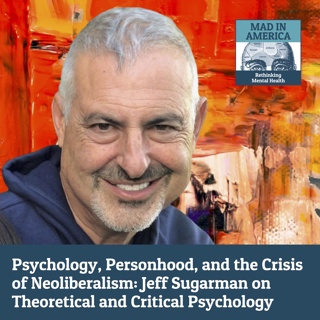
Psychology, Personhood, and the Crisis of Neoliberalism: Jeff Sugarman on Theoretical and Critical Psychology

Psychology, Personhood, and the Crisis of Neoliberalism: Jeff Sugarman on Theoretical and Critical Psychology

Jeff Sugarman is a distinguished scholar in theoretical and philosophical psychology, known for his work examining the psychology of selfhood, human agency, and the sociopolitical underpinnings of psy...

19 Maalis 202553min
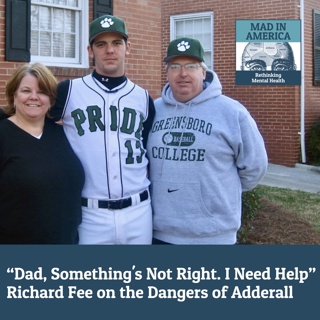
"Dad, Something's Not Right. I Need Help"- Richard Fee on the Dangers of Adderall

"Dad, Something's Not Right. I Need Help"- Richard Fee on the Dangers of Adderall

Welcome to the Mad in America podcast. My name is Brooke Siem, and I'm the author of May Cause Side Effects. Today, I'm here with Rick Fee, president of the Richard Fee Foundation. Rick joins us to ta...

5 Maalis 202547min
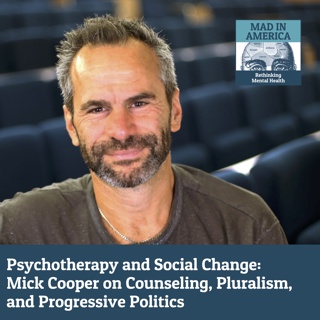
Psychotherapy and Social Change: Mick Cooper on Counseling, Pluralism, and Progressive Politics

Psychotherapy and Social Change: Mick Cooper on Counseling, Pluralism, and Progressive Politics

Mick Cooper is a leading voice in contemporary counseling psychology, known for his work at the intersection of psychotherapy and social change. A Professor of Counseling Psychology at the University ...

19 Helmi 202545min
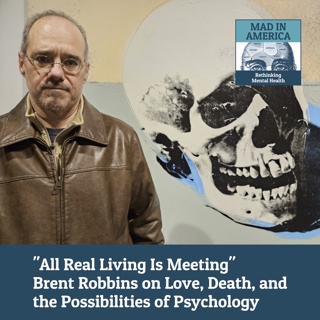
All Real Living Is Meeting - In Conversation With Brent Robbins - Part 2

All Real Living Is Meeting - In Conversation With Brent Robbins - Part 2

Brent Dean Robbins is a psychologist, scholar, and all-around thoughtful human whose work has profoundly shaped existential and humanistic psychology. He is one of those rare thinkers who makes psych...

12 Helmi 202552min

All Real Living Is Meeting - In Conversation With Brent Robbins - Part 1

All Real Living Is Meeting - In Conversation With Brent Robbins - Part 1

Brent Dean Robbins is a psychologist, scholar, and all-around thoughtful human whose work has profoundly shaped existential and humanistic psychology. He is one of those rare thinkers who makes psych...

12 Helmi 202553min
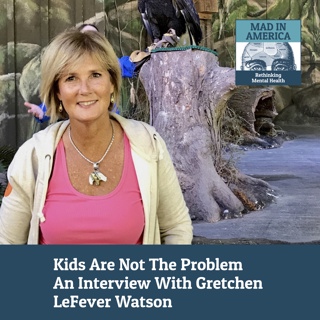
Kids Are Not The Problem: An Interview With Gretchen LeFever Watson

Kids Are Not The Problem: An Interview With Gretchen LeFever Watson

In this interview, Brooke Siem, who is the author of a memoir on antidepressant withdrawal, May Cause Side Effects, interviews Gretchen LeFever Watson, PhD. Gretchen is a developmental and clinical ps...

22 Tammi 202546min
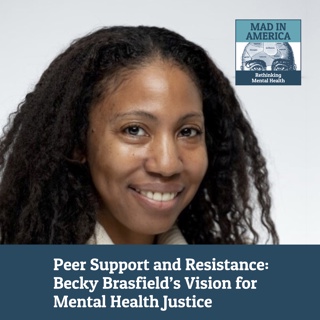
Peer Support and Resistance - Becky Brasfield's Vision for Mental Health Justice

Peer Support and Resistance - Becky Brasfield's Vision for Mental Health Justice

Becky Brasfield has emerged as a formidable advocate for change in the complex landscape of mental health care. A certified recovery support specialist and policy researcher at the Human Services Rese...

8 Tammi 202540min
Mad Sisters: An Interview With Susan Grundy

Mad Sisters: An Interview With Susan Grundy

Susan Grundy is an author who writes about the weight of emotional distress and an easier way of being. Her book, Mad Sisters, is a highly personal account of her caregiving journey for an older siste...

11 Joulu 202448min

Suosittua kategoriassa Terveys ja hyvinvointi

unicast
voi-hyvin-meditaatiot-2
psykopodiaa-podcast
vakeva-elama-viisaampi-mieli-vahvempi-keho
tiedenaiset-podcast
rss-pitaisko-erota
puhu-muru
rss-narsisti
terapiassa
rss-kuumilla-aalloilla
rss-uplevel-by-sonja-hannus
junnut-pelissa
rss-rakas-mielenterveyteni
katilon-kahvitunti
meditaatiot-suomeksi
selviytyjat-tarinoita-elamasta
rss-duodecim-lehti
rss-ehjaksi
rss-vapaudu-voimaasi
rss-kyykkya-ja-kuoharia