How Much Protein a Runner Really Needs: Dr. Robert Wolfe

How Much Protein a Runner Really Needs: Dr. Robert Wolfe

As runners, we think about how to fuel properly. That includes carbohydrate and protein, but what about essential amino acids? How do they help us optimize our nutrition to become the best runners we can be?

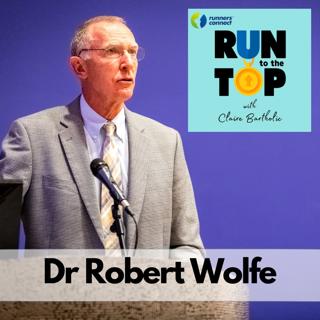
Dr. Robert Wolfe, Ph.D, is here to talk as both a scientist and a runner. As the director of the Center for Translational Research on Aging and Longevity at the University of Arkansas, he focuses his research on the regulation of muscle metabolism. His research publications have been cited an impressive 75,000+ times, and he shares how amino acids might be able to help your performance and recovery.

Dr. Wolfe has also been running for 60 years and has run an amazing 62 marathons under 2:30 in his lifetime! Coach Claire talks to him about his running career, how to stay young and healthy, what happens in the body when we run, and how our food can help us before, during, and after the run.

Dr. Wolfe also shares his thoughts on the importance of keeping a consistent exercise routine as we age, so there's definitely a lot of great food for thought in this episode!

Dr. Wolfe's undergraduate studies were at the University of California, Berkeley, and he completed his Ph.D. degree at UC Santa Barbara's Institute of Environmental Stress. Dr. Wolfe served as a faculty member at Harvard Medical School for nine years. Prior to accepting his current position in 2006, he was at the UT Medical Branch at Galveston, where he held the John H. Sealy Distinguished Chair in Clinical Research and was Chief of the Metabolism Unit at Shriners Burns Hospital.

Dr. Wolfe has received a number of awards and invited lectureships in recognition of his work. He received the Herman Award from the American Society of Clinical Nutrition for his career contributions. He has published over 452 peer-reviewed research articles, 126 review articles, three books, including the major reference source in the field of stable isotope tracer methodology and has 5 patents. His papers have been cited 50,663 times (h index= 122), and 16,423 (h index =65) since 2011. Dr. Wolfe has been funded continuously by the NIH for his entire career and frequently held two NIH grants per year as Pl.

The focus of Dr. Wolfe's research is on the regulation of muscle metabolism, particularly as affected by aging and stressors such as injury, sepsis and cancer. His research has been performed largely in human patients and normal volunteers. Dr. Wolfe has developed models using stable isotopes to quantify a variety of metabolic processes in human subjects including the oxidation and production of fatty acids, various aspects of carbohydrate metabolism, and the rates of muscle protein synthesis, breakdown, and the transport of amino acids between blood and muscle tissue. Dr. Wolfe is the Director of the Center for Translational Research in Aging and Longevity at the Reynolds Institute on Aging.


Questions Bob is asked:

3:33 Before we talk about the science of exercise metabolism, I want to hear about your running journey. You've been a runner for over 50 years with 62 marathons under 2:30. Can you tell us a little bit about what your story is and how you started?

5:15 I can't imagine that every single run was super fun, so I would love to talk about what your training was like, how you trained for marathons and what are the key ingredients in the recipe for a marathon?

8:06 How old were you when you did your last sub-2:30 marathon?

8:59 As far as fueling goes, what does an endurance athlete need before, during, and after exercise?

12:09 What are amino acids? What are the different kinds (essential, branched chain, etc)? And how are they used in the body?

14:56 When we're eating enough dietary protein, does that mean we are automatically eating enough of the essential amino acids that we need?

16:53 What is the optimal amount of essential amino acids we as individuals need?

18:44 Obviously protein requirements are going to be different for an endurance runner and a bodybuilder, right?

22:51 Is the purpose of taking amino acid supplements to get everything you need for optimum performance without having to eat more food?

25:24 Is there a limit to how much amino acids the body can absorb at one?

27:55 Does the body have a way of storing essential amino acids?

29:22 If you take in too much essential amino acids, do you just excrete it?

29:44 How are the amino acids from the Amino Company produced?

32:09 How do you use amino acid supplements? Do you take it before your run, after, or even during?

36:40 When you are taking amino acids during exercise, do they activate hormones in your body?

41:00 Does your company have an amino acid formulation to help me with my insomnia too?

41:41 Besides leading the Amino Company, you are also the director of the center for translational research on aging and longevity at the University of Arkansas. So what's the secret to staying youthful and vital as we age?

43:39 Do older athletes have an advantage when it comes to longevity and aging?


Questions I ask everyone:

45:32 If you could go back and talk to yourself when you started running, what advice would you give?

47:02 What is the greatest gift running has given you?

47:54 Where can listeners connect with you?

Quotes by Bob:

"Generally speaking, I think the protein aspect of the diet is extremely important but as far as dietary protein, when you're eating as many as 4 or 5,000 calories a day, even a low protein diet is going to provide enough dietary protein to meet your protein requirements."

"It's important to understand that the dietary requirements are telling us not only how much protein we should eat, but how much of each individual essential amino acid we should eat, are predicated on the baseline amount we need to avoid deficiency. And so the key aspect, what we'll talk about with specific amino acid supplementation, is that for optimal physical functioning, particularly with stress like exercise training, that the baseline amount of essential amino acids that you need to avoid deficiency is really not optimal."

"One of the things that obviously we're trying to do is with running is to improve muscle function and muscle strength without increasing muscle bulk because it's just extra weight."

"The thing which is obvious when you see a lot of older people is that ability to function physically is really the primary determinant of quality of life. If you can't get up out of a chair then medical costs and everything else go out the window, but just being able to do the activities you like is so important."


Take a Listen on Your Next Run

Leave a space for libsyn link

Want more awesome interviews and advice? Subscribe to our iTunes channel

Mentioned in this podcast:

The Amino Company

The Center for Translational Research in Aging and Longevity | UAMS Donald W. Reynolds Institute on Aging

Runners Connect Winner's Circle Facebook Community

RunnersConnect Facebook page

RunnersConnect Retreats

Email Coach Claire

Follow Bob on:

Email Dr. Wolfe


We really hope you've enjoyed this episode of Run to the Top.

The best way you can show your support of the show is to share this podcast with your family and friends and share it on your Facebook, Twitter, or any other social media channel you use.

The more people who know about the podcast and download the episodes, the more I can reach out to and get top running influencers, to bring them on and share their advice, which hopefully makes the show even more enjoyable for you!


Tämä jakso on lisätty Podme-palveluun avoimen RSS-syötteen kautta eikä se ole Podmen omaa tuotantoa. Siksi jakso saattaa sisältää mainontaa.

Jaksot(768)

The #1 Easy Pace Mistake That Wrecks Your Fall Marathon Training

The #1 Easy Pace Mistake That Wrecks Your Fall Marathon Training

Welcome back to Run to the Top! After a year-long break, we're back with a new format, a new permanent co-host in Coach Sara, and a lineup of new segments designed to make this show more interactive a...

24 Kesä 38min
Learning From Injury Setbacks to Run Smarter & Faster

Learning From Injury Setbacks to Run Smarter & Faster

Pretty much every runner deals with injury setbacks. The silver lining is that the recovery process can teach many important lessons. Coach Andie Cozzarelli joins us on the show to chat about her own ...

25 Kesä 20251h 13min

Exploring The AI Running Revolution with Dr. John Holash and Dr. Cody Ray van Rassel

Exploring The AI Running Revolution with Dr. John Holash and Dr. Cody Ray van Rassel

The technological revolution has taken over running. Dr. John Holash and Dr. Cody Ray van Rassel are specialists in exercise physiology at the University of Calgary. We brought them on today's show to...

18 Kesä 20251h 31min
How Coach James McKirdy is Bringing the Pro Treatment to Everyday Runners

How Coach James McKirdy is Bringing the Pro Treatment to Everyday Runners

Coach James McKirdy is bringing the pro treatment to non-professional athletes by offering the McKirdy Micro Race series with services like personal pacing and bottle service. We brought James on to ...

11 Kesä 20251h

The Science Behind Ketones as Fuel Source with Founder of Ketone IQ Michael Brandt

The Science Behind Ketones as Fuel Source with Founder of Ketone IQ Michael Brandt

Michael Brandt founded Ketone IQ after noticing its high metabolic efficiency to make fueling with ketones easier. We're bringing him on the show to chat all about ketones including: How he got start...

4 Kesä 20251h 5min

Interview with Wayne Larden - TCS Sydney Marathon Race Director

Interview with Wayne Larden - TCS Sydney Marathon Race Director

The TCS Sydney Marathon is the newest Abbot World Marathon Major and we're joined by race director Wayne Larden to learn more about it. We'll answer questions like: How did the Sydney Marathon become...

28 Touko 202532min

How to Run with your Slower (or Much Faster) Friends

How to Run with your Slower (or Much Faster) Friends

Running in groups adds a social element to training but it can be tricky finding a pace that works for everyone involved. Today's show is all about getting the most out of training in groups and we'll...

21 Touko 202552min

Running News: Marathon Results Roundup, Grand Slam Track Debut, NCAA Paying Athletes Directly and More

Running News: Marathon Results Roundup, Grand Slam Track Debut, NCAA Paying Athletes Directly and More

We're covering the top news stories in running on today's show, including a roundup of headlines including: Top American performances at the Boston Marathon Women's course records at both the London ...

14 Touko 20251h 19min

Suosittua kategoriassa Terveys ja hyvinvointi

unicast
rss-pitaisko-erota
aamukahvilla
vakeva-elama-viisaampi-mieli-vahvempi-keho
psykopodiaa-podcast
meditaatiot-suomeksi
rss-kuumilla-aalloilla
voi-hyvin-meditaatiot-2
rss-uplevel-by-sonja-hannus
tiedenaiset-podcast
rss-pt-paahtio
rss-terapiaklubi
selviytyjat-tarinoita-elamasta
rss-mighty-finland-podcast
katilon-kahvitunti
paritellen
rss-narsisti
terapiassa
rss-sanelunpurku-podcast
rss-ehjaksi