Fabric Lakehouse Governance & Data Lineage: How Microsoft Fabric Tracks Data Flows, Permissions and Audit End to End

Fabric Lakehouse Governance & Data Lineage: How Microsoft Fabric Tracks Data Flows, Permissions and Audit End to End

Fabric Lakehouse Governance & Data Lineage

Most teams only notice their data lineage when something breaks—a number changes, a column disappears, or a report no longer matches the source. In this episode, we trace the full journey of your data inside Microsoft Fabric’s Lakehouse, from ingestion through transformation into analytics, and show how automatic lineage, permission inheritance and audit trails turn that “invisible middle” into a map you can actually govern.

We start with why modern analytics environments feel like a renovated building rather than a straight hallway. Data doesn’t flow in one simple pipeline; it weaves through pipelines, Lakehouse tables, semantic models and reports, often across multiple workspaces and teams. You’ll hear how Fabric’s built‑in lineage capture turns that maze into a visual chain: every Data Factory pipeline run, every Lakehouse table, every downstream dataset and report are linked automatically, so you can see exactly where a value changed instead of guessing across tools and exports.

Then we connect lineage to permissions and governance. Fabric uses workspaces as the central control point, so the same permission model applies across Lakehouse, semantic models and Power BI reports instead of fragmenting into separate ACLs at every layer. We unpack how permission inheritance means a locked‑down Lakehouse table stays locked when it feeds a dataset or report, reducing security drift and eliminating the classic gap where someone only meant to share a dashboard but accidentally exposed raw data underneath.

Finally, we look at why the audit trail is just as important as access control. With Fabric logging who changed what and when, you can move beyond “check the logs” as a last‑minute panic and treat it as a routine part of operations and compliance. By the end of the episode, you’ll see how lineage, permissions and audit work together: you don’t just know the current state of a dataset, you can reconstruct the full path it took, who touched it along the way, and where to focus your governance rules so they follow the data automatically instead of being maintained by hand.

WHAT YOU’LL LEARN
  • Why data paths in Fabric Lakehouse are more like a maze than a straight pipeline—and how automatic lineage makes that maze visible.
  • How Fabric’s workspace‑based permission model and inheritance keep Lakehouse, datasets and reports aligned.
  • How lineage metadata becomes the foundation for governance rules, not just pretty diagrams.
  • Why a unified audit trail across transformations and access changes is critical for troubleshooting and compliance.
THE CORE INSIGHT

The core insight of this episode is that governance only really works when it travels with the data. Once Microsoft Fabric captures lineage by default, applies permissions consistently across Lakehouse and analytics, and records who changed what and when, you move from guessing about how your data is used to being able to show it—step by step, end to end.

WHO THIS EPISODE IS FOR
  • Data and analytics teams running or planning a Fabric Lakehouse who need more than ad‑hoc documentation.
  • Governance, risk and compliance teams who require traceable data flows and consistent access control.
  • Architects who want a practical mental model for how lineage, permissions and audit fit together in Fabric.
ABOUT THE AUTHOR / HOST

Mirko Peters is a Microsoft 365 and data platform consultant and host of the M365.FM podcast, helping organizations design Fabric Lakehouse environments where lineage, governance and analytics work together instead of fighting each other. He works with data, BI and governance teams to turn invisible pipelines into mapped, governed data products that hold up under real‑world troubleshooting and audit pressure.

Become a supporter of this podcast: https://www.spreaker.com/podcast/m365-fm-modern-work-security-and-productivity-with-microsoft-365--6704921/support.

Tämä jakso on lisätty Podme-palveluun avoimen RSS-syötteen kautta eikä se ole Podmen omaa tuotantoa. Siksi jakso saattaa sisältää mainontaa.

Jaksot(720)

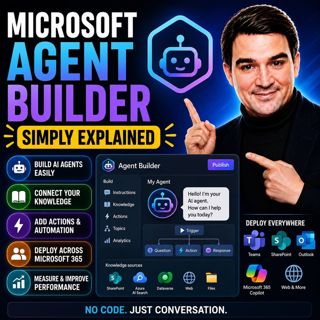
Microsoft Agent Builder — Simply Explained

Microsoft Agent Builder — Simply Explained

Building AI agents used to require developers, code, and complex AI platforms. Microsoft Agent Builder changes that completely. Built directly into Microsoft 365 Copilot, Agent Builder allows anyone t...

13 Heinä 15min
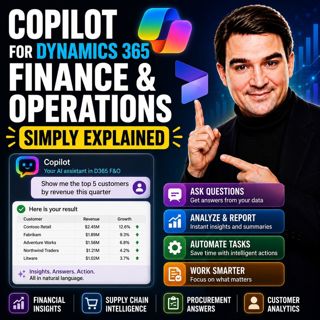
Copilot for Dynamics 365 Finance and Operations - Simply Explained

Copilot for Dynamics 365 Finance and Operations - Simply Explained

Finance teams have never struggled with a lack of data—they struggle with the time it takes to find, organize, analyze, and act on that information. Traditional ERP workflows often require switching b...

13 Heinä 11min

AI Under Attack: Building Zero Trust Security with Microsoft Copilot, Azure & Microsoft 365 - Mourtaza Fazlehoussen [MVP]

AI Under Attack: Building Zero Trust Security with Microsoft Copilot, Azure & Microsoft 365 - Mourtaza Fazlehoussen [MVP]

Artificial intelligence is transforming cybersecurity faster than any technology before it. But while AI helps defenders automate investigations and respond to incidents faster, it also gives cybercri...

13 Heinä 1h 1min
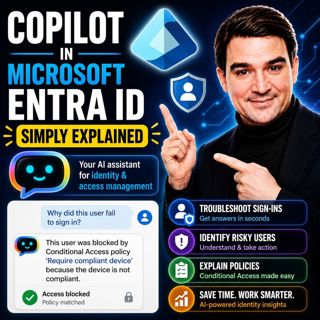
Copilot in Microsoft Entra ID - Simply Explained

Copilot in Microsoft Entra ID - Simply Explained

Managing identities has become one of the most challenging responsibilities for modern IT teams. Every day, organizations process thousands of sign-ins, evaluate Conditional Access policies, detect ri...

13 Heinä 14min
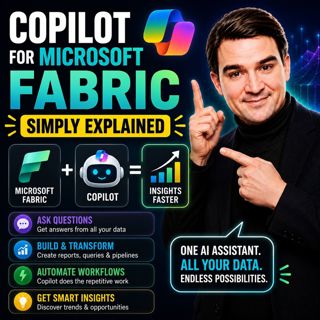
Copilot for Microsoft Fabric - Simply Explained

Copilot for Microsoft Fabric - Simply Explained

Microsoft has several Copilots, but each one serves a completely different purpose. Microsoft 365 Copilot helps you write documents and summarize meetings. GitHub Copilot helps developers write code. ...

13 Heinä 11min
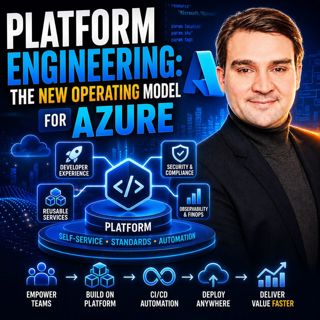
Platform Engineering: The New Operating Model for Azure

Platform Engineering: The New Operating Model for Azure

DevOps changed how software is built, but it didn't eliminate complexity—it simply redistributed it. As organizations adopted cloud platforms, Infrastructure as Code, containers, and CI/CD pipelines, ...

13 Heinä 1h 16min
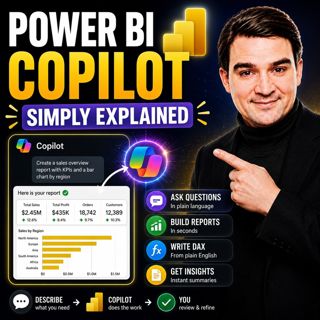
Power BI Copilot - Simply Explained

Power BI Copilot - Simply Explained

Power BI Copilot brings generative AI directly into Microsoft's business intelligence platform, helping users build reports, write DAX formulas, analyze data, and generate insights using natural langu...

13 Heinä 11min
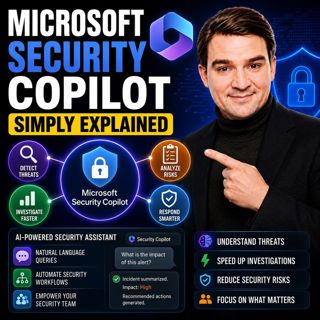
Microsoft Security Copilot - Simply Explained

Microsoft Security Copilot - Simply Explained

Security teams face a common challenge: thousands of security alerts, limited staff, and not enough time to investigate every incident. Most alerts turn out to be harmless, but hidden among them can b...

12 Heinä 13min

Suosittua kategoriassa Politiikka ja uutiset

aikalisa
uutiscast
ootsa-kuullut-tasta-2
rss-ootsa-kuullut-tasta
rss-podme-livebox
otetaan-yhdet
rss-seksicast
politiikan-puskaradio
tervo-halme
aihe
rss-vaalirankkurit-podcast
rss-girls-finish-f1rst
rss-mina-ukkola
rss-aijat-hopottaa-podcast
rss-mita-tapahtuu
rss-merja-mahkan-rahat
rss-raha-talous-ja-politiikka
rss-tekoalyfoorumi
rss-asiastudio
rss-pinnalla