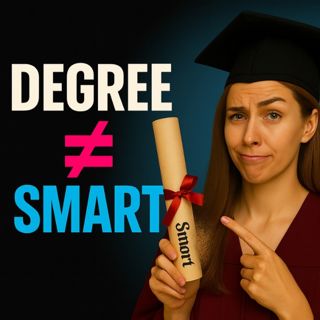

E173: Broke. Woke. Stroke. A tenured prof explains why college is failing
El Podcast17 Des 2025

E173: Broke. Woke. Stroke. A tenured prof explains why college is failing

Tenured sociology professor Mark Horowitz explains why falling preparedness, grade inflation, and perverse incentives are eroding college standards—and why “broke, woke, stroke” helps describe the pattern.

GUEST BIO: Dr. Mark Horowitz is a sociology professor at Seton Hall University and co-author of a survey-based study of tenured faculty perceptions about academic standards, grade inflation, student preparedness, and institutional incentives in higher education.

TOPICS DISCUSSED IN ORDER:

  • Why the authors ran a higher-ed “crisis” survey (faculty perspectives vs pundit/parent narratives)
  • Horowitz’s “honors student with junior-high-level writing” anecdote
  • Key survey findings: perceived decline in preparedness, increased pushback, grade inflation
  • “Broke, Woke, Stroke” framework: market pressures, egalitarian/compassion impulses, therapeutic ethos
  • “Most shocking” claim: some functionally illiterate students graduating (and why that happens)
  • Which factor matters most: Horowitz argues “broke” (economics/market incentives) is decisive
  • Admin growth and student-support infrastructure; retention/compassion language vs rigor/merit
  • Taboo around ability/intellectual differences; political psychology and educational romanticism
  • Concern about watering down harming gifted students; standards vs equity tensions
  • Potential solutions: admissions tests, exit/credentialing signals, eliminating student evals; bigger structural funding conversation

MAIN POINTS:

  • Many tenured faculty report signs of a standards problem: lower preparedness, more grade pressure, more pushback.
  • “Broke” incentives (enrollment/revenue pressure + reduced public support + debt-financed model) push institutions toward admitting and passing more students.
  • “Woke” sensibilities (egalitarian compassion for disadvantaged students) can combine with market incentives to reduce rigor and resist sorting/standards.
  • “Stroke” dynamics (therapeutic/mental-health framing, protecting student feelings) further discourages hard grading, failure, and frank talk about ability.
  • The result is a weakened “signaling function” of the degree: if everyone gets A’s/B’s, employers learn less from credentials.
  • Fixes are hard because incentives punish the people who enforce standards (evals, backlash, institutional pressure), but small reforms could still matter.

TOP 3 QUOTES:

  • “We use that kind of cheeky mnemonic of broke, woke, stroke.”
  • “We think the incentive structure in higher ed right now is perverse.”
  • “It’s kind of a tragedy of the commons in a way. No university can afford to raise standards, but if none do, the long-run tendency is to have the system collapse.”

🎙 The Pod is hosted by Jesse Wright
💬 For guest suggestions, questions, or media inquiries, reach out at https://elpodcast.media/
📬 Never miss an episode – subscribe and follow wherever you get your podcasts.
⭐️ If you enjoyed this episode, please rate and review the show. It helps others find us.

Thanks for listening!

Episoder(186)

E170: Boomers Didn’t Steal Your Future. This Did - Dr. Jennie Bristow

E170: Boomers Didn’t Steal Your Future. This Did - Dr. Jennie Bristow

Sociologist Dr. Jennie Bristow joins Jesse to dismantle “generation wars” rhetoric—especially Boomer-blaming—and re-center the real story: stalled economies, broken higher ed, housing dysfunction, and...

3 Des 20251h 10min
E169: Why Diets Fail: The Hidden Forces Controlling What You Eat - Julia Belluz

E169: Why Diets Fail: The Hidden Forces Controlling What You Eat - Julia Belluz

Investigative health journalist Julia Belluz breaks down what really drives obesity and chronic disease—metabolism myths, ultra-processed food, bad incentives, and why our entire food environment is q...

27 Nov 202544min
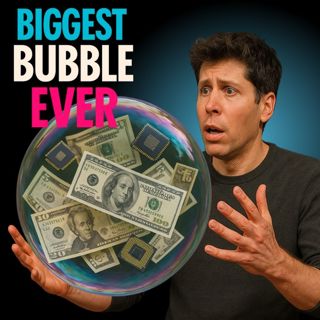
E168: AI - Biggest Bubble in Human History? Tech Economist Says YES

E168: AI - Biggest Bubble in Human History? Tech Economist Says YES

Tech economist Dr. Jeffrey Funk argues that today’s AI boom is the biggest bubble in history—far larger than dot-com or housing—because colossal infrastructure spending is chasing tiny, unprofitable r...

20 Nov 20251h 39min

E167: Nuclear Rockets, AI Agents & Science Hype | RealClear Science’s Ross Pomeroy

E167: Nuclear Rockets, AI Agents & Science Hype | RealClear Science’s Ross Pomeroy

Steven Ross Pomeroy, Chief Editor of RealClearScience, joins the podcast to discuss NASA’s abandoned nuclear propulsion programs, the future of AI and white-collar work, the rise of “scienceploitation...

13 Nov 202539min

E166: Is the Internet Too Big to Moderate? — John Wihbey

E166: Is the Internet Too Big to Moderate? — John Wihbey

A wide-ranging conversation with Northeastern’s John Wihbey on how algorithms, laws, and business models shape speech online—and what smarter, lighter regulation could look like.Guest bio: John Wihbey...

6 Nov 20251h 33min

E165: STUDY Shows NFL Favors the Chiefs — Lead Researcher Explains

E165: STUDY Shows NFL Favors the Chiefs — Lead Researcher Explains

Finance professor Spencer Barnes explains research showing postseason officiating systematically favors the Mahomes-era Chiefs—consistent with subconscious, financially driven “regulatory capture,” no...

1 Nov 20251h 2min
E164: The Real Reason You Can Speak: Explained by Evolutionary Biologist - Dr. Madeleine Beekman

E164: The Real Reason You Can Speak: Explained by Evolutionary Biologist - Dr. Madeleine Beekman

How human babies, big brains, and social life likely forced Homo sapiens to invent precise speech ~150–200k years ago—and what that means for learning, tech, and today’s kids.Guest Bio:Madeleine Beekm...

29 Okt 20251h 10min
E163: Why AI Still Loses to Humans: Renowned Psychologist Explains - Dr. Gerd Gigerenzer

E163: Why AI Still Loses to Humans: Renowned Psychologist Explains - Dr. Gerd Gigerenzer

A candid conversation with psychologist Gerd Gigerenzer on why human judgment outperforms AI, the “stable world” limits of machine intelligence, and how surveillance capitalism reshapes society.Guest ...

25 Okt 20251h 3min

Populært innen Business og økonomi

stopp-verden
lydartikler-fra-aftenposten
dine-penger-pengeradet
e24-podden
rss-penger-polser-og-politikk
rss-borsmorgen-okonominyhetene
utbytte
pengesnakk
livet-pa-veien-med-jan-erik-larssen
finansredaksjonen
pengepodden-2
morgenkaffen-med-finansavisen
tid-er-penger-en-podcast-med-peter-warren
okonomiamatorene
rss-sunn-okonomi
liberal-halvtime
lederpodden
rss-markedspuls-2
rss-impressions-2
rss-investering-gjort-enkelt