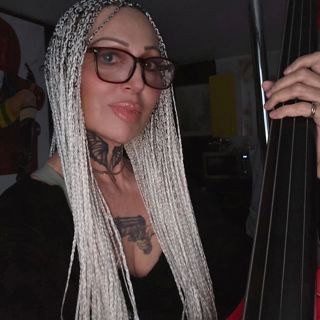
Music as Mental and Physical Occupation in Recovery | iServalan | Continuum Approach

Music as Mental and Physical Occupation in Recovery | iServalan | Continuum Approach

Music as Occupation(Why disciplined attention leaves little room for self-destruction)Music does not make people virtuous.
It makes them busy in a particular way.Learning an instrument occupies the brain fully. Not briefly, not passively, but over long arcs of time. It demands attention, physical coordination, memory, listening, and emotional regulation simultaneously. Few other activities require this level of integrated engagement without external reward.This matters.When the mind is deeply occupied, certain impulses struggle to take hold. Not because they are forbidden, but because there is simply no space left for them to dominate. The phenomenon is not moral. It is practical.A learner working through sound is practising delay, tolerance, and effort without framing it as self-improvement. Pride emerges not from comparison, but from evidence: a note that was once unreachable now exists. A phrase that once collapsed now holds.This is where determination and discipline appear—not as rules, but as side-effects.The Continuum does not prescribe restraint.
It creates conditions in which restraint becomes unnecessary.There is no sermon here. No promise of transcendence. Only a quiet shift in internal economy. Time once spent dispersing attention becomes time spent shaping something real. The reward is not virtue, but coherence.And coherence is stabilising.This is why long-term instrumental learning has such a powerful regulatory effect. It gives the nervous system a repeatable experience of effort leading somewhere. Not immediately. Not perfectly. But reliably.Vices often flourish where time is empty or hostile.
Music fills time without numbing it.The emotional space that opens is not “higher.”
It is simply inhabited.And that, for many learners, is enough.Music as Recovery(Occupation, repair, and the quiet danger of creative removal)Recovery is often spoken about as if it were a destination.
In practice, it is a process of re-occupation.Whether the cause is addiction, breakdown, trauma, neurological injury, or prolonged stress, recovery almost always involves the same underlying problem: the mind has lost safe, structured ways to inhabit time. Attention becomes either fragmented or compulsively fixed. The nervous system oscillates between hyper-vigilance and collapse.Learning an instrument addresses this not symbolically, but mechanically.Instrumental practice occupies multiple systems at once: motor control, auditory processing, memory, prediction, emotional regulation. It does so repeatedly, voluntarily, and without immediate external reward. This combination is rare—and it matters.Recovery does not require constant self-analysis.
It requires reliable engagement.Music provides a form of occupation that is neither escapist nor confrontational. The learner is not asked to relive trauma, justify progress, or articulate feeling. They are asked to attend—to sound, to timing, to physical sensation. Over time, this sustained attention rebuilds tolerance for effort and continuity.This is not metaphorical repair. It is cognitive.Regular instrumental learning strengthens sequencing, working memory, error correction, and delayed gratification. These are precisely the capacities that fracture under addiction, PTSD, and cognitive overload. Music does not “heal” them in a sentimental sense; it exercises them back into reliability.Importantly, this happens without moral framing.There is no requirement to become better, purer, calmer, or enlightened. The learner is simply busy in a way that produces evidence of agency. A note improves. A passage stabilises. The body remembers something it forgot it could do.This is why music is so effective in recovery contexts: it restores trust in process.Where things become more urgent—socially, not individually—is in what we are currently removing.AI-generated music and automated creativity systems offer output without occupation. They replace engagement with consumption. The listener receives sound without effort, and the creator role is increasingly abstracted away from human labour altogether.This creates a subtle but serious risk.When creative activity is outsourced, people are left with time but no structured way to inhabit it. Attention becomes surplus. The mind, unoccupied, seeks stimulation rather than meaning. For some, that vacuum is uncomfortable. For others, it is dangerous.This is not an argument against technology.
It is an argument for preserving human practice.Learning an instrument is one of the few remaining activities that reliably absorbs time without numbing it. It demands patience without enforcing obedience. It rewards effort without guaranteeing success. It restores a sense of progression that cannot be faked or automated.In recovery terms, this is invaluable.Music does not replace therapy.
It does not replace medication.
It does not replace social support.But it does something those things cannot do alone: it gives the recovering mind somewhere to go, every day, with its hands, ears, and attention aligned.The Continuum does not present music as salvation.
It presents it as occupation with dignity.And in a culture increasingly defined by automated output and passive intake, preserving practices that genuinely occupy the human mind is not nostalgic.It is preventative.

iServalan™
Music, listening, and the Continuum Approach: Exploring sound across genres, eras, and performance cultures — from Baroque to punk, hip-hop to minimalism — without hierarchy or haste.

🎧 Podcast & essays: 🎻 Music School
https://iservalan.gumroad.com/l/concervatoire?
https://iservalan.gumroad.com📚 Books & long-form work by Sarnia de la Maré FRSA:
https://www.amazon.co.uk/stores/author/B0CWGX2DJ6🎨 Professional profile:
https://www.a-n.co.uk/person/sarnia-de-la-mare-frsa-2/

#iServalan #ContinuumApproach #MusicPodcast #RadicalListening #MusicAcrossGenres
#PerformanceCulture #SarniaDeLaMaré

Episoder(252)

Sea by E Wilcox Live Poetry Reading Public Domain Lyrics | iServalan | Continuum Approach

Sea by E Wilcox Live Poetry Reading Public Domain Lyrics | iServalan | Continuum Approach

https://iservalan.gumroad.com/l/concervatoireiServalan™Music, listening, and the Continuum Approach: Exploring sound across genres, eras, and performance cultures — from Baroque to punk, hip-hop to mi...

26 Des 20251min

 Open Strings: Confidence, Resonance, and the First Sense of Intonation | iServalan | Continuum

 Open Strings: Confidence, Resonance, and the First Sense of Intonation | iServalan | Continuum

Open Strings: Confidence, Resonance, and the First Sense of IntonationBefore fingers arrive, the instrument already knows how to sing.Open strings are often treated as placeholders—sounds we pass thro...

26 Des 20255min
Christmas Wishes from iServalan at the Digital Conservatoire and Continuum

Christmas Wishes from iServalan at the Digital Conservatoire and Continuum

iServalan™Music, listening, and the Continuum Approach: Exploring sound across genres, eras, and performance cultures — from Baroque to punk, hip-hop to minimalism — without hierarchy or haste.🎧 Podc...

25 Des 20251min

Waking Year E Dickenson Live Poetry Reading Public Domain Free Lyrics | iServalan Music School

Waking Year E Dickenson Live Poetry Reading Public Domain Free Lyrics | iServalan Music School

iServalan™Music, listening, and the Continuum Approach: Exploring sound across genres, eras, and performance cultures — from Baroque to punk, hip-hop to minimalism — without hierarchy or haste.🎧 Podc...

23 Des 20251min

What Would Bach Have Done in a Dub Studio?  | iServalan | Continuum Approach

What Would Bach Have Done in a Dub Studio? | iServalan | Continuum Approach

What Would Bach Have Done in a Dub Studio? If anyone from the late Baroque period belongs in a dub studio, it’s Johann Sebastian Bach. Not necessarily because of style — but because of belief.If you w...

23 Des 20253min

How to Use the Book Continuum in Music | iServalan | Continuum Approach in Music

How to Use the Book Continuum in Music | iServalan | Continuum Approach in Music

Foreword — How to Use This BookThe Continuum Approach is not a method. It does not replace existing teaching traditions, schools, or technical systems, nor does it ask the learner to abandon repertoir...

23 Des 20255min

The Last Supper Live Reading Public Domain Open Mic Lyrics | iServalan | Continuum Approach

The Last Supper Live Reading Public Domain Open Mic Lyrics | iServalan | Continuum Approach

iServalan™Music, listening, and the Continuum Approach: Exploring sound across genres, eras, and performance cultures — from Baroque to punk, hip-hop to minimalism — without hierarchy or haste.🎧 Podc...

22 Des 202548s

Auld Lang Syne Live Reading Public Domain Poetry | iServalan | Continuum Approach

Auld Lang Syne Live Reading Public Domain Poetry | iServalan | Continuum Approach

iServalan™Music, listening, and the Continuum Approach: Exploring sound across genres, eras, and performance cultures — from Baroque to punk, hip-hop to minimalism — without hierarchy or haste.🎧 Podc...

22 Des 20251min

Populært innen Fakta

fastlegen
dine-penger-pengeradet
relasjonspodden-med-dora-thorhallsdottir-kjersti-idem
mikkels-paskenotter
foreldreradet
treningspodden
rss-strid-de-norske-borgerkrigene
jakt-og-fiskepodden
rss-bisarr-historie
takk-og-lov-med-anine-kierulf
rss-kull
sinnsyn
fryktlos
rss-sunn-okonomi
hverdagspsyken
gravid-uke-for-uke
level-up-med-anniken-binz
tomprat-med-gunnar-tjomlid
hagespiren-podcast
rss-kunsten-a-leve




















