AfterMaths: When Children Decide They’re “Not a Maths Person”

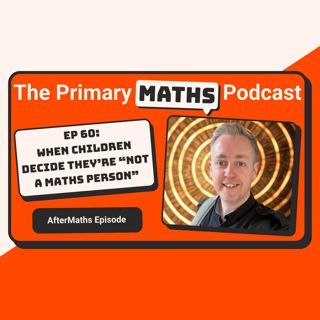
AfterMaths: When Children Decide They’re “Not a Maths Person”

Episode 60 of The Primary Maths Podcast is an Aftermaths episode where Jon Cripwell and Becky Brown reflect on mathematical thinking in the classroom, the hidden cost of passive maths, and why pupils’ mathematical identity matters as much as their test scores.

The episode begins with a lighter moment as Jon points out that it is Friday the 13th again, one of three Friday the 13ths in 2026, the maximum possible in a single year. The conversation then moves to this week’s interview episode with secondary maths teacher Will McLoughlin, which explored direct instruction, conceptual understanding and mathematical thinking.

Jon reflects on a moment from a recent school visit where a Year 5 pupil casually said, “I’m not really a maths person.” That comment becomes the starting point for the main discussion: what passive maths can cost learners over time. When pupils spend too much time watching maths rather than doing maths, they may complete work and pass tests, but gradually lose confidence, identity and a sense of belonging in mathematics. The challenge for teachers is that these losses are often invisible in data. Schools can measure answers on a page, but it is much harder to measure what pupils have quietly stopped believing about themselves as mathematicians.

Jon and Becky discuss how lesson design and task choice can make a difference. Starting lessons with accessible entry points, encouraging pupils to explain their thinking, and creating collaborative mathematical environments can all help build confidence and participation. While accountability measures such as the KS2 SATs arithmetic paper or the Year 4 Multiplication Tables Check prioritise speed and procedural accuracy, great maths teaching also develops curiosity, reasoning and identity as a mathematician.

The episode also includes Becky’s History of Maths segment in honour of Pi Day on 14 March. Becky explains the origins of the number π, how ancient Babylonians and Egyptians approximated it thousands of years ago, and how Archimedes later developed more precise methods for calculating it. The Greek letter π was first used to represent the number by Welsh mathematician William Jones in the early eighteenth century. Becky also explores some fun facts about π, including the world record for memorising its digits.

Jon highlights that even though π is not formally taught in the primary curriculum, sharing mathematical curiosities like this can help create a sense of wonder and show pupils that mathematics extends far beyond the classroom.

Towards the end of the episode Jon announces that Twinkl’s PlanIt Maths scheme of work is being completely refreshed, with every lesson rewritten to reflect current research and pedagogy. The new scheme builds problem solving, scaffolding and greater depth thinking throughout lessons rather than adding them as optional extras. A free taster pack is now available for teachers who would like to explore the new materials.

If you enjoy the podcast, remember to subscribe so you never miss an episode. Jon also invites listeners to continue the discussion on LinkedIn and through the podcast Substack.

Links mentioned in this episode

Listen to the previous interview episode with Will McLoughlin (Episode 59)

https://primarymathspodcast.substack.com/

Download the free PlanIt Maths taster pack

https://www.twinkl.co.uk/resource/free-planit-maths-taster-pack-t-m-1691485779

Follow Jon Cripwell on LinkedIn

https://www.linkedin.com/in/joncripwell

Subscribe to The Primary Maths Podcast Substack

https://primarymathspodcast.substack.com/

Contact the show

primarymathspodcast@twinkl.co.uk

Denne episoden er hentet fra en åpen RSS-feed og er ikke publisert av Podme. Den kan derfor inneholde annonser.

Episoder(90)

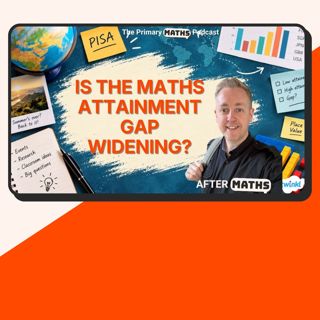
Is the maths attainment gap getting wider?

Is the maths attainment gap getting wider?

Why do some pupils seem to thrive in maths while others struggle to access the same lesson?Jon and Becky discuss the latest PISA findings and the widening gap between higher and lower attainers, befor...

18 Sep 38min
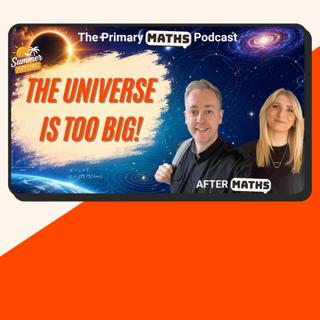
How Big Is the Universe? | AfterMaths Summer Special

How Big Is the Universe? | AfterMaths Summer Special

How can the universe be 13.8 billion years old but the observable universe be around 93 billion light years across?In this AfterMaths Summer Special, Jon is joined by primary science specialist Sarah ...

4 Sep 42min
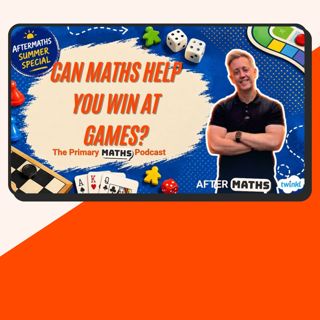
Can Maths Help You Win at Games?

Can Maths Help You Win at Games?

Can maths help you win at games?In this AfterMaths Summer Special, Jon and Becky explore the line between luck and strategy — and whether understanding the maths behind a game can actually give you an...

28 Aug 25min
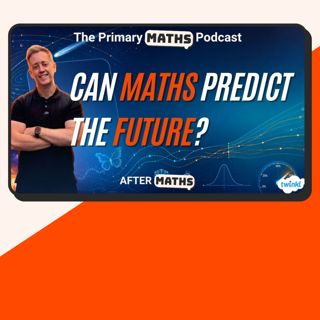
Can Maths Predict the Future?

Can Maths Predict the Future?

Can maths really predict the future?We can predict the return of a comet decades in advance, but tomorrow's weather can still catch us completely by surprise. In this AfterMaths Summer Special, Jon an...

24 Aug 26min
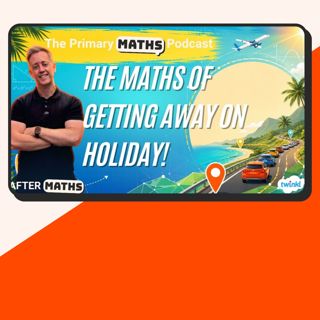
The Maths of Getting Away: Routes, Queues & Google Maps

The Maths of Getting Away: Routes, Queues & Google Maps

Podcast Show NotesWhat makes a route the best route? The shortest distance? The quickest journey? The cheapest option? Or simply whichever one Google tells you to take?In this AfterMaths Summer Specia...

21 Aug 31min
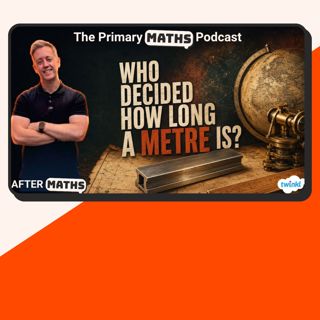
Who Decided How Long a Metre Is? AfterMaths Summer Special 3

Who Decided How Long a Metre Is? AfterMaths Summer Special 3

Who decided how long a metre should be? Why is a mile 1,760 yards? And what connects the French Revolution, an expedition from Dunkirk to Barcelona and the speed of light?In this AfterMaths Summer Spe...

7 Aug 22min
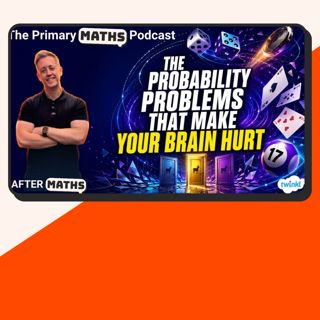
The Probability Problems That Make Your Brain Hurt - AfterMaths Summer Special 2 2026

The Probability Problems That Make Your Brain Hurt - AfterMaths Summer Special 2 2026

Probability often feels as though it should be intuitive, right up until the mathematics tells us that our instincts are completely wrong.In this AfterMaths Summer Special, Jon and Becky explore the s...

31 Jul 30min
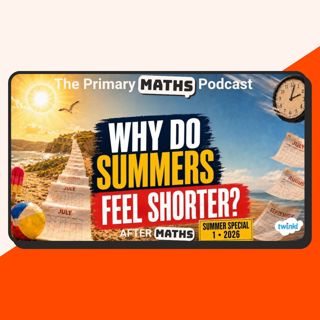
Why Do Summer Holidays Feel Shorter As We Get Older? Summer Special 1 2026

Why Do Summer Holidays Feel Shorter As We Get Older? Summer Special 1 2026

Why did the six-week summer holiday feel endless when we were children, yet now seems to disappear almost as soon as it begins?In the first of the 2026 Aftermaths Summer Specials, Jon and Becky explor...

28 Jul 29min

Populært innen Fakta

fastlegen
dine-penger-pengeradet
relasjonspodden-med-dora-thorhallsdottir-kjersti-idem
rss-strid
treningspodden
foreldreradet
rss-bisarr-historie
jakt-og-fiskepodden
rss-orjasater
hverdagspsyken
rss-kunsten-a-leve
takk-og-lov-med-anine-kierulf
sinnsyn
mikkels-paskenotter
rss-impressions-2
gravid-uke-for-uke
psykt-interessant
tomprat-med-gunnar-tjomlid
fryktlos
level-up-med-anniken-binz