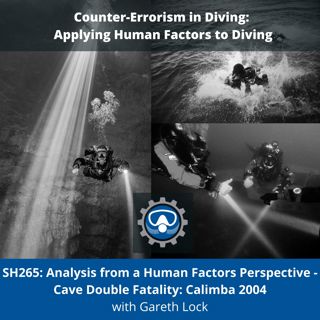
SH265: Analysis from a Human Factors Perspective - Cave Double Fatality: Calimba 2004

SH265: Analysis from a Human Factors Perspective - Cave Double Fatality: Calimba 2004

This episode looks at a real cave diving tragedy and uses it to explain how accidents often happen because of human thinking, not just broken rules or bad equipment. Instead of focusing on blame, it shows how choices made underwater can seem logical at the time, even when they lead to disaster. The episode explores key ideas like awareness, decision-making, teamwork, leadership, and psychological safety, and explains how stress, distraction, group pressure, and complex plans can affect how people think and act. It also highlights why good briefings, open communication, and honest debriefs matter, and why teams must feel safe to speak up and challenge decisions. The main message is that safer diving comes from understanding human behaviour, learning without blame, and building strong teams that plan well, communicate clearly, and adapt when things don’t go as expected.

Original blog: https://www.thehumandiver.com/post/analysis-from-a-human-factors-perspective-cave-double-fatality-calimba-2004

Links: Blueprint for Survival: https://nsscds.org/blueprint-for-survival/

Identifying lessons and learning from them vs blame and punishment: https://www.thehumandiver.com/blog/blame-or-learn

online resources that have a compendium of reports on cave diving fatalities:

CREER https://creer-mx.com/accident-incident-analysis/

NSS-CDS https://nsscds.org/accident-analysis/

IUCRR - https://iucrr.org/more/accident-analysis/incident-reports/

Jenny’s blog “Incompetent and Unaware”: https://www.thehumandiver.com/blog/the-dunning-kruger-effect-incompetent-or-competent-and-unaware

YouTube channel: https://www.thehumandiver.com/blog/hf-for-dummies-part-1-human-factors

Tags: - english accident analysis cave diving lanny vogel

Denne episoden er hentet fra en åpen RSS-feed og er ikke publisert av Podme. Den kan derfor inneholde annonser.

Episoder(293)

SH293: Why does nothing change? Why do the same failures keep happening?

SH293: Why does nothing change? Why do the same failures keep happening?

Over the past decade, diving fatalities have remained stubbornly consistent despite better equipment, more training, and growing participation, suggesting the problem isn’t just technical or individua...

4 Jul 22min

SH292: Learning or Blaming: The Choice the Diving Industry Needs to Make. Part 3 of 3.

SH292: Learning or Blaming: The Choice the Diving Industry Needs to Make. Part 3 of 3.

This final blog explores what the research means and how the diving community can realistically improve learning and safety. It argues that the problem is not broken individuals but a system that quie...

1 Jul 14min

SH291: What the Data Told Us: Fear, Trust, and the Stories That Never Get Told. Part 2 of 3.

SH291: What the Data Told Us: Fear, Trust, and the Stories That Never Get Told. Part 2 of 3.

This blog explains how a mixed-methods study explored why divers struggle to share honest, learning-focused stories about incidents. Using a large international survey, focus groups, and expert interv...

27 Jun 13min

SH290: What Happens Underwater, Stays Underwater — And That's a Problem. Part 1 of 3

SH290: What Happens Underwater, Stays Underwater — And That's a Problem. Part 1 of 3

This episode introduces the problem behind learning in diving safety, using the 2020 death of Linnea Mills to highlight how incidents are often caused by deeper system issues, not just individual mist...

24 Jun 12min

SH289: Chac Mool - Diving Deeper into a Triple Fatality with Human Factors

SH289: Chac Mool - Diving Deeper into a Triple Fatality with Human Factors

This episode examines a 2012 triple fatality at Cenote Chac Mool in Mexico using a Human Factors approach, showing how accidents are rarely caused by a single mistake but by a combination of small, in...

20 Jun 24min

SH288: The 'Obvious Thing' Nobody Noticed

SH288: The 'Obvious Thing' Nobody Noticed

This episode explores the fatal case of 18-year-old Linnea Mills to show how visible hazards can go unnoticed when an instructor lacks the mental capacity to recognise them. Linnea was overweighted, u...

17 Jun 15min

SH287: When the Picture Goes Dark

SH287: When the Picture Goes Dark

This episode explores why divers don’t truly “lose” situation awareness, but instead run out of the mental capacity needed to maintain it. Through the story of James on a challenging wreck dive, it sh...

13 Jun 16min

SH286: The Shortcut That Gets You Home — and the One That Doesn't

SH286: The Shortcut That Gets You Home — and the One That Doesn't

Divers make many decisions quickly, often without realising it, by using heuristics—mental shortcuts that help us act fast when time and information are limited. These shortcuts are essential and ofte...

10 Jun 10min

Populært innen Fakta

fastlegen
dine-penger-pengeradet
relasjonspodden-med-dora-thorhallsdottir-kjersti-idem
foreldreradet
mikkels-paskenotter
rss-kunsten-a-leve
treningspodden
rss-strid-de-norske-borgerkrigene
hverdagspsyken
jakt-og-fiskepodden
tomprat-med-gunnar-tjomlid
level-up-med-anniken-binz
rss-impressions-2
rss-var-forste-kaffe
sinnsyn
rss-kull
rss-bisarr-historie
gravid-uke-for-uke
rss-kunstig-intelligens-med-elisabeth-maren-og-morten
diagnose