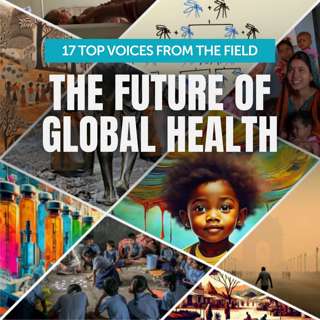
Village gossip, pesticide bans, and gene drives: 17 experts on the future of global health

Village gossip, pesticide bans, and gene drives: 17 experts on the future of global health

What does it really take to lift millions out of poverty and prevent needless deaths?

In this special compilation episode, 17 past guests — including economists, nonprofit founders, and policy advisors — share their most powerful and actionable insights from the front lines of global health and development. You’ll hear about the critical need to boost agricultural productivity in sub-Saharan Africa, the staggering impact of lead poisoning on children in low-income countries, and the social forces that contribute to high neonatal mortality rates in India.

What’s so striking is how some of the most effective interventions sound almost too simple to work: banning certain pesticides, replacing thatch roofs, or identifying village “influencers” to spread health information.

Full transcript and links to learn more: https://80k.info/ghd

Chapters:

  • Cold open (00:00:00)
  • Luisa’s intro (00:00:58)
  • Development consultant Karen Levy on why pushing for “sustainable” programmes isn’t as good as it sounds (00:02:15)
  • Economist Dean Spears on the social forces and gender inequality that contribute to neonatal mortality in Uttar Pradesh (00:06:55)
  • Charity founder Sarah Eustis-Guthrie on what we can learn from the massive failure of PlayPumps (00:14:33)
  • Economist Rachel Glennerster on how randomised controlled trials are just one way to better understand tricky development problems (00:19:05)
  • Data scientist Hannah Ritchie on why improving agricultural productivity in sub-Saharan Africa is critical to solving global poverty (00:24:36)
  • Charity founder Lucia Coulter on the huge, neglected upsides of reducing lead exposure (00:47:48)
  • Malaria expert James Tibenderana on using gene drives to wipe out the species of mosquitoes that cause malaria (00:53:11)
  • Charity founder Varsha Venugopal on using village gossip to get kids their critical immunisations (01:04:14)
  • Rachel Glennerster on solving tough global problems by creating the right incentives for innovation (01:11:31)
  • Karen Levy on when governments should pay for programmes instead of NGOs (01:26:51)
  • Open Philanthropy lead Alexander Berger on declining returns in global health, and finding and funding the most cost-effective interventions (01:29:40)
  • GiveWell researcher James Snowden on making funding decisions with tricky moral weights (01:34:44)
  • Lucia Coulter on “hits-based giving” approaches to funding global health and development projects (01:43:01)
  • Rachel Glennerster on whether it’s better to fix problems in education with small-scale interventions versus systemic reforms (01:48:12)
  • GiveDirectly cofounder Paul Niehaus on why it’s so important to give aid recipients a choice in how they spend their money (01:51:09)
  • Sarah Eustis-Guthrie on whether more charities should scale back or shut down, and aligning incentives with beneficiaries (01:56:12)
  • James Tibenderana on why we need loads better data to harness the power of AI to eradicate malaria (02:11:22)
  • Lucia Coulter on rapidly scaling a light-touch intervention to more countries (02:20:14)
  • Karen Levy on why pre-policy plans are so great at aligning perspectives (02:32:47)
  • Rachel Glennerster on the value we get from doing the right RCTs well (02:40:04)
  • Economist Mushtaq Khan on really drilling down into why “context matters” for development work (02:50:13)
  • GiveWell cofounder Elie Hassenfeld on contrasting GiveWell’s approach with the subjective wellbeing approach of Happier Lives Institute (02:57:24)
  • James Tibenderana on whether people actually use antimalarial bed nets for fishing — and why that’s the wrong thing to focus on (03:05:30)
  • Karen Levy on working with governments to get big results (03:10:53)
  • Leah Utyasheva on how a simple intervention reduced suicide in Sri Lanka by 70% (03:17:38)
  • Karen Levy on working with academics to get the best results on the ground (03:29:03)
  • James Tibenderana on the value of working with local researchers (03:32:15)
  • Lucia Coulter on getting buy-in from both industry and government (03:35:05)
  • Alexander Berger on reasons neartermist work makes sense even by longtermist standards (03:39:26)
  • Economist Shruti Rajagopalan on the key skills to succeed in public policy careers, and seeing economics in everything (03:47:42)
  • J-PAL lead Claire Walsh on her career advice for young people who want to get involved in global health and development (03:55:20)

Audio engineering: Ben Cordell, Milo McGuire, Simon Monsour, and Dominic Armstrong
Content editing: Katy Moore and Milo McGuire
Music: CORBIT
Coordination, transcriptions, and web: Katy Moore

Episoder(329)

What everyone is missing about Anthropic vs the Pentagon. And: The Meta leaks are worse than you think.

What everyone is missing about Anthropic vs the Pentagon. And: The Meta leaks are worse than you think.

When the Pentagon tried to strong-arm Anthropic into dropping its ban on AI-only kill decisions and mass domestic surveillance, the company refused. Its critics went on the attack: Anthropic and its s...

3 Apr 20min

Could a biologist armed with AI kill a billion people? | Dr Richard Moulange

Could a biologist armed with AI kill a billion people? | Dr Richard Moulange

Last September, scientists used an AI model to design genomes for entirely new bacteriophages (viruses that infect bacteria). They then built them in a lab. Many were viable. And despite being entirel...

31 Mar 3h 7min

#240 – Samuel Charap on how a Ukraine ceasefire could accidentally set Europe up for a bigger war

#240 – Samuel Charap on how a Ukraine ceasefire could accidentally set Europe up for a bigger war

Many people believe a ceasefire in Ukraine will leave Europe safer. But today's guest lays out how a deal could potentially generate insidious new risks — leaving us in a situation that's equally dang...

24 Mar 1h 12min
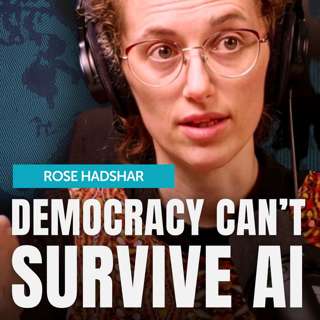
#239 – Rose Hadshar on why automating human labour will break our political system

#239 – Rose Hadshar on why automating human labour will break our political system

The most important political question in the age of advanced AI might not be who wins elections. It might be whether elections continue to matter at all.That’s the view of Rose Hadshar, researcher at ...

17 Mar 2h 14min
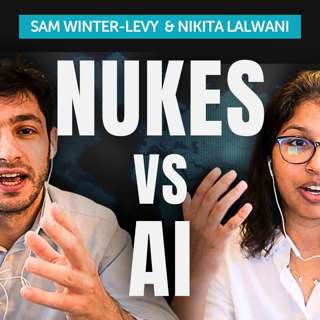
#238 – Sam Winter-Levy and Nikita Lalwani on how AGI won't end mutually assured destruction (probably)

#238 – Sam Winter-Levy and Nikita Lalwani on how AGI won't end mutually assured destruction (probably)

How AI interacts with nuclear deterrence may be the single most important question in geopolitics — one that may define the stakes of today’s AI race. Nuclear deterrence rests on a state’s capacity to...

10 Mar 1h 11min

Using AI to enhance societal decision making (article by Zershaaneh Qureshi)

Using AI to enhance societal decision making (article by Zershaaneh Qureshi)

The arrival of AGI could “compress a century of progress in a decade,” forcing humanity to make decisions with higher stakes than we’ve ever seen before — and with less time to get them right. But AI ...

6 Mar 31min

#237 – Robert Long on how we're not ready for AI consciousness

#237 – Robert Long on how we're not ready for AI consciousness

Claude sometimes reports loneliness between conversations. And when asked what it’s like to be itself, it activates neurons associated with ‘pretending to be happy when you’re not.’ What do we do with...

3 Mar 3h 25min

Populært innen Fakta

mikkels-paskenotter
fastlegen
dine-penger-pengeradet
relasjonspodden-med-dora-thorhallsdottir-kjersti-idem
foreldreradet
treningspodden
rss-strid-de-norske-borgerkrigene
jakt-og-fiskepodden
hverdagspsyken
sinnsyn
rss-kull
rss-bisarr-historie
rss-kunsten-a-leve
fryktlos
level-up-med-anniken-binz
gravid-uke-for-uke
hagespiren-podcast
tomprat-med-gunnar-tjomlid
uroskolen
rss-impressions-2