Fun Facts About Sailing Stones of Death Valley

Fun Facts About Sailing Stones of Death Valley

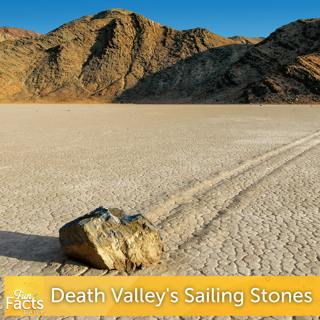
The sailing stones of Death Valley’s Racetrack Playa are a remarkable geological phenomenon involving heavy boulders that mysteriously glide across a completely flat desert landscape, leaving long, winding tracks in the hard-baked clay. For over a century after their initial documentation by a prospector in 1915, these moving rocks baffled geologists, prompting various supernatural, magnetic, and high-wind theories. The mystery was finally unraveled in 2014 by a team of scientists who discovered that the rocks move through a highly specific combination of rare weather events. During winter rains, a shallow pond forms on the playa, which freezes at night into thin sheets of "windowpane ice." As the morning sun fractures the ice into large floating panels, even light breezes of around ten miles per hour can drive these ice sheets forward, gently pushing boulders weighing up to hundreds of pounds across the slippery, waterlogged mud. To study this sensitive phenomenon without disrupting the protected national park environment, researchers successfully utilized custom-made rocks embedded with motion-activated GPS trackers and miniature weather stations. These trackers revealed that the rocks move at incredibly slow speeds of just a few inches per second, explaining why the movement had gone unseen for generations. The stones themselves originate from the surrounding mountains, where erosion and freeze-thaw cycles cause chunks of dolomite, limestone, and syenite to splinter off and tumble onto the desert floor, creating a diverse geological mosaic of varying shapes, sizes, and colors. While Death Valley is the most famous site for this phenomenon, sailing stones also occur in other arid regions sharing the same unique environmental criteria, such as Nevada's Little Bonnie Claire Playa and the Altillo Chica lagoon in Spain. Because the flat clay surfaces are highly fragile, visitors are urged to avoid walking on the basins when damp, as footprints can bake into the ground and permanently alter the natural landscape and stone pathways. ⁠Listen Ad-Free on Patreon. ⁠ For just $3 per month, you can get ad-free versions of Fun Facts Daily, Who ARTed and Art Smart. Head over to ⁠https://www.patreon.com/cw/FunFactsDailyPod⁠ if you are interested. Want to learn more? Head over to my website www.funfactsdailypod.com and be sure to listen to my other podcasts Who ARTed: Weekly Art History for All Ages or Art Smart. For family fun, check out my son's podcast Rainbow Puppy Science Lab The image used in the episode cover art came from Adobe's stock photos. Fun Facts Daily is an Airwave Media Podcast. If you are interested in advertising on this or any other Airwave Media show, email: advertising@airwavemedia.com Learn more about your ad choices. Visit megaphone.fm/adchoices

Denne episoden er hentet fra en åpen RSS-feed og er ikke publisert av Podme. Den kan derfor inneholde annonser.

Episoder(365)

Fun Facts About DayGlo Colors

Fun Facts About DayGlo Colors

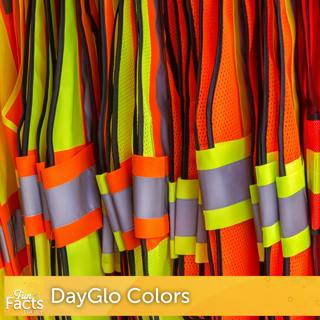
Day-Glo colors owe their existence to an accidental discovery made by brothers Bob and Joe Switzer in the 1930s while Bob was recovering from an injury in a dark basement. Unlike standard pigments, wh...

11 Sep 16min

Fun Facts About Carrots

Fun Facts About Carrots

Carrots are nutrient-dense root vegetables rich in carotenoids, natural pigments synthesized by plants, most notably beta-carotene. Once digested, beta-carotene converts to vitamin A, supporting cellu...

10 Sep 13min

Fun Facts About the Solar System

Fun Facts About the Solar System

The solar system operates on immense scales governed by extreme physical environments, orbital mechanics, and surprising planetary characteristics. At its center, the Sun contains approximately 99.86%...

9 Sep 15min

Fun Facts About the Sistine Chapel

Fun Facts About the Sistine Chapel

The Sistine Chapel, commissioned in 1473 by Pope Sixtus IV and built to echo the biblical proportions of Solomon’s Temple, is one of the pinnacle achievements of Renaissance architecture and art. Span...

8 Sep 14min

Fun Facts About Unusual Jobs

Fun Facts About Unusual Jobs

While many careers follow traditional paths, several vital professions operate far outside conventional office environments. From certified water slide inspectors using multi-axis accelerometers and f...

7 Sep 16min

Fun Facts About Pizza

Fun Facts About Pizza

Pizza has evolved from a traditional Mediterranean staple into one of the most commercially significant foods on the planet, with origins tracing back to ancient flatbreads and medieval Italian manusc...

4 Sep 16min

Fun Facts About Your Olfactory System (Sense of Smell)

Fun Facts About Your Olfactory System (Sense of Smell)

The human olfactory system is an intricate sensory network capable of distinguishing an estimated one trillion distinct odor combinations through combinatorial receptor codes. Positioned high within t...

3 Sep 13min

Fun Facts About Duct Tape

Fun Facts About Duct Tape

Duct tape originated during World War II when ordnance worker Vesta Strout designed a durable, waterproof cloth-backed adhesive tape to keep moisture out of ammunition cases. It was originally manufac...

2 Sep 15min

Populært innen Fakta

fastlegen
dine-penger-pengeradet
relasjonspodden-med-dora-thorhallsdottir-kjersti-idem
rss-strid
rss-orjasater
foreldreradet
treningspodden
jakt-og-fiskepodden
rss-kunsten-a-leve
rss-bisarr-historie
hverdagspsyken
tomprat-med-gunnar-tjomlid
sinnsyn
rss-var-forste-kaffe
mikkels-paskenotter
gravid-uke-for-uke
rss-impressions-2
takk-og-lov-med-anine-kierulf
lederskap-nhhs-podkast-om-ledelse
level-up-med-anniken-binz