No News is Bad News: AI Agents, Information Value, Accountability & Democracy

No News is Bad News: AI Agents, Information Value, Accountability & Democracy

Notes:

  • Dr. Bridgman discusses his path from Winnipeg to McGill and how he became involved with the Media Ecosystem Observatory while still a PhD student.
  • The conversation turns to the origins of the Media Ecosystem Observatory during the 2019 Canadian federal election and how its work continued through the pandemic, the Hogue Commission and the growing focus on information ecosystem health in Canada.
  • Dr. Bridgman explains why COVID-19 and AI have been two major disruptions in the information environment and why AI agents may become one of the main ways people encounter public information.
  • The episode looks at the shift from traditional search, where users clicked through to sources, to AI summaries that may give users enough information without sending them to the people or organizations that produced it.
  • Dr. Bridgman discusses the problem of value transfer, explaining how aggregators have captured value from original information production and how AI agents may become even more powerful aggregators.
  • The conversation considers how common AI news use already is, including the difficulty of measuring it because many people may not recognize that ordinary search now includes AI-generated answers.
  • Dr. Bridgman explains what he means by an AI agent: a general intelligence connected to tools that allow it to search, read, summarize and act in digital environments.
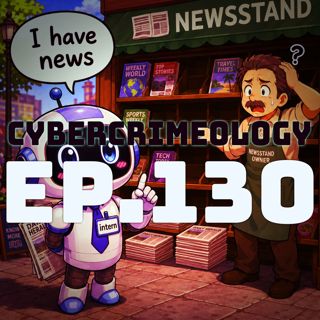
  • The discussion uses the idea of AI as a “brilliant intern” to explain why these systems can be useful, capable and eager to please, while still lacking judgment about the broader consequences of how they complete a task.
  • The episode closes by looking at the harms that may follow if original information production is not sustained, including poorer information, weaker attribution and new challenges for democratic accountability.

About our guest:

Dr. Aengus Bridgman

https://meo.ca/people/aengus-bridgman

https://abridgman.ca/

Papers or resources mentioned in this episode:

Owen, T., & Bridgman, A. (2026). AI News Audit: How AI Models Use and Distribute Canadian Journalism. Media Ecosystem Observatory.

https://meo.ca/work/how-ai-models-use-and-distribute-canadian-journalism

Owen, T., & Bridgman, A. (2026). AI News Audit: AI, Canadian Journalism, and Paths for Policy Action. Centre for Media, Technology and Democracy.

https://www.mediatechdemocracy.com/all-work/ai-canadian-journalism-and-paths-for-policy-action

Other:

Media Ecosystem Observatory

https://meo.ca/

Centre for Media, Technology and Democracy

https://www.mediatechdemocracy.com/

Denne episoden er hentet fra en åpen RSS-feed og er ikke publisert av Podme. Den kan derfor inneholde annonser.

Episoder(132)

A Treacherous Land: Cyberstalking and Harassment on Dating Apps

A Treacherous Land: Cyberstalking and Harassment on Dating Apps

Notes: Ms. Ayerza studied criminology, forensic behavioural sciences and psychology. Her early research examined eyewitness memory and the re-entry of exonerees before she became interested in cyber...

1 Aug 23min
Snapshots of Society: Studying Cybercrime Every Here

Snapshots of Society: Studying Cybercrime Every Here

Notes: Irnasya Hadi explains how growing up with the internet, and being frustrated by the limited connection between critical criminology and cybercrime, drew her toward the study of cyber insecuri...

1 Jul 29min
Public Interest Technology: Making Sense of Security in an AI World

Public Interest Technology: Making Sense of Security in an AI World

Notes: The conversation begins with his path into teaching public policy, despite never having planned a conventional academic career, and why translating technical subjects for non-technical studen...

1 Mai 34min
Who You Gonna Call?: Cybercrime Types and Expectations of Police Response

Who You Gonna Call?: Cybercrime Types and Expectations of Police Response

Notes: Cybercrime is often treated as a distinct phenomenon, but there are strong continuities with offline crime that are frequently overlooked. Digital technologies change behaviour and scale, bu...

1 Apr 30min
Disordered Sense-Making: Conflict Narratives in the Digital Era

Disordered Sense-Making: Conflict Narratives in the Digital Era

Notes: Dr Samuel Tanner began his doctoral research examining war crimes and armed militias involved in mass violence in the Balkans, conducting extensive fieldwork and interviews with participants ...

1 Mar 36min
Beyond “The Cybercriminal”: Understanding Diversity in Cyber Offenders

Beyond “The Cybercriminal”: Understanding Diversity in Cyber Offenders

Notes:Dr Bekkers describes his academic pathway from psychology to criminology and explains why his research focus has consistently been on offenders and their behaviour rather than on offences or tec...

1 Feb 25min

Systematically Improving Cybersecurity Training

Systematically Improving Cybersecurity Training

Notes:Julia Prümmer describes her transition from legal psychology into cybersecurity research and how psychological methods shape her approach to cybersecurity training.The discussion explores the ro...

1 Jan 49min

Populært innen Fakta

fastlegen
dine-penger-pengeradet
relasjonspodden-med-dora-thorhallsdottir-kjersti-idem
treningspodden
foreldreradet
jakt-og-fiskepodden
mikkels-paskenotter
rss-strid-de-norske-borgerkrigene
rss-kunsten-a-leve
sinnsyn
hverdagspsyken
gravid-uke-for-uke
fryktlos
ryddepodden
babyverden
rss-var-forste-kaffe
tomprat-med-gunnar-tjomlid
rss-sarbar-med-lotte-erik
lederskap-nhhs-podkast-om-ledelse
rss-impressions-2