Autism, Food Rigidity, & Eating Disorders: How Autistic Traits Can Help & Hinder Recovery

Autism, Food Rigidity, & Eating Disorders: How Autistic Traits Can Help & Hinder Recovery

Autism and eating disorders can create a complicated relationship with food rigidity, routines, sensory needs, and predictability. For autistic people recovering from anorexia, ARFID, bulimia, or other eating disorders, repetitive eating patterns aren't always symptoms that need to be challenged. Sometimes autistic food routines and preferred foods make consistent nourishment more accessible.

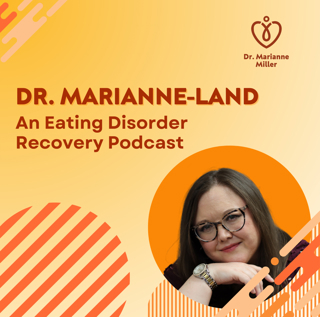
In this solo episode, Dr. Marianne explores the difference between autistic food rigidity and eating disorder rigidity, including why they can be difficult to separate. Sensory processing differences, executive functioning challenges, autistic inertia, interoceptive differences, and a strong preference for sameness can all shape autistic eating and eating disorder recovery.

Autism, Food Rigidity & Eating Disorder Recovery

A familiar breakfast, preferred brand, predictable meal schedule, or small rotation of foods may look rigid from the outside. For an autistic person, however, these routines can reduce sensory overwhelm, decision fatigue, and the executive functioning demands involved in eating.

Dr. Marianne explains why autism and eating disorder recovery may require a different definition of flexibility. Mechanical eating and predictable meal routines can be particularly helpful for autistic people who experience inconsistent hunger cues or difficulty interpreting internal body signals.

You'll also learn how the same autistic traits can sometimes complicate recovery. Changes to meal timing, unfamiliar foods, unexpected sensory experiences, and disruptions to established routines can create significant distress. What appears to be eating disorder resistance may actually involve autistic sensory needs, difficulty with transitions, interoceptive differences, or a need for predictability.

Autism, ARFID, Anorexia & Sensory Issues With Food

Food variety is another area where neurodivergent eating disorder treatment requires nuance. Expanding someone's range of foods can be important when limited intake creates nutritional or medical concerns, particularly with autism and ARFID. But eating more variety isn't automatically the same as eating disorder recovery.

Dr. Marianne discusses how sensory sensitivities can overlap with ARFID, anorexia, and other restrictive eating disorders, and why clinicians need to understand what a food behavior is doing before trying to change it. Avoiding a food because of texture, smell, temperature, or unpredictability isn't necessarily the same as avoiding it because of eating disorder fears about calories, weight, or body shape. Sometimes both are present.

Related Episodes

Neurodivergent-Affirming Eating Disorder Treatment

Successful autistic eating disorder recovery doesn't require making someone's eating look neurotypical. An autistic person may continue to plan meals, repeat breakfasts, rely on preferred foods, check restaurant menus ahead of time, use sensory accommodations, and maintain predictable eating routines after the eating disorder has significantly improved.

Dr. Marianne also explains how autistic traits can become recovery strengths. A preference for routine can support regular meals and snacks, pattern recognition can help identify situations where nourishment breaks down, and understanding sensory needs can make eating more sustainable.

Rather than automatically trying to eliminate food rigidity in autism, neurodivergent-affirming eating disorder treatment asks a more useful question: Does this pattern strengthen the eating disorder, or does it help this person stay nourished?

Dr. Marianne specializes in autism, ADHD, ARFID, anorexia, bulimia, binge eating, and neurodivergent eating disorder recovery. Learn more about working with Dr. Marianne and her eating disorder therapy services at drmariannemiller.com. You can also explore her self-paced ARFID & Selective Eating course for adults with ARFID, parents and caregivers, and eating disorder providers.

Denne episoden er hentet fra en åpen RSS-feed og er ikke publisert av Podme. Den kan derfor inneholde annonser.

Episoder(349)

ARFID & PDA: Why Eating Can Feel Like a Demand Even When No One Is Pressuring You

ARFID & PDA: Why Eating Can Feel Like a Demand Even When No One Is Pressuring You

ARFID and PDA can make eating feel difficult even when no one is telling you what, when, or how much to eat. For autistic and neurodivergent people with Avoidant/Restrictive Food Intake Disorder (ARFI...

18 Sep 15min

Tradwives, Disordered Eating, & the Thin Ideal: Why Young Women Are Being Told to Shrink Again

Tradwives, Disordered Eating, & the Thin Ideal: Why Young Women Are Being Told to Shrink Again

Tradwife culture is having a moment, but what happens when traditional femininity, purity culture, the thin ideal, and disordered eating begin to overlap? In this SOLO episode, Dr. Marianne Miller exa...

16 Sep 20min

Is Eating Disorder Recovery a Form of Neurodivergence? Diet Culture, Hunger, & Body Trust With Shira Collings, LPC

Is Eating Disorder Recovery a Form of Neurodivergence? Diet Culture, Hunger, & Body Trust With Shira Collings, LPC

Eating disorder recovery often requires developing a relationship with food, hunger, movement, and body size that differs sharply from what society considers “normal.” In this conversation, Dr. Marian...

14 Sep 27min

Why Is Eating Disorder Recovery So Scary? Understanding Fear, Safety, & Letting Go

Why Is Eating Disorder Recovery So Scary? Understanding Fear, Safety, & Letting Go

Eating disorder recovery can feel surprisingly scary, even when you genuinely want to get better. Letting go of restriction, binge eating, purging, compulsive exercise, food rules, or body checking ca...

9 Sep 15min

How to Help Your Child With an Eating Disorder: Replacing Control With Connection With Dr. Tom Wooldridge

How to Help Your Child With an Eating Disorder: Replacing Control With Connection With Dr. Tom Wooldridge

Supporting a child or teen with an eating disorder can leave parents caught between the urgency to help them eat and the fear that increasing control will create more conflict around food. In this epi...

7 Sep 32min

Anorexia & Binge Eating: The Binge-Restrict Cycle in Long-Term Eating Disorder Recovery

Anorexia & Binge Eating: The Binge-Restrict Cycle in Long-Term Eating Disorder Recovery

Can you have anorexia and struggle with binge eating, too? If you find yourself moving between food restriction and binge eating, you may wonder whether your eating disorder has changed or whether you...

4 Sep 10min

Why Do I Need to Save Food? Eating Disorders, Food Rationing, & Scarcity Fears

Why Do I Need to Save Food? Eating Disorders, Food Rationing, & Scarcity Fears

Food rationing and scarcity fears can show up in eating disorders in surprising ways. You might save the last few bites even though you’re still hungry, carefully make favorite foods “last,” become an...

2 Sep 15min

Populært innen Helse

fastlegen
rss-gukild-johaug
psykodrama
hvordan-har-du-det-mann
leger-om-livet
relasjonspodden-med-dora-thorhallsdottir-kjersti-idem
rss-skravla-gar
foreldreradet
g-punktet
rss-dagen-for-dagen
morten-ramm-lar-kakla-ga-til-du-sovner
rss-lopedrommen
klimaks
hjernesterk
lydartikler-fra-aftenposten
treningsprat
rss-loping-for-nybegynnere
bak-fasaden-en-reise-i-livet-med-sykepleier-ine
rss-kunsten-a-leve
kjed-deg-i-sovn-verdens-kjedeligste-podcast