Tradwives, Disordered Eating, & the Thin Ideal: Why Young Women Are Being Told to Shrink Again

Tradwives, Disordered Eating, & the Thin Ideal: Why Young Women Are Being Told to Shrink Again

Tradwife culture is having a moment, but what happens when traditional femininity, purity culture, the thin ideal, and disordered eating begin to overlap?

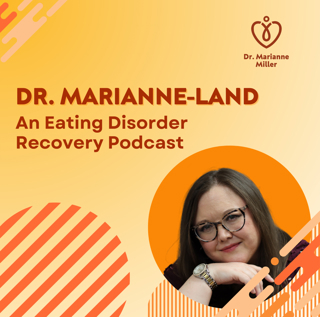
In this SOLO episode, Dr. Marianne Miller examines the growing popularity of tradwives and renewed interest in conservative Christianity among some young women. She considers why messages about modesty, discipline, self-denial, homemaking, and being a “good woman” may feel especially appealing during a time of uncertainty, loneliness, and cultural change.

Tradwives, Purity Culture, & the Thin Ideal

Tradwife content often presents an idealized picture of femininity: beautiful homes, homemade food, motherhood, marriage, modesty, and clearly defined gender roles. Yet many of the women who represent this aesthetic online are also conventionally attractive and thin.

Dr. Marianne asks whether the resurgence of traditional femininity is happening alongside another cultural shift: the return of an increasingly narrow thin ideal. In the age of GLP-1 medications, “what I eat in a day” videos, wellness culture, and shrinking celebrity bodies, young women are once again receiving powerful messages about how much physical space they should occupy.

Disordered Eating, Diet Culture, & the “Good Girl”

Diet culture and purity culture can also share a familiar vocabulary: discipline versus indulgence, clean versus contaminated, good versus bad, and control versus temptation.

For people vulnerable to eating disorders, self-denial can easily receive praise. Food restriction may look like discipline. Compulsive exercise may look like dedication. Orthorexia may look like wellness. Ignoring hunger may look like self-control.

This episode also examines a striking contradiction in tradwife culture: women may be celebrated for producing abundant homemade food for their families while still being expected to maintain thin bodies themselves. Feed everyone else, but keep your own appetite contained.

Eating Disorder Recovery Means Reclaiming Appetite

Dr. Marianne expands the meaning of “shrinking” beyond body size. Women have long been encouraged to minimize their hunger, anger, sexuality, ambition, needs, and voices. Eating disorders can turn those cultural expectations inward.

Eating disorder recovery can involve reclaiming appetite in a much broader sense: permission to want food, pleasure, rest, relationships, independence, motherhood or no motherhood, a career or homemaking, and a life that does not require becoming smaller to belong.

Rather than mocking women drawn to tradwife culture or conservative Christianity, Dr. Marianne encourages curiosity about what these movements may provide: certainty, community, spirituality, belonging, structure, or relief from hustle culture. At the same time, we can question any system that ties women's goodness to restraint, purity, desirability, self-denial, or thinness.

In this episode: tradwives and eating disorders, disordered eating, the thin ideal, purity culture, conservative Christianity, diet culture, orthorexia, wellness culture, GLP-1s, body image, traditional femininity, women and food, and eating disorder recovery.

Work With Dr. Marianne

Dr. Marianne Miller is an eating disorder therapist with nearly 30 years of experience in mental health. She specializes in ARFID, anorexia, bulimia, binge eating, neurodivergence, autism, ADHD, and complicated relationships with food and body image.

Learn more about eating disorder therapy with Dr. Marianne in California and Washington, D.C., her neurodivergent-affirming ARFID resources and course, and additional support at drmariannemiller.com.

Denne episoden er hentet fra en åpen RSS-feed og er ikke publisert av Podme. Den kan derfor inneholde annonser.

Episoder(349)

ARFID & PDA: Why Eating Can Feel Like a Demand Even When No One Is Pressuring You

ARFID & PDA: Why Eating Can Feel Like a Demand Even When No One Is Pressuring You

ARFID and PDA can make eating feel difficult even when no one is telling you what, when, or how much to eat. For autistic and neurodivergent people with Avoidant/Restrictive Food Intake Disorder (ARFI...

18 Sep 15min

Is Eating Disorder Recovery a Form of Neurodivergence? Diet Culture, Hunger, & Body Trust With Shira Collings, LPC

Is Eating Disorder Recovery a Form of Neurodivergence? Diet Culture, Hunger, & Body Trust With Shira Collings, LPC

Eating disorder recovery often requires developing a relationship with food, hunger, movement, and body size that differs sharply from what society considers “normal.” In this conversation, Dr. Marian...

14 Sep 27min

Autism, Food Rigidity, & Eating Disorders: How Autistic Traits Can Help & Hinder Recovery

Autism, Food Rigidity, & Eating Disorders: How Autistic Traits Can Help & Hinder Recovery

Autism and eating disorders can create a complicated relationship with food rigidity, routines, sensory needs, and predictability. For autistic people recovering from anorexia, ARFID, bulimia, or othe...

11 Sep 19min

Why Is Eating Disorder Recovery So Scary? Understanding Fear, Safety, & Letting Go

Why Is Eating Disorder Recovery So Scary? Understanding Fear, Safety, & Letting Go

Eating disorder recovery can feel surprisingly scary, even when you genuinely want to get better. Letting go of restriction, binge eating, purging, compulsive exercise, food rules, or body checking ca...

9 Sep 15min

How to Help Your Child With an Eating Disorder: Replacing Control With Connection With Dr. Tom Wooldridge

How to Help Your Child With an Eating Disorder: Replacing Control With Connection With Dr. Tom Wooldridge

Supporting a child or teen with an eating disorder can leave parents caught between the urgency to help them eat and the fear that increasing control will create more conflict around food. In this epi...

7 Sep 32min

Anorexia & Binge Eating: The Binge-Restrict Cycle in Long-Term Eating Disorder Recovery

Anorexia & Binge Eating: The Binge-Restrict Cycle in Long-Term Eating Disorder Recovery

Can you have anorexia and struggle with binge eating, too? If you find yourself moving between food restriction and binge eating, you may wonder whether your eating disorder has changed or whether you...

4 Sep 10min

Why Do I Need to Save Food? Eating Disorders, Food Rationing, & Scarcity Fears

Why Do I Need to Save Food? Eating Disorders, Food Rationing, & Scarcity Fears

Food rationing and scarcity fears can show up in eating disorders in surprising ways. You might save the last few bites even though you’re still hungry, carefully make favorite foods “last,” become an...

2 Sep 15min

Populært innen Helse

fastlegen
rss-gukild-johaug
psykodrama
hvordan-har-du-det-mann
leger-om-livet
relasjonspodden-med-dora-thorhallsdottir-kjersti-idem
rss-skravla-gar
foreldreradet
g-punktet
rss-dagen-for-dagen
morten-ramm-lar-kakla-ga-til-du-sovner
rss-lopedrommen
klimaks
hjernesterk
lydartikler-fra-aftenposten
treningsprat
rss-loping-for-nybegynnere
bak-fasaden-en-reise-i-livet-med-sykepleier-ine
rss-kunsten-a-leve
kjed-deg-i-sovn-verdens-kjedeligste-podcast