Japan Attacks Manchuria and Shanghai

Japan Attacks Manchuria and Shanghai

In September 1931, junior officer's of Japan's Kwantung Army in Manchuria set off explosives to make it look like a Chinese attack on Japanese interests along the South Manchuria Railway. This is often called the Mukden Incident or named after the nearby Liutiao Lake. The Kwantung Army then attacked Zhang Xueliang's nearby garrison and, with Japanese reinforcements, moved into the rest of Manchuria.


In 1932, the puppet state of Manchukuo was formed, with Puyi, the last Qing Emperor, as Chief Executive and then Emperor of Manchuguo. Few states other than Japan recognized the new State.


China increased tariffs on Japan complained to the League of Nations, which investigated and requested that Japan withdrew its troops. Instead, Japan withdrew from the League of Nations.


Zhang Xueliang, the Young Marshal, did not resist the Japanese takeover of his territory. But over 200,000 provincial army soldiers and long-time bandits did. Railcars were attacked and railways torn up. The Japanese responded by bombing hideouts and killing civilians in the process.


Then Japan's naval marines attacked the Chinese controlled part of Shanghai, in further unprovoked aggression following some anti-Japanese protests resulting from Japan's moves in Manchuria. China's 19th Army and Chiang's 5th Army under the command of the 19th Army, resisted Japan fiercely. For 33 days they fought a modern urban warfare battle and then Chinese soldiers defended against combined arms attacks in the river delta outside Shanghai. Japan's Navy couldn't win and needed help from its Army. Still, the Chinese resisted and Japan had to bring in more and more soldiers and equipment to save face. A negotiated settlement resulted in Japanese troops withdrawing and China demilitarizing Shanghai.


Japan had begun a new period of aggression against China and a 14 year war was beginning. The Nationalist government now was faced with a new threat. Not only did it have to face internal challenges like warlords, strong provincial governors and Communists committed to overthrowing the government. It also battled an aggressive and powerful country to its east that was beginning its invasions.


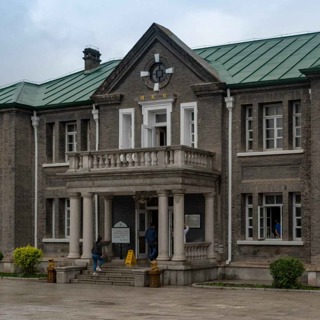
Image: "25126-Changchun" by xiquinhosilva is licensed under CC BY 2.0.


You can support this show through Buy me a coffee. https://www.buymeacoffee.com/thechineserevolution

Hosted on Acast. See acast.com/privacy for more information.

Denne episoden er hentet fra en åpen RSS-feed og er ikke publisert av Podme. Den kan derfor inneholde annonser.

Episoder(67)

The Wang Jingwei Regime: A Puppet Regime in Nanjing

The Wang Jingwei Regime: A Puppet Regime in Nanjing

In 1938, after the Battle of Wuhan, Wang Jingwei left Chongqing and the Republic of China team in Chongqing for Hanoi. He negotiated with Japanese officials and eventually set up a puppet regime know ...

30 Jun 202428min
Living Under Japanese Occupation

Living Under Japanese Occupation

Japan controlled Taiwan as a colony from 1895 to 1945. During the Second Sino-Japanese War, Chinese language education and publications stopped and the Imperial Subject Movement tried to Japanize resi...

27 Mai 202429min
The Brilliance of Chairman Mao

The Brilliance of Chairman Mao

By the early 1940s, the Communists in Yan’an were feeling relatively secure. The Japanese advance in north China had not reached that area. The Sino-Japanese War and the United Front meant that Chiang...

7 Apr 202420min
Hope and the Second United Front in Wuhan

Hope and the Second United Front in Wuhan

For ten months in 1938, Hankou in Wuhan was the center of China's Second United Front and defense against the Japanese invasion.Artistic expression, political parties and free speech all blossomed. Ne...

3 Mar 202426min
The National Palace Museum Treasures During the Second Sino Japanese War

The National Palace Museum Treasures During the Second Sino Japanese War

The treasures of the National Palace Museum, originally the Forbidden City, followed China's path. They escaped the invading Japanese by leaving Beijing, first for Shanghai, then Nanjing and then foll...

12 Feb 202455min
The Beginning of the Second Sino-Japanese War and the Nanjing Massacre

The Beginning of the Second Sino-Japanese War and the Nanjing Massacre

On July 7, 1937, the Second Sino-Japanese War and World War II began with the Marco Polo Bridge Incident. It is also known as the Lugou Bridge Incident. Within days of the small skirmish with 100 Chin...

15 Jan 202425min
Chiang Kai Shek is Kidnapped

Chiang Kai Shek is Kidnapped

After the Long March, the Chinese Communists were mostly in northern Shaanxi, wanting a breather. Japan had continued its aggression in China after it set up the puppet state of Manchukuo under Empero...

7 Jan 202416min
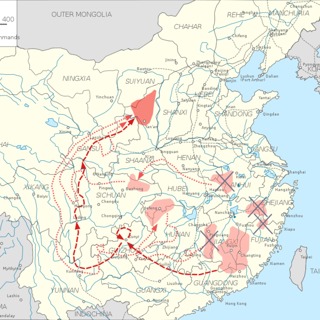
The Long March

The Long March

Zhou Enlai planned in secret the details of the Chinese Communist's escape from the encirclement of the Central Soviet. He identified a Guangdong warlord who preferred to save his troops rather than f...

25 Des 202341min

Populært innen Samfunn

rss-spartsklubben
giver-og-gjengen-vg
aftenpodden
alt-fortalt
aftenpodden-usa
popradet
konspirasjonspodden
rss-nesten-hele-uka-med-lepperod
rss-henlagt-andy-larsgaard
lydartikler-fra-aftenposten
rss-espen-lee-usensurert
wolfgang-wee-uncut
grenselos
synnve-og-vanessa
rss-dette-ma-aldri-skje-igjen
fladseth
bokmerket-2
frokostshowet-pa-p5
krisemoter
198-land-med-einar-trnquist