Attachment Styles and the Neurology of Relationships
Trauma Rewired16 Feb 2021

Attachment Styles and the Neurology of Relationships

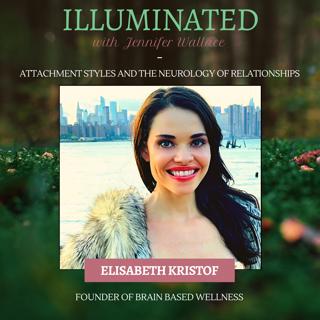
She's back ya'll, co-host Elisabeth Kristof, founder of Brain Based Wellness joins me again this week as we dive into attachment theory and share stories of our own relationships that highlight the research. We will be exploring the three attachment styles - anxious, dismissive, and fearful and how these relate to our dating styles and relationships with friends and the people that we care about.

In this episode, I share:

  • [3:52] In neurology there is no morality
  • [5:28] Early childhood development - Moms, don't be too hard on yourself
  • [6:07] Learning how to heal is our life's work
  • [6:34] Neurology is the science of hope
  • [8:00] Elisabeth shares the history of attachment theory
  • [10:54] Overlap between trauma response and attachment style
  • [12:45] Parental separation and codependency
  • [14:22] Five conditions that the attachment styles are based around
  • [15:08] Other areas of our lives that attachment styles show up
  • [16:13] Elisabeth shares her attachment styles in relation to her childhood
  • [18:58] Sacrificing yourself to get love from others
  • [21:31] My attachment styles in relation to my childhood
  • [24:06] Intimacy in avoidant dismissive attachment and anxious attachment
  • [25:23] Codependency in friendships
  • [30:44] It is normal to prioritize human connection
  • [31:30] When codependency becomes problematic
  • [32:24] Trauma bonds
  • [35:37] Somatic practices to self regulate
  • [36:29] The vagus nerve and dysregulation
  • [37:53] Regulating our nervous systems and healing trauma responses
  • [40:10] Life cycles of relationships
  • [43:10] Recovery from relationships and an increase in secure attachment
  • [44:32] Elisabeth shares how she regulates her nervous system
  • [46:24] Getting regulation from a variety of sources
  • [47:32] Thought loops are connected with physical sensations
  • [48:38] Inner child work
  • [50:57] Movement and affirmations
  • [52:14] Self-regulation, reflection, and stability in relationships


Resources From This Episode:

Take the 'Attachment Style Quiz' to find out your attachment style HERE

Virtual Workshop 'Own Your Pleasure' Get your tickets HERE

Friday, February 26, 6pm-8pm CST

~ Join Neuro Performance Specialist Elisabeth Kristof, and Embodied Healer Melanie Holst-Collins for a 2-hour virtual workshop.

Work with Jennifer

25% Off a Private Coaching Session HERE

Work with Elisabeth

FREE intro to applied neurology course and morning practice HERE

Connect with Jennifer

Website

Facebook

Instagram

Connect with Elizabeth

Website

Instagram

Facebook

Denne episoden er hentet fra en åpen RSS-feed og er ikke publisert av Podme. Den kan derfor inneholde annonser.

Episoder(296)

Sexual Fawning: When Survival Gets Mistaken for Intimacy

Sexual Fawning: When Survival Gets Mistaken for Intimacy

Why do so many trauma survivors say "yes" when every part of their body is saying "no"? In this deeply compassionate episode of Trauma Rewired, Jennifer Wallace and Elisabeth Kristof are joined by som...

10 Aug 57min

The Fawn Response Explained

The Fawn Response Explained

The fawn response is one of the most common—and most misunderstood—trauma adaptations. While many people recognize it as people-pleasing, saying yes too often, or avoiding conflict, fawning is far mor...

3 Aug 55min

Why Being Yourself Can Feel Dangerous After Trauma

Why Being Yourself Can Feel Dangerous After Trauma

What if authenticity isn't a personality trait—but a sign of nervous system capacity? Many people believe they struggle to be themselves because they lack confidence, boundaries, or self-awareness. Bu...

27 Jul 45min

Grief Is a Body Experience: The Neuroscience of Loss

Grief Is a Body Experience: The Neuroscience of Loss

Grief is often thought of as an emotional response to death, but grief is much more than that. It is a full-body physiological process that accompanies every meaningful loss, transition, and transform...

20 Jul 1h 4min

From Shame to Self Expression: Healing Body Boundaries After Trauma

From Shame to Self Expression: Healing Body Boundaries After Trauma

Childhood sexual trauma doesn't end when the event is over. It can shape the nervous system for decades, influencing boundaries, shame, relationships, chronic pain, dissociation, and the way we experi...

13 Jul 53min

How Self-Compassion Changes the Brain and Rewires Shame

How Self-Compassion Changes the Brain and Rewires Shame

Shame is one of the most powerful forces shaping the nervous system. It can quietly influence how we think, relate, perform, heal, and even how we experience ourselves. Yet most approaches treat shame...

6 Jul 50min

Why You Shut Down: Freeze, Flop, and Tonic Immobility Explained

Why You Shut Down: Freeze, Flop, and Tonic Immobility Explained

S5 E48 – Why You Shut Down: Freeze, Flop, and Tonic Immobility Explained Have you ever found yourself unable to speak during an important conversation? Staring at your computer for hours without being...

29 Jun 54min

How Trauma Turns Fear Into Hustle, Overworking & Burnout; The Flight Response.

How Trauma Turns Fear Into Hustle, Overworking & Burnout; The Flight Response.

In this episode of Trauma Rewired, Jennifer Wallace and Elisabeth Kristof explore the flight response through the lens of trauma, nervous system regulation, emotional processing, and Neurosomatic Inte...

22 Jun 35min

Populært innen Fakta

fastlegen
dine-penger-pengeradet
relasjonspodden-med-dora-thorhallsdottir-kjersti-idem
treningspodden
foreldreradet
jakt-og-fiskepodden
mikkels-paskenotter
rss-strid-de-norske-borgerkrigene
rss-kunsten-a-leve
sinnsyn
hverdagspsyken
gravid-uke-for-uke
babyverden
ryddepodden
fryktlos
rss-var-forste-kaffe
tomprat-med-gunnar-tjomlid
rss-sarbar-med-lotte-erik
dopet
lederskap-nhhs-podkast-om-ledelse