Michael Walford-Williams on Ethical Hacking of Human Controls

Michael Walford-Williams on Ethical Hacking of Human Controls

How can we assess the level of human risk we’re running in a control framework? Unlike technology, humans aren’t always reliable and how they behave under pressure may well be different to how they behave in normal situations.

My guest on this episode, Michael Walford-Willaims is a risk professional who specialises in how to plan for when things go wrong, covering areas like business continuity, operational resilience and crisis management.

Michael helps companies by testing out the human components of control frameworks to see where there might be weaknesses. He goes into organisations and tries to ethically hack them by trying to circumvent controls with human elements — that might be trying to get a fraudulent invoice paid or simply tailgating employees to see if he can get physical access to buildings.

His work serves two purposes:

Firstly it identifies potential weaknesses in controls. If he can get a fake invoice paid, then so can a fraudster. If he can get access to buildings, then so can thieves. By seeing how easy it is to bypass controls, organisations can get a better handle on their risk profile. Until you’ve actually tested the human controls, it’s impossible to know how weak or strong they actually are.

Secondly, it serves as a training exercise. Just like a fire evacuation drill, it’s better to have employees learn what to do or not do, by experiencing a simulation, than letting them learn from real-life situations.


This is human risk management in action. Of course there are ethical components to the work that Michael does — how far is it appropriate to test out your employees and what do you if you discover they are the weakest link in your security chain?

As Michael explains, we have to also think about what impact the exercise will have on those involved in it. If you think you’ve been tricked by your employer, that you’re somehow not trusted, or that your employer is prepared to deceive you and therefore the organisation is unethical, the exercise could actually make things worse. So the expertise Michael brings isn’t just about testing the proverbial fences. It’s planning exercises that don’t cross ethical lines and then using the information gleaned from them, sensitively and intelligently.

About Michael
Michael has worked for over 15 years in various aspects of risk management and compliance with a specialism in Business Continuity and Crisis Management and more recently third party risk management. He has worked in a number of countries globally having been based in London, Singapore and New York. Working in house and for the last 7 years as a consultant, Michael has worked across many industries for some of the largest organisations in the world including some of the worlds largest banks. and through his work in the field of crisis management has worked on a number of major incidents including the Japanese Tsunami and Fukushima incident, terror attacks in Mumbai, Boston and Moscow and numerous natural disasters, and technology & infrastructure failure related incidents. In 2014 Michael worked to set up one of the UK's first CrowdFunding platforms and as head of Operations and Compliance oversaw the first successful direct FCA authorisation of a platform for both Debt and Equity-based crowdfunding. Michael continues to work as a consultant as has just set up a new brand "Westbourne" to pull together a number of offerings in the risk management space.

You can contact him via LinkedIn: https://www.linkedin.com/in/michael-walford-williams-2302a78a/

Denne episoden er hentet fra en åpen RSS-feed og er ikke publisert av Podme. Den kan derfor inneholde annonser.

Episoder(378)

Annie Wagstaff on The Joy of Curiosity

Annie Wagstaff on The Joy of Curiosity

What’s the last thing you learned simply because you wanted to know?Episode summaryWhy do we feel the need to justify what we learn? My guest on this episode is Annie Wagstaff, a musician and composer...

23 Aug 1h
Paul Craven on Living With Uncertainty

Paul Craven on Living With Uncertainty

What happens when someone who spends his life thinking about risk, decision-making and human behaviour is confronted with an uncertainty he simply can’t control?Episode summaryMy guest is Paul Craven,...

15 Aug 51min
Benji Wilson on why we rate everything

Benji Wilson on why we rate everything

Why do we rate everything and why do we do so on a scale of one to five stars? What happens when systems designed to help us make better choices start influencing our behaviour in ways we don’t necess...

8 Aug 1h 4min
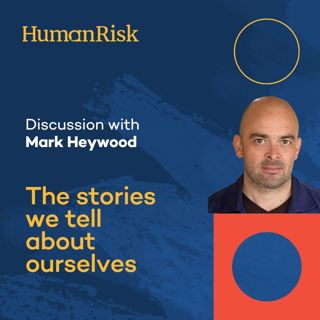
Mark Heywood on The Stories We Tell About Ourselves

Mark Heywood on The Stories We Tell About Ourselves

What parts of yourself have you learned to hide in order to be taken seriously? My guest on this episode is Mark Heywood, a friend of the show, returning guest and someone I've collaborated with on a ...

2 Aug 1h 21min
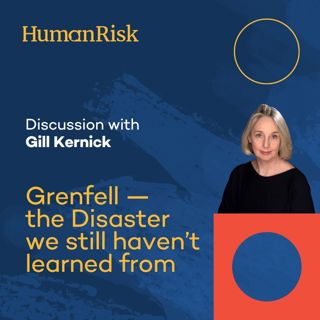
Gill Kernick on Grenfell -  the disaster we still haven't learned from

Gill Kernick on Grenfell - the disaster we still haven't learned from

When something goes badly wrong, we investigate it. Reports are written. Recommendations are made. Lessons are identified. But do we actually learn them?Episode SummaryReturning to the show, Gill Kern...

21 Jul 57min
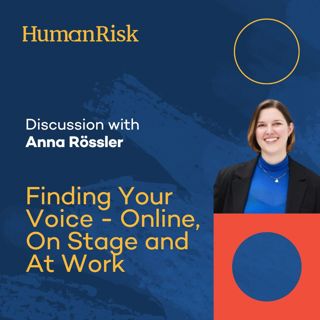
Anna Rössler on Finding Your Voice — Online, On Stage and At Work

Anna Rössler on Finding Your Voice — Online, On Stage and At Work

What does jazz singing have to do with LinkedIn? More than you might think. This week's guest, Anna Rössler, has built a career helping senior leaders find their voice online while simultaneously deve...

5 Jul 1h 1min
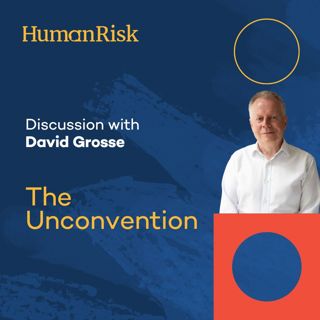
David Grosse on The Unconvention

David Grosse on The Unconvention

What happens when two people who spend their careers thinking about human behaviour meet in a London pub and start complaining about conferences? Apparently, they decide to organise one.Episode Summar...

25 Jun 48min
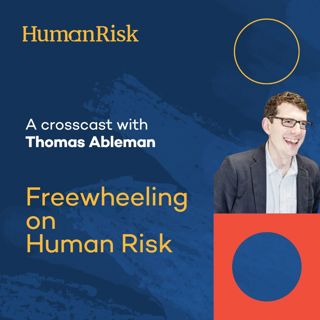
Freewheeling on Human Risk with Thomas Ableman

Freewheeling on Human Risk with Thomas Ableman

Why is it so hard to stop people playing vides, music or phone calls out loud on public transport — and what does that tell us about changing human behaviour? Show Summary This episode of The Human Ri...

11 Jun 45min

Populært innen Vitenskap

fastlegen
romkapsel
tingenes-tilstand
liberal-halvtime
rekommandert
jss
forskningno
villmarksliv
sinnsyn
tomprat-med-gunnar-tjomlid
rss-paradigmepodden
fjellsportpodden
tidlose-historier
rss-rekommandert
rss-nysgjerrige-norge
rss-inn-til-kjernen-med-sunniva-rose
nevropodden
rss-overskuddsliv
rss-fuglehundfolk
grunnstoffene