
#23 - How to actually become an AI alignment researcher, according to Dr Jan Leike

#23 - How to actually become an AI alignment researcher, according to Dr Jan Leike

Want to help steer the 21st century’s most transformative technology? First complete an undergrad degree in computer science and mathematics. Prioritize harder courses over easier ones. Publish at least one paper before you apply for a PhD. Find a supervisor who’ll have a lot of time for you. Go to the top conferences and meet your future colleagues. And finally, get yourself hired.

That’s Dr Jan Leike’s advice on how to join him as a Research Scientist at DeepMind, the world’s leading AI team.

Jan is also a Research Associate at the Future of Humanity Institute at the University of Oxford, and his research aims to make machine learning robustly beneficial. His current focus is getting AI systems to learn good ‘objective functions’ in cases where we can’t easily specify the outcome we actually want.

Full transcript, summary and links to learn more.

How might you know you’re a good fit for research?

Jan says to check whether you get obsessed with puzzles and problems, and find yourself mulling over questions that nobody knows the answer to. To do research in a team you also have to be good at clearly and concisely explaining your new ideas to other people.

We also discuss:

* Where Jan's views differ from those expressed by Dario Amodei in episode 3
* Why is AGI safety one of the world’s most pressing problems?
* Common misconceptions about AI
* What are some of the specific things DeepMind is researching?
* The ways in which today’s AI systems can fail
* What are the best techniques available today for teaching an AI the right objective function?
* What’s it like to have some of the world’s greatest minds as coworkers?
* Who should do empirical research and who should do theoretical research
* What’s the DeepMind application process like?
* The importance of researchers being comfortable with the unknown.

*The 80,000 Hours Podcast is produced by Keiran Harris.*

Episoder(326)

#179 Classic episode – Randy Nesse on why evolution left us so vulnerable to depression and anxiety

#179 Classic episode – Randy Nesse on why evolution left us so vulnerable to depression and anxiety

Mental health problems like depression and anxiety affect enormous numbers of people and severely interfere with their lives. By contrast, we don’t see similar levels of physical ill health in young p...

3 Feb 2h 51min
#234 – David Duvenaud on why 'aligned AI' would still kill democracy

#234 – David Duvenaud on why 'aligned AI' would still kill democracy

Democracy might be a brief historical blip. That’s the unsettling thesis of a recent paper, which argues AI that can do all the work a human can do inevitably leads to the “gradual disempowerment” of ...

27 Jan 2h 31min
#145 Classic episode – Christopher Brown on why slavery abolition wasn't inevitable

#145 Classic episode – Christopher Brown on why slavery abolition wasn't inevitable

In many ways, humanity seems to have become more humane and inclusive over time. While there’s still a lot of progress to be made, campaigns to give people of different genders, races, sexualities, et...

20 Jan 2h 56min
#233 – James Smith on how to prevent a mirror life catastrophe

#233 – James Smith on how to prevent a mirror life catastrophe

When James Smith first heard about mirror bacteria, he was sceptical. But within two weeks, he’d dropped everything to work on it full time, considering it the worst biothreat that he’d seen described...

13 Jan 2h 9min
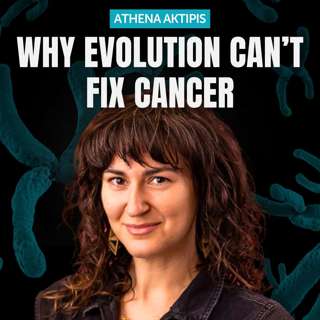
#144 Classic episode – Athena Aktipis on why cancer is a fundamental universal phenomena

#144 Classic episode – Athena Aktipis on why cancer is a fundamental universal phenomena

What’s the opposite of cancer? If you answered “cure,” “antidote,” or “antivenom” — you’ve obviously been reading the antonym section at www.merriam-webster.com/thesaurus/cancer.But today’s guest Athe...

9 Jan 3h 30min
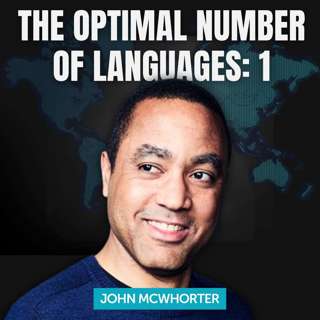
#142 Classic episode – John McWhorter on why the optimal number of languages might be one, and other provocative claims about language

#142 Classic episode – John McWhorter on why the optimal number of languages might be one, and other provocative claims about language

John McWhorter is a linguistics professor at Columbia University specialising in research on creole languages. He's also a content-producing machine, never afraid to give his frank opinion on anything...

6 Jan 1h 35min
2025 Highlight-o-thon: Oops! All Bests

2025 Highlight-o-thon: Oops! All Bests

It’s that magical time of year once again — highlightapalooza! Stick around for one top bit from each episode we recorded this year, including:Kyle Fish explaining how Anthropic’s AI Claude descends i...

29 Des 20251h 40min
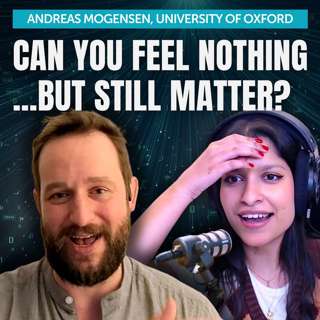
#232 – Andreas Mogensen on what we owe 'philosophical Vulcans' and unconscious beings

#232 – Andreas Mogensen on what we owe 'philosophical Vulcans' and unconscious beings

Most debates about the moral status of AI systems circle the same question: is there something that it feels like to be them? But what if that’s the wrong question to ask? Andreas Mogensen — a senior ...

19 Des 20252h 37min

Populært innen Fakta

fastlegen
dine-penger-pengeradet
relasjonspodden-med-dora-thorhallsdottir-kjersti-idem
foreldreradet
rss-strid-de-norske-borgerkrigene
treningspodden
jakt-og-fiskepodden
rss-sunn-okonomi
sinnsyn
mikkels-paskenotter
takk-og-lov-med-anine-kierulf
hverdagspsyken
gravid-uke-for-uke
rss-kunsten-a-leve
tomprat-med-gunnar-tjomlid
hagespiren-podcast
rss-bisarr-historie
rss-var-forste-kaffe
fryktlos
rss-kull