
#23 - How to actually become an AI alignment researcher, according to Dr Jan Leike

#23 - How to actually become an AI alignment researcher, according to Dr Jan Leike

Want to help steer the 21st century’s most transformative technology? First complete an undergrad degree in computer science and mathematics. Prioritize harder courses over easier ones. Publish at least one paper before you apply for a PhD. Find a supervisor who’ll have a lot of time for you. Go to the top conferences and meet your future colleagues. And finally, get yourself hired.

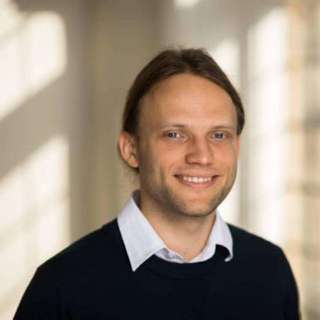
That’s Dr Jan Leike’s advice on how to join him as a Research Scientist at DeepMind, the world’s leading AI team.

Jan is also a Research Associate at the Future of Humanity Institute at the University of Oxford, and his research aims to make machine learning robustly beneficial. His current focus is getting AI systems to learn good ‘objective functions’ in cases where we can’t easily specify the outcome we actually want.

Full transcript, summary and links to learn more.

How might you know you’re a good fit for research?

Jan says to check whether you get obsessed with puzzles and problems, and find yourself mulling over questions that nobody knows the answer to. To do research in a team you also have to be good at clearly and concisely explaining your new ideas to other people.

We also discuss:

* Where Jan's views differ from those expressed by Dario Amodei in episode 3
* Why is AGI safety one of the world’s most pressing problems?
* Common misconceptions about AI
* What are some of the specific things DeepMind is researching?
* The ways in which today’s AI systems can fail
* What are the best techniques available today for teaching an AI the right objective function?
* What’s it like to have some of the world’s greatest minds as coworkers?
* Who should do empirical research and who should do theoretical research
* What’s the DeepMind application process like?
* The importance of researchers being comfortable with the unknown.

*The 80,000 Hours Podcast is produced by Keiran Harris.*

Episoder(332)

#11 - Spencer Greenberg on speeding up social science 10-fold & why plenty of startups cause harm

#11 - Spencer Greenberg on speeding up social science 10-fold & why plenty of startups cause harm

Do most meat eaters think it’s wrong to hurt animals? Do Americans think climate change is likely to cause human extinction? What is the best, state-of-the-art therapy for depression? How can we make ...

17 Okt 20171h 29min
#10 - Nick Beckstead on how to spend billions of dollars preventing human extinction

#10 - Nick Beckstead on how to spend billions of dollars preventing human extinction

What if you were in a position to give away billions of dollars to improve the world? What would you do with it? This is the problem facing Program Officers at the Open Philanthropy Project - people l...

11 Okt 20171h 51min
#9 - Christine Peterson on how insecure computers could lead to global disaster, and how to fix it

#9 - Christine Peterson on how insecure computers could lead to global disaster, and how to fix it

Take a trip to Silicon Valley in the 70s and 80s, when going to space sounded like a good way to get around environmental limits, people started cryogenically freezing themselves, and nanotechnology l...

4 Okt 20171h 45min
#8 - Lewis Bollard on how to end factory farming in our lifetimes

#8 - Lewis Bollard on how to end factory farming in our lifetimes

Every year tens of billions of animals are raised in terrible conditions in factory farms before being killed for human consumption. Over the last two years Lewis Bollard – Project Officer for Farm An...

27 Sep 20173h 16min

#7 - Julia Galef on making humanity more rational, what EA does wrong, and why Twitter isn’t all bad

#7 - Julia Galef on making humanity more rational, what EA does wrong, and why Twitter isn’t all bad

The scientific revolution in the 16th century was one of the biggest societal shifts in human history, driven by the discovery of new and better methods of figuring out who was right and who was wrong...

13 Sep 20171h 14min
#6 - Toby Ord on why the long-term future matters more than anything else & what to do about it

#6 - Toby Ord on why the long-term future matters more than anything else & what to do about it

Of all the people whose well-being we should care about, only a small fraction are alive today. The rest are members of future generations who are yet to exist. Whether they’ll be born into a world th...

6 Sep 20172h 8min

#5 - Alex Gordon-Brown on how to donate millions in your 20s working in quantitative trading

#5 - Alex Gordon-Brown on how to donate millions in your 20s working in quantitative trading

Quantitative financial trading is one of the highest paying parts of the world’s highest paying industry. 25 to 30 year olds with outstanding maths skills can earn millions a year in an obscure set of...

28 Aug 20171h 45min

#4 - Howie Lempel on pandemics that kill hundreds of millions and how to stop them

#4 - Howie Lempel on pandemics that kill hundreds of millions and how to stop them

What disaster is most likely to kill more than 10 million human beings in the next 20 years? Terrorism? Famine? An asteroid? Actually it’s probably a pandemic: a deadly new disease that spreads out o...

23 Aug 20172h 35min

Populært innen Fakta

fastlegen
dine-penger-pengeradet
relasjonspodden-med-dora-thorhallsdottir-kjersti-idem
mikkels-paskenotter
foreldreradet
rss-strid-de-norske-borgerkrigene
treningspodden
rss-bisarr-historie
jakt-og-fiskepodden
takk-og-lov-med-anine-kierulf
sinnsyn
rss-sunn-okonomi
hverdagspsyken
tomprat-med-gunnar-tjomlid
gravid-uke-for-uke
fryktlos
hagespiren-podcast
level-up-med-anniken-binz
rss-kull
rss-bak-luftfarten