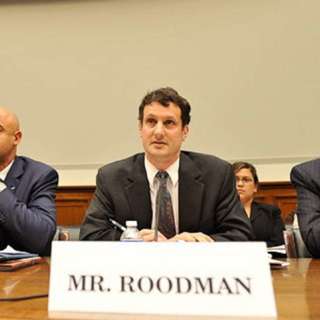
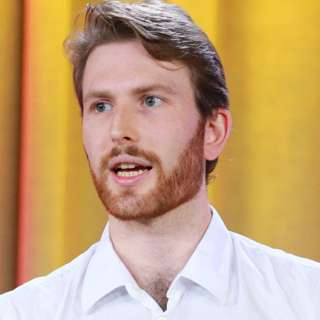
#41 - David Roodman on incarceration, geomagnetic storms, & becoming a world-class researcher

#41 - David Roodman on incarceration, geomagnetic storms, & becoming a world-class researcher

With 698 inmates per 100,000 citizens, the U.S. is by far the leader among large wealthy nations in incarceration. But what effect does imprisonment actually have on crime?

According to David Roodman, Senior Advisor to the Open Philanthropy Project, the marginal effect is zero.

* 80,000 HOURS IMPACT SURVEY - Let me know how this show has helped you with your career.
* ROB'S AUDIOBOOK RECOMMENDATIONS

This stunning rebuke to the American criminal justice system comes from the man Holden Karnofsky’s called "the gold standard for in-depth quantitative research", whose other investigations include the risk of geomagnetic storms, whether deworming improves health and test scores, and the development impacts of microfinance.

Links to learn more, summary and full transcript.

The effects of crime can be split into three categories; before, during, and after.

Does having tougher sentences deter people from committing crime?

After reviewing studies on gun laws and ‘three strikes’ in California, David concluded that the effect of deterrence is zero.

Does imprisoning more people reduce crime by incapacitating potential offenders?

Here he says yes, noting that crimes like motor vehicle theft have gone up in a way that seems pretty clearly connected with recent Californian criminal justice reforms (though the effect on violent crime is far lower).

Finally, do the after-effects of prison make you more or less likely to commit future crimes?

This one is more complicated.

Concerned that he was biased towards a comfortable position against incarceration, David did a cost-benefit analysis using both his favored reading of the evidence and the devil's advocate view; that there is deterrence and that the after-effects are beneficial.

For the devil’s advocate position David used the highest assessment of the harm caused by crime, which suggests a year of prison prevents about $92,000 in crime. But weighed against a lost year of liberty, valued at $50,000, plus the cost of operating prisons, the numbers came out exactly the same.

So even using the least-favorable cost-benefit valuation of the least favorable reading of the evidence -- it just breaks even.

The argument for incarceration melts further when you consider the significant crime that occurs within prisons, de-emphasised because of a lack of data and a perceived lack of compassion for inmates.

In today’s episode we discuss how to conduct such impactful research, and how to proceed having reached strong conclusions.

We also cover:

* How do you become a world class researcher? What kinds of character traits are important?
* Are academics aware of following perverse incentives?
* What’s involved in data replication? How often do papers replicate?
* The politics of large orgs vs. small orgs
* Geomagnetic storms as a potential cause area
* How much does David rely on interviews with experts?
* The effects of deworming on child health and test scores
* Should we have more ‘data vigilantes’?
* What are David’s critiques of effective altruism?
* What are the pros and cons of starting your career in the think tank world?

Get this episode by subscribing to our podcast on the world’s most pressing problems and how to solve them: type 80,000 Hours into your podcasting app. Or read the transcript below.

The 80,000 Hours Podcast is produced by Keiran Harris.

Episoder(325)

#28 - Owen Cotton-Barratt on why scientists should need insurance, PhD strategy & fast AI progresses

#28 - Owen Cotton-Barratt on why scientists should need insurance, PhD strategy & fast AI progresses

A researcher is working on creating a new virus – one more dangerous than any that exist naturally. They believe they’re being as careful as possible. After all, if things go wrong, their own life and...

27 Apr 20181h 3min

#27 - Dr Tom Inglesby on careers and policies that reduce global catastrophic biological risks

#27 - Dr Tom Inglesby on careers and policies that reduce global catastrophic biological risks

How about this for a movie idea: a main character has to prevent a new contagious strain of Ebola spreading around the world. She’s the best of the best. So good in fact, that her work on early detect...

18 Apr 20182h 16min

#26 - Marie Gibbons on how exactly clean meat is made & what's needed to get it in every supermarket

#26 - Marie Gibbons on how exactly clean meat is made & what's needed to get it in every supermarket

First, decide on the type of animal. Next, pick the cell type. Then take a small, painless biopsy, and put the cells in a solution that makes them feel like they’re still in the body. Once the cells a...

10 Apr 20181h 44min

#25 - Robin Hanson on why we have to lie to ourselves about why we do what we do

#25 - Robin Hanson on why we have to lie to ourselves about why we do what we do

On February 2, 1685, England’s King Charles II was struck by a sudden illness. Fortunately his physicians were the best of the best. To reassure the public they kept them abreast of the King’s treatme...

28 Mar 20182h 39min

#24 - Stefan Schubert on why it’s a bad idea to break the rules, even if it’s for a good cause

#24 - Stefan Schubert on why it’s a bad idea to break the rules, even if it’s for a good cause

How honest should we be? How helpful? How friendly? If our society claims to value honesty, for instance, but in reality accepts an awful lot of lying – should we go along with those lax standards? Or...

20 Mar 201855min

#23 - How to actually become an AI alignment researcher, according to Dr Jan Leike

#23 - How to actually become an AI alignment researcher, according to Dr Jan Leike

Want to help steer the 21st century’s most transformative technology? First complete an undergrad degree in computer science and mathematics. Prioritize harder courses over easier ones. Publish at lea...

16 Mar 201845min

#22 - Leah Utyasheva on the non-profit that figured out how to massively cut suicide rates

#22 - Leah Utyasheva on the non-profit that figured out how to massively cut suicide rates

How people kill themselves varies enormously depending on which means are most easily available. In the United States, suicide by firearm stands out. In Hong Kong, where most people live in high rise ...

7 Mar 20181h 8min

#21 - Holden Karnofsky on times philanthropy transformed the world & Open Phil’s plan to do the same

#21 - Holden Karnofsky on times philanthropy transformed the world & Open Phil’s plan to do the same

The Green Revolution averted mass famine during the 20th century. The contraceptive pill gave women unprecedented freedom in planning their own lives. Both are widely recognised as scientific breakthr...

27 Feb 20182h 35min

Populært innen Fakta

fastlegen
dine-penger-pengeradet
relasjonspodden-med-dora-thorhallsdottir-kjersti-idem
treningspodden
rss-strid-de-norske-borgerkrigene
foreldreradet
rss-sunn-okonomi
jakt-og-fiskepodden
takk-og-lov-med-anine-kierulf
sinnsyn
rss-kunsten-a-leve
merry-quizmas
gravid-uke-for-uke
hverdagspsyken
smart-forklart
hagespiren-podcast
rss-kull
lederskap-nhhs-podkast-om-ledelse
fryktlos
uroskolen