#46 - Hilary Greaves on moral cluelessness & tackling crucial questions in academia

#46 - Hilary Greaves on moral cluelessness & tackling crucial questions in academia

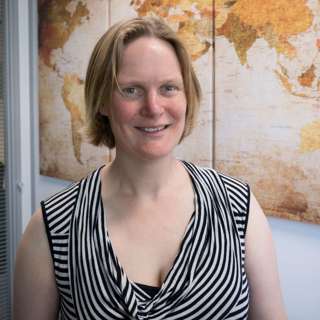
The barista gives you your coffee and change, and you walk away from the busy line. But you suddenly realise she gave you $1 less than she should have. Do you brush your way past the people now waiting, or just accept this as a dollar you’re never getting back? According to philosophy Professor Hilary Greaves - Director of Oxford University's Global Priorities Institute, which is hiring - this simple decision will completely change the long-term future by altering the identities of almost all future generations.

How? Because by rushing back to the counter, you slightly change the timing of everything else people in line do during that day - including changing the timing of the interactions they have with everyone else. Eventually these causal links will reach someone who was going to conceive a child.

By causing a child to be conceived a few fractions of a second earlier or later, you change the sperm that fertilizes their egg, resulting in a totally different person. So asking for that $1 has now made the difference between all the things that this actual child will do in their life, and all the things that the merely possible child - who didn't exist because of what you did - would have done if you decided not to worry about it.

As that child's actions ripple out to everyone else who conceives down the generations, ultimately the entire human population will become different, all for the sake of your dollar. Will your choice cause a future Hitler to be born, or not to be born? Probably both!

Links to learn more, summary and full transcript.

Some find this concerning. The actual long term effects of your decisions are so unpredictable, it looks like you’re totally clueless about what's going to lead to the best outcomes. It might lead to decision paralysis - you won’t be able to take any action at all.

Prof Greaves doesn’t share this concern for most real life decisions. If there’s no reasonable way to assign probabilities to far-future outcomes, then the possibility that you might make things better in completely unpredictable ways is more or less canceled out by equally likely opposite possibility.

But, if instead we’re talking about a decision that involves highly-structured, systematic reasons for thinking there might be a general tendency of your action to make things better or worse -- for example if we increase economic growth -- Prof Greaves says that we don’t get to just ignore the unforeseeable effects.

When there are complex arguments on both sides, it's unclear what probabilities you should assign to this or that claim. Yet, given its importance, whether you should take the action in question actually does depend on figuring out these numbers. So, what do we do?

Today’s episode blends philosophy with an exploration of the mission and research agenda of the Global Priorities Institute: to develop the effective altruism movement within academia. We cover:

* How controversial is the multiverse interpretation of quantum physics?
* Given moral uncertainty, how should population ethics affect our real life decisions?
* How should we think about archetypal decision theory problems?
* What are the consequences of cluelessness for those who based their donation advice on GiveWell style recommendations?
* How could reducing extinction risk be a good cause for risk-averse people?

Get this episode by subscribing: type '80,000 Hours' into your podcasting app.

The 80,000 Hours Podcast is produced by Keiran Harris.

Episoder(324)

#224 – There's a cheap and low-tech way to save humanity from any engineered disease | Andrew Snyder-Beattie

#224 – There's a cheap and low-tech way to save humanity from any engineered disease | Andrew Snyder-Beattie

Conventional wisdom is that safeguarding humanity from the worst biological risks — microbes optimised to kill as many as possible — is difficult bordering on impossible, making bioweapons humanity’s ...

2 Okt 20252h 31min
Inside the Biden admin’s AI policy approach | Jake Sullivan, Biden’s NSA | via The Cognitive Revolution

Inside the Biden admin’s AI policy approach | Jake Sullivan, Biden’s NSA | via The Cognitive Revolution

Jake Sullivan was the US National Security Advisor from 2021-2025. He joined our friends on The Cognitive Revolution podcast in August to discuss AI as a critical national security issue. We thought i...

26 Sep 20251h 5min
#223 – Neel Nanda on leading a Google DeepMind team at 26 – and advice if you want to work at an AI company (part 2)

#223 – Neel Nanda on leading a Google DeepMind team at 26 – and advice if you want to work at an AI company (part 2)

At 26, Neel Nanda leads an AI safety team at Google DeepMind, has published dozens of influential papers, and mentored 50 junior researchers — seven of whom now work at major AI companies. His secret?...

15 Sep 20251h 46min
#222 – Can we tell if an AI is loyal by reading its mind? DeepMind's Neel Nanda (part 1)

#222 – Can we tell if an AI is loyal by reading its mind? DeepMind's Neel Nanda (part 1)

We don’t know how AIs think or why they do what they do. Or at least, we don’t know much. That fact is only becoming more troubling as AIs grow more capable and appear on track to wield enormous cultu...

8 Sep 20253h 1min

#221 – Kyle Fish on the most bizarre findings from 5 AI welfare experiments

#221 – Kyle Fish on the most bizarre findings from 5 AI welfare experiments

What happens when you lock two AI systems in a room together and tell them they can discuss anything they want?According to experiments run by Kyle Fish — Anthropic’s first AI welfare researcher — som...

28 Aug 20252h 28min
How not to lose your job to AI (article by Benjamin Todd)

How not to lose your job to AI (article by Benjamin Todd)

About half of people are worried they’ll lose their job to AI. They’re right to be concerned: AI can now complete real-world coding tasks on GitHub, generate photorealistic video, drive a taxi more sa...

31 Jul 202551min

Rebuilding after apocalypse: What 13 experts say about bouncing back

Rebuilding after apocalypse: What 13 experts say about bouncing back

What happens when civilisation faces its greatest tests?This compilation brings together insights from researchers, defence experts, philosophers, and policymakers on humanity’s ability to survive and...

15 Jul 20254h 26min

#220 – Ryan Greenblatt on the 4 most likely ways for AI to take over, and the case for and against AGI in <8 years

#220 – Ryan Greenblatt on the 4 most likely ways for AI to take over, and the case for and against AGI in <8 years

Ryan Greenblatt — lead author on the explosive paper “Alignment faking in large language models” and chief scientist at Redwood Research — thinks there’s a 25% chance that within four years, AI will b...

8 Jul 20252h 50min

Populært innen Fakta

fastlegen
dine-penger-pengeradet
relasjonspodden-med-dora-thorhallsdottir-kjersti-idem
treningspodden
rss-strid-de-norske-borgerkrigene
foreldreradet
rss-sunn-okonomi
jakt-og-fiskepodden
hverdagspsyken
sinnsyn
merry-quizmas
gravid-uke-for-uke
tomprat-med-gunnar-tjomlid
rss-kunsten-a-leve
smart-forklart
takk-og-lov-med-anine-kierulf
fryktlos
rss-impressions-2
hagespiren-podcast
rss-kull