#46 - Hilary Greaves on moral cluelessness & tackling crucial questions in academia

#46 - Hilary Greaves on moral cluelessness & tackling crucial questions in academia

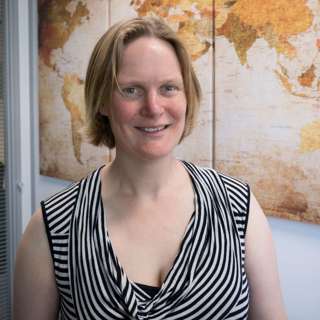
The barista gives you your coffee and change, and you walk away from the busy line. But you suddenly realise she gave you $1 less than she should have. Do you brush your way past the people now waiting, or just accept this as a dollar you’re never getting back? According to philosophy Professor Hilary Greaves - Director of Oxford University's Global Priorities Institute, which is hiring - this simple decision will completely change the long-term future by altering the identities of almost all future generations.

How? Because by rushing back to the counter, you slightly change the timing of everything else people in line do during that day - including changing the timing of the interactions they have with everyone else. Eventually these causal links will reach someone who was going to conceive a child.

By causing a child to be conceived a few fractions of a second earlier or later, you change the sperm that fertilizes their egg, resulting in a totally different person. So asking for that $1 has now made the difference between all the things that this actual child will do in their life, and all the things that the merely possible child - who didn't exist because of what you did - would have done if you decided not to worry about it.

As that child's actions ripple out to everyone else who conceives down the generations, ultimately the entire human population will become different, all for the sake of your dollar. Will your choice cause a future Hitler to be born, or not to be born? Probably both!

Links to learn more, summary and full transcript.

Some find this concerning. The actual long term effects of your decisions are so unpredictable, it looks like you’re totally clueless about what's going to lead to the best outcomes. It might lead to decision paralysis - you won’t be able to take any action at all.

Prof Greaves doesn’t share this concern for most real life decisions. If there’s no reasonable way to assign probabilities to far-future outcomes, then the possibility that you might make things better in completely unpredictable ways is more or less canceled out by equally likely opposite possibility.

But, if instead we’re talking about a decision that involves highly-structured, systematic reasons for thinking there might be a general tendency of your action to make things better or worse -- for example if we increase economic growth -- Prof Greaves says that we don’t get to just ignore the unforeseeable effects.

When there are complex arguments on both sides, it's unclear what probabilities you should assign to this or that claim. Yet, given its importance, whether you should take the action in question actually does depend on figuring out these numbers. So, what do we do?

Today’s episode blends philosophy with an exploration of the mission and research agenda of the Global Priorities Institute: to develop the effective altruism movement within academia. We cover:

* How controversial is the multiverse interpretation of quantum physics?
* Given moral uncertainty, how should population ethics affect our real life decisions?
* How should we think about archetypal decision theory problems?
* What are the consequences of cluelessness for those who based their donation advice on GiveWell style recommendations?
* How could reducing extinction risk be a good cause for risk-averse people?

Get this episode by subscribing: type '80,000 Hours' into your podcasting app.

The 80,000 Hours Podcast is produced by Keiran Harris.

Episoder(326)

Emergency pod: Did OpenAI give up, or is this just a new trap? (with Rose Chan Loui)

Emergency pod: Did OpenAI give up, or is this just a new trap? (with Rose Chan Loui)

When attorneys general intervene in corporate affairs, it usually means something has gone seriously wrong. In OpenAI’s case, it appears to have forced a dramatic reversal of the company’s plans to si...

8 Mai 20251h 2min

#216 – Ian Dunt on why governments in Britain and elsewhere can't get anything done – and how to fix it

#216 – Ian Dunt on why governments in Britain and elsewhere can't get anything done – and how to fix it

When you have a system where ministers almost never understand their portfolios, civil servants change jobs every few months, and MPs don't grasp parliamentary procedure even after decades in office —...

2 Mai 20253h 14min

Serendipity, weird bets, & cold emails that actually work: Career advice from 16 former guests

Serendipity, weird bets, & cold emails that actually work: Career advice from 16 former guests

How do you navigate a career path when the future of work is uncertain? How important is mentorship versus immediate impact? Is it better to focus on your strengths or on the world’s most pressing pro...

24 Apr 20252h 18min

#215 – Tom Davidson on how AI-enabled coups could allow a tiny group to seize power

#215 – Tom Davidson on how AI-enabled coups could allow a tiny group to seize power

Throughout history, technological revolutions have fundamentally shifted the balance of power in society. The Industrial Revolution created conditions where democracies could flourish for the first ti...

16 Apr 20253h 22min

Guilt, imposter syndrome & doing good: 16 past guests share their mental health journeys

Guilt, imposter syndrome & doing good: 16 past guests share their mental health journeys

"We are aiming for a place where we can decouple the scorecard from our worthiness. It’s of course the case that in trying to optimise the good, we will always be falling short. The question is how mu...

11 Apr 20251h 47min

#214 – Buck Shlegeris on controlling AI that wants to take over – so we can use it anyway

#214 – Buck Shlegeris on controlling AI that wants to take over – so we can use it anyway

Most AI safety conversations centre on alignment: ensuring AI systems share our values and goals. But despite progress, we’re unlikely to know we’ve solved the problem before the arrival of human-leve...

4 Apr 20252h 16min

15 expert takes on infosec in the age of AI

15 expert takes on infosec in the age of AI

"There’s almost no story of the future going well that doesn’t have a part that’s like '…and no evil person steals the AI weights and goes and does evil stuff.' So it has highlighted the importance of...

28 Mar 20252h 35min

#213 – Will MacAskill on AI causing a “century in a decade” – and how we're completely unprepared

#213 – Will MacAskill on AI causing a “century in a decade” – and how we're completely unprepared

The 20th century saw unprecedented change: nuclear weapons, satellites, the rise and fall of communism, third-wave feminism, the internet, postmodernism, game theory, genetic engineering, the Big Bang...

11 Mar 20253h 57min

Populært innen Fakta

fastlegen
dine-penger-pengeradet
relasjonspodden-med-dora-thorhallsdottir-kjersti-idem
foreldreradet
treningspodden
rss-strid-de-norske-borgerkrigene
mikkels-paskenotter
jakt-og-fiskepodden
sinnsyn
takk-og-lov-med-anine-kierulf
hverdagspsyken
rss-sunn-okonomi
gravid-uke-for-uke
rss-kunsten-a-leve
rss-bisarr-historie
tomprat-med-gunnar-tjomlid
rss-kull
hagespiren-podcast
rss-var-forste-kaffe
fryktlos