
#49 - Rachel Glennerster on a year's worth of education for 30c & other development 'best buys'

#49 - Rachel Glennerster on a year's worth of education for 30c & other development 'best buys'

If I told you it's possible to deliver an extra year of ideal primary-level education for under $1, would you believe me? Hopefully not - the claim is absurd on its face.

But it may be true nonetheless. The very best education interventions are phenomenally cost-effective, and they're not the kinds of things you'd expect, says Dr Rachel Glennerster.

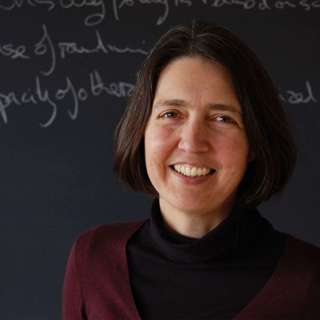
She's Chief Economist at the UK's foreign aid agency DFID, and used to run J-PAL, the world-famous anti-poverty research centre based in MIT's Economics Department, where she studied the impact of a wide range of approaches to improving education, health, and governing institutions. According to Dr Glennerster:

"...when we looked at the cost effectiveness of education programs, there were a ton of zeros, and there were a ton of zeros on the things that we spend most of our money on. So more teachers, more books, more inputs, like smaller class sizes - at least in the developing world - seem to have no impact, and that's where most government money gets spent."

"But measurements for the top ones - the most cost effective programs - say they deliver 460 LAYS per £100 spent ($US130). LAYS are Learning-Adjusted Years of Schooling. Each one is the equivalent of the best possible year of education you can have - Singapore-level."

Links to learn more, summary and full transcript.

"...the two programs that come out as spectacularly effective... well, the first is just rearranging kids in a class."

"You have to test the kids, so that you can put the kids who are performing at grade two level in the grade two class, and the kids who are performing at grade four level in the grade four class, even if they're different ages - and they learn so much better. So that's why it's so phenomenally cost effective because, it really doesn't cost anything."

"The other one is providing information. So sending information over the phone [for example about how much more people earn if they do well in school and graduate]. So these really small nudges. Now none of those nudges will individually transform any kid's life, but they are so cheap that you get these fantastic returns on investment - and we do very little of that kind of thing."

In this episode, Dr Glennerster shares her decades of accumulated wisdom on which anti-poverty programs are overrated, which are neglected opportunities, and how we can know the difference, across a range of fields including health, empowering women and macroeconomic policy.

Regular listeners will be wondering - have we forgotten all about the lessons from episode 30 of the show with Dr Eva Vivalt? She threw several buckets of cold water on the hope that we could accurately measure the effectiveness of social programs at all.

According to Vivalt, her dataset of hundreds of randomised controlled trials indicates that social science findings don’t generalize well at all. The results of a trial at a school in Namibia tell us remarkably little about how a similar program will perform if delivered at another school in Namibia - let alone if it's attempted in India instead.

Rachel offers a different and more optimistic interpretation of Eva's findings. To learn more and figure out who you sympathise with more, you'll just have to listen to the episode.

Regardless, Vivalt and Glennerster agree that we should continue to run these kinds of studies, and today’s episode delves into the latest ideas in global health and development.

Get this episode by subscribing: type '80,000 Hours' into your podcasting app.

The 80,000 Hours Podcast is produced by Keiran Harris.

Episoder(325)

Rob Wiblin on plastic straws, nicotine, doping, & whether changing the long-term is really possible

Rob Wiblin on plastic straws, nicotine, doping, & whether changing the long-term is really possible

Today's episode is a compilation of interviews I recently recorded for two other shows, Love Your Work and The Neoliberal Podcast.  If you've listened to absolutely everything on this podcast feed, y...

25 Sep 20193h 14min

Have we helped you have a bigger social impact? Our annual survey, plus other ways we can help you.

Have we helped you have a bigger social impact? Our annual survey, plus other ways we can help you.

1. Fill out our annual impact survey here. 2. Find a great vacancy on our job board. 3. Learn about our key ideas, and get links to our top articles. 4. Join our newsletter for an email about what's n...

16 Sep 20193min

#63 – Vitalik Buterin on better ways to fund public goods, blockchain's failures, & effective giving

#63 – Vitalik Buterin on better ways to fund public goods, blockchain's failures, & effective giving

Historically, progress in the field of cryptography has had major consequences. It has changed the course of major wars, made it possible to do business on the internet, and enabled private communicat...

3 Sep 20193h 18min
#62 – Paul Christiano on messaging the future, increasing compute, & how CO2 impacts your brain

#62 – Paul Christiano on messaging the future, increasing compute, & how CO2 impacts your brain

Imagine that – one day – humanity dies out. At some point, many millions of years later, intelligent life might well evolve again. Is there any message we could leave that would reliably help them out...

5 Aug 20192h 11min

#61 - Helen Toner on emerging technology, national security, and China

#61 - Helen Toner on emerging technology, national security, and China

From 1870 to 1950, the introduction of electricity transformed life in the US and UK, as people gained access to lighting, radio and a wide range of household appliances for the first time. Electricit...

17 Jul 20191h 54min
#60 - Phil Tetlock on why accurate forecasting matters for everything, and how you can do it better

#60 - Phil Tetlock on why accurate forecasting matters for everything, and how you can do it better

Have you ever been infuriated by a doctor's unwillingness to give you an honest, probabilistic estimate about what to expect? Or a lawyer who won't tell you the chances you'll win your case? Their beh...

28 Jun 20192h 11min
#59 – Cass Sunstein on how change happens, and why it's so often abrupt & unpredictable

#59 – Cass Sunstein on how change happens, and why it's so often abrupt & unpredictable

It can often feel hopeless to be an activist seeking social change on an obscure issue where most people seem opposed or at best indifferent to you. But according to a new book by Professor Cass Sunst...

17 Jun 20191h 43min

#58 – Pushmeet Kohli of DeepMind on designing robust & reliable AI systems and how to succeed in AI

#58 – Pushmeet Kohli of DeepMind on designing robust & reliable AI systems and how to succeed in AI

When you're building a bridge, responsibility for making sure it won't fall over isn't handed over to a few 'bridge not falling down engineers'. Making sure a bridge is safe to use and remains standin...

3 Jun 20191h 30min

Populært innen Fakta

fastlegen
dine-penger-pengeradet
relasjonspodden-med-dora-thorhallsdottir-kjersti-idem
treningspodden
rss-strid-de-norske-borgerkrigene
foreldreradet
rss-sunn-okonomi
jakt-og-fiskepodden
takk-og-lov-med-anine-kierulf
sinnsyn
merry-quizmas
rss-kunsten-a-leve
lederskap-nhhs-podkast-om-ledelse
smart-forklart
hverdagspsyken
gravid-uke-for-uke
level-up-med-anniken-binz
hagespiren-podcast
rss-kull
fryktlos