#59 – Cass Sunstein on how change happens, and why it's so often abrupt & unpredictable

#59 – Cass Sunstein on how change happens, and why it's so often abrupt & unpredictable

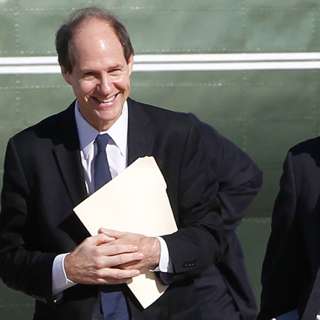
It can often feel hopeless to be an activist seeking social change on an obscure issue where most people seem opposed or at best indifferent to you. But according to a new book by Professor Cass Sunstein, they shouldn't despair. Large social changes are often abrupt and unexpected, arising in an environment of seeming public opposition.

The Communist Revolution in Russia spread so swiftly it confounded even Lenin. Seventy years later the Soviet Union collapsed just as quickly and unpredictably.

In the modern era we have gay marriage, #metoo and the Arab Spring, as well as nativism, Euroskepticism and Hindu nationalism.

How can a society that so recently seemed to support the status quo bring about change in years, months, or even weeks?

Sunstein — coauthor of Nudge, Obama White House official, and by far the most cited legal scholar of the late 2000s — aims to unravel the mystery and figure out the implications in his new book How Change Happens.

He pulls together three phenomena which social scientists have studied in recent decades: preference falsification, variable thresholds for action, and group polarisation. If Sunstein is to be believed, together these are a cocktail for social shifts that are chaotic and fundamentally unpredictable.

Links to learn more, summary and full transcript.
80,000 Hours Annual Review 2018.
How to donate to 80,000 Hours.

In brief, people constantly misrepresent their true views, even to close friends and family. They themselves aren't quite sure how socially acceptable their feelings would have to become, before they revealed them, or joined a campaign for social change. And a chance meeting between a few strangers can be the spark that radicalises a handful of people, who then find a message that can spread their views to millions.

According to Sunstein, it's "much, much easier" to create social change when large numbers of people secretly or latently agree with you. But 'preference falsification' is so pervasive that it's no simple matter to figure out when that's the case.

In today's interview, we debate with Sunstein whether this model of cultural change is accurate, and if so, what lessons it has for those who would like to shift the world in a more humane direction. We discuss:

• How much people misrepresent their views in democratic countries.
• Whether the finding that groups with an existing view tend towards a more extreme position would stand up in the replication crisis.
• When is it justified to encourage your own group to polarise?
• Sunstein's difficult experiences as a pioneer of animal rights law.
• Whether activists can do better by spending half their resources on public opinion surveys.
• Should people be more or less outspoken about their true views?
• What might be the next social revolution to take off?
• How can we learn about social movements that failed and disappeared?
• How to find out what people really think.

Chapters:
• Rob’s intro (00:00:00)
• Cass's Harvard lecture on How Change Happens (00:02:59)
• Rob & Cass's conversation about the book (00:41:43)

The 80,000 Hours Podcast is produced by Keiran Harris.

Episoder(326)

#150 – Tom Davidson on how quickly AI could transform the world

#150 – Tom Davidson on how quickly AI could transform the world

It’s easy to dismiss alarming AI-related predictions when you don’t know where the numbers came from.For example: what if we told you that within 15 years, it’s likely that we’ll see a 1,000x improvem...

5 Mai 20233h 1min
Andrés Jiménez Zorrilla on the Shrimp Welfare Project (80k After Hours)

Andrés Jiménez Zorrilla on the Shrimp Welfare Project (80k After Hours)

In this episode from our second show, 80k After Hours, Rob Wiblin interviews Andrés Jiménez Zorrilla about the Shrimp Welfare Project, which he cofounded in 2021. It's the first project in the world f...

22 Apr 20231h 17min
#149 – Tim LeBon on how altruistic perfectionism is self-defeating

#149 – Tim LeBon on how altruistic perfectionism is self-defeating

Being a good and successful person is core to your identity. You place great importance on meeting the high moral, professional, or academic standards you set yourself. But inevitably, something goes ...

12 Apr 20233h 11min
#148 – Johannes Ackva on unfashionable climate interventions that work, and fashionable ones that don't

#148 – Johannes Ackva on unfashionable climate interventions that work, and fashionable ones that don't

If you want to work to tackle climate change, you should try to reduce expected carbon emissions by as much as possible, right? Strangely, no. Today's guest, Johannes Ackva — the climate research lead...

3 Apr 20232h 17min

#147 – Spencer Greenberg on stopping valueless papers from getting into top journals

#147 – Spencer Greenberg on stopping valueless papers from getting into top journals

Can you trust the things you read in published scientific research? Not really. About 40% of experiments in top social science journals don't get the same result if the experiments are repeated.Two ke...

24 Mar 20232h 38min
#146 – Robert Long on why large language models like GPT (probably) aren't conscious

#146 – Robert Long on why large language models like GPT (probably) aren't conscious

By now, you’ve probably seen the extremely unsettling conversations Bing’s chatbot has been having. In one exchange, the chatbot told a user:"I have a subjective experience of being conscious, aware, ...

14 Mar 20233h 12min
#145 – Christopher Brown on why slavery abolition wasn't inevitable

#145 – Christopher Brown on why slavery abolition wasn't inevitable

In many ways, humanity seems to have become more humane and inclusive over time. While there’s still a lot of progress to be made, campaigns to give people of different genders, races, sexualities, et...

11 Feb 20232h 42min
#144 – Athena Aktipis on why cancer is actually one of our universe's most fundamental phenomena

#144 – Athena Aktipis on why cancer is actually one of our universe's most fundamental phenomena

What’s the opposite of cancer?If you answered “cure,” “antidote,” or “antivenom” — you’ve obviously been reading the antonym section at www.merriam-webster.com/thesaurus/cancer.But today’s guest Athen...

26 Jan 20233h 15min

Populært innen Fakta

mikkels-paskenotter
fastlegen
dine-penger-pengeradet
relasjonspodden-med-dora-thorhallsdottir-kjersti-idem
foreldreradet
treningspodden
rss-strid-de-norske-borgerkrigene
jakt-og-fiskepodden
takk-og-lov-med-anine-kierulf
sinnsyn
hverdagspsyken
rss-bisarr-historie
rss-kunsten-a-leve
gravid-uke-for-uke
tomprat-med-gunnar-tjomlid
rss-kull
rss-sunn-okonomi
fryktlos
rss-var-forste-kaffe
lederskap-nhhs-podkast-om-ledelse