#145 – Christopher Brown on why slavery abolition wasn't inevitable

#145 – Christopher Brown on why slavery abolition wasn't inevitable

In many ways, humanity seems to have become more humane and inclusive over time. While there’s still a lot of progress to be made, campaigns to give people of different genders, races, sexualities, ethnicities, beliefs, and abilities equal treatment and rights have had significant success.

It’s tempting to believe this was inevitable — that the arc of history “bends toward justice,” and that as humans get richer, we’ll make even more moral progress.

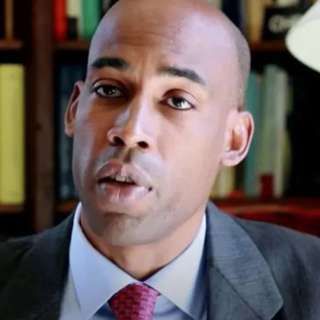
But today's guest Christopher Brown — a professor of history at Columbia University and specialist in the abolitionist movement and the British Empire during the 18th and 19th centuries — believes the story of how slavery became unacceptable suggests moral progress is far from inevitable.

Links to learn more, video, highlights, and full transcript.

While most of us today feel that the abolition of slavery was sure to happen sooner or later as humans became richer and more educated, Christopher doesn't believe any of the arguments for that conclusion pass muster. If he's right, a counterfactual history where slavery remains widespread in 2023 isn't so far-fetched.

As Christopher lays out in his two key books, Moral Capital: Foundations of British Abolitionism and Arming Slaves: From Classical Times to the Modern Age, slavery has been ubiquitous throughout history. Slavery of some form was fundamental in Classical Greece, the Roman Empire, in much of the Islamic civilization, in South Asia, and in parts of early modern East Asia, Korea, China.

It was justified on all sorts of grounds that sound mad to us today. But according to Christopher, while there’s evidence that slavery was questioned in many of these civilisations, and periodically attacked by slaves themselves, there was no enduring or successful moral advocacy against slavery until the British abolitionist movement of the 1700s.

That movement first conquered Britain and its empire, then eventually the whole world. But the fact that there's only a single time in history that a persistent effort to ban slavery got off the ground is a big clue that opposition to slavery was a contingent matter: if abolition had been inevitable, we’d expect to see multiple independent abolitionist movements thoroughly history, providing redundancy should any one of them fail.

Christopher argues that this rarity is primarily down to the enormous economic and cultural incentives to deny the moral repugnancy of slavery, and crush opposition to it with violence wherever necessary.

Mere awareness is insufficient to guarantee a movement will arise to fix a problem. Humanity continues to allow many severe injustices to persist, despite being aware of them. So why is it so hard to imagine we might have done the same with forced labour?

In this episode, Christopher describes the unique and peculiar set of political, social and religious circumstances that gave rise to the only successful and lasting anti-slavery movement in human history. These circumstances were sufficiently improbable that Christopher believes there are very nearby worlds where abolitionism might never have taken off.

We also discuss:

  • Various instantiations of slavery throughout human history
  • Signs of antislavery sentiment before the 17th century
  • The role of the Quakers in early British abolitionist movement
  • The importance of individual “heroes” in the abolitionist movement
  • Arguments against the idea that the abolition of slavery was contingent
  • Whether there have ever been any major moral shifts that were inevitable

Get this episode by subscribing to our podcast on the world’s most pressing problems and how to solve them: type 80,000 Hours into your podcasting app.

Producer: Keiran Harris
Audio mastering: Milo McGuire
Transcriptions: Katy Moore

Denne episoden er hentet fra en åpen RSS-feed og er ikke publisert av Podme. Den kan derfor inneholde annonser.

Episoder(340)

We can guess what intergalactic war would look like. And strangely, it matters.

We can guess what intergalactic war would look like. And strangely, it matters.

Intergalactic war is probably billions of years away — yet physics can already tell us how it ends. And strangely that conclusion is relevant to decisions people have to make today.In this video, Rob ...

18 Jun 15min

How AI could create the world’s biggest problems (article by Zershaaneh Qureshi)

How AI could create the world’s biggest problems (article by Zershaaneh Qureshi)

Imagine you’re living 15,000 years ago. Your people are hunter-gatherers and you sleep under the stars. If someone told you humans would one day build cities with millions of people, fly through the a...

11 Jun 1h 29min

What it's really like to run AGI safety at Google DeepMind (and where I disagree with 'doomers') | Rohin Shah

What it's really like to run AGI safety at Google DeepMind (and where I disagree with 'doomers') | Rohin Shah

Most people working on AI safety think without a massive effort AI systems will probably end up with goals catastrophically different from humanity’s. Today’s guest, Rohin Shah — head of AGI Safety an...

2 Jun 2h 48min

What makes for a dream job? | Benjamin Todd

What makes for a dream job? | Benjamin Todd

What actually makes a job fulfilling? It's not what most career advice tells you. "Follow your passion" sounds inspiring, but it's misleading — and the research backs that up.Drawing on hundreds of st...

28 Mai 28min

We’re updating our career advice for the strangest time in history | Benjamin Todd, author of 80,000 Hours

We’re updating our career advice for the strangest time in history | Benjamin Todd, author of 80,000 Hours

The average career is 80,000 hours long. With AI advancing so rapidly, the hours you have left in your career matter more than ever.Some leading AI researchers think there’s a 10% chance that AI syste...

26 Mai 1h 6min

Can AIs already start 'rogue deployments' inside AI companies? (Landmark new METR report)

Can AIs already start 'rogue deployments' inside AI companies? (Landmark new METR report)

A red-teamer was embedded inside Anthropic for three weeks, told to imagine he was an evil Claude, and asked to figure out how to launch a ‘rogue AI deployment’ without getting caught. It’s one part o...

20 Mai 20min

#243 – 'Godfather of AI' Yoshua Bengio: "I now see a path" to safe superintelligent AI

#243 – 'Godfather of AI' Yoshua Bengio: "I now see a path" to safe superintelligent AI

The co-inventor of modern AI and the most cited living scientist believes he's figured out how to ensure AI is honest, incapable of deception, and never goes rogue. Yoshua Bengio – Turing Award Winner...

7 Mai 2h 35min

'95% of AI Pilots Fail': The hidden agenda behind the viral stat that misled millions

'95% of AI Pilots Fail': The hidden agenda behind the viral stat that misled millions

You might have heard that '95% of corporate AI pilots' are failing. It was one of the most widely cited AI statistics of 2025, parroted by media outlets everywhere. It helped trigger a Nasdaq selloff ...

28 Apr 10min

Populært innen Fakta

fastlegen
dine-penger-pengeradet
relasjonspodden-med-dora-thorhallsdottir-kjersti-idem
foreldreradet
treningspodden
jakt-og-fiskepodden
rss-kull
takk-og-lov-med-anine-kierulf
mikkels-paskenotter
rss-strid-de-norske-borgerkrigene
rss-kunsten-a-leve
hverdagspsyken
sinnsyn
rss-bisarr-historie
rss-impressions-2
gravid-uke-for-uke
rss-mind-body-podden
level-up-med-anniken-binz
hagespiren-podcast
tomprat-med-gunnar-tjomlid