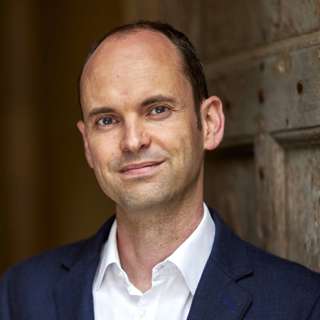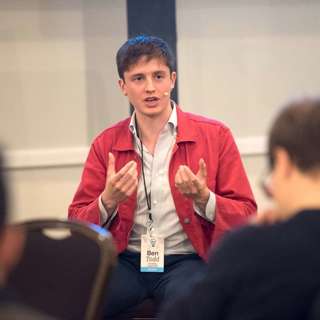

#17 Classic episode - Will MacAskill on moral uncertainty, utilitarianism & how to avoid being a moral monster

#17 Classic episode - Will MacAskill on moral uncertainty, utilitarianism & how to avoid being a moral monster

Rebroadcast: this episode was originally released in January 2018.

Immanuel Kant is a profoundly influential figure in modern philosophy, and was one of the earliest proponents for universal democracy and international cooperation. He also thought that women have no place in civil society, that it was okay to kill illegitimate children, and that there was a ranking in the moral worth of different races.

Throughout history we’ve consistently believed, as common sense, truly horrifying things by today’s standards. According to University of Oxford Professor Will MacAskill, it’s extremely likely that we’re in the same boat today. If we accept that we’re probably making major moral errors, how should we proceed?

Full transcript, key points & links to articles discussed in the show.

If our morality is tied to common sense intuitions, we’re probably just preserving these biases and moral errors. Instead we need to develop a moral view that criticises common sense intuitions, and gives us a chance to move beyond them. And if humanity is going to spread to the stars it could be worth dedicating hundreds or thousands of years to moral reflection, lest we spread our errors far and wide.

Will is an Associate Professor in Philosophy at Oxford University, author of Doing Good Better, and one of the co-founders of the effective altruism (EA) community. In this interview we discuss a wide range of topics:

• How would we go about a ‘long reflection’ to fix our moral errors?
• Will’s forthcoming book on how one should reason and act if you don't know which moral theory is correct. What are the practical implications of so-called ‘moral uncertainty’?
• If we basically solve existential risks, what does humanity do next?
• What are some of Will’s most unusual philosophical positions?
• What are the best arguments for and against utilitarianism?
• Given disagreements among philosophers, how much should we believe the findings of philosophy as a field?
• What are some the biases we should be aware of within academia?
• What are some of the downsides of becoming a professor?
• What are the merits of becoming a philosopher?
• How does the media image of EA differ to the actual goals of the community?
• What kinds of things would you like to see the EA community do differently?
• How much should we explore potentially controversial ideas?
• How focused should we be on diversity?
• What are the best arguments against effective altruism?

Get this episode by subscribing: type '80,000 Hours' into your podcasting app.

The 80,000 Hours Podcast is produced by Keiran Harris.

Episoder(326)

Rob & Howie on what we do and don't know about 2019-nCoV

Rob & Howie on what we do and don't know about 2019-nCoV

Two 80,000 Hours researchers, Robert Wiblin and Howie Lempel, record an experimental bonus episode about the new 2019-nCoV virus.See this list of resources, including many discussed in the episode, to...

3 Feb 20201h 18min

#68 - Will MacAskill on the paralysis argument, whether we're at the hinge of history, & his new priorities

#68 - Will MacAskill on the paralysis argument, whether we're at the hinge of history, & his new priorities

You’re given a box with a set of dice in it. If you roll an even number, a person's life is saved. If you roll an odd number, someone else will die. Each time you shake the box you get $10. Should you...

24 Jan 20203h 25min

#44 Classic episode - Paul Christiano on finding real solutions to the AI alignment problem

#44 Classic episode - Paul Christiano on finding real solutions to the AI alignment problem

Rebroadcast: this episode was originally released in October 2018. Paul Christiano is one of the smartest people I know. After our first session produced such great material, we decided to do a seco...

15 Jan 20203h 51min

#33 Classic episode - Anders Sandberg on cryonics, solar flares, and the annual odds of nuclear war

#33 Classic episode - Anders Sandberg on cryonics, solar flares, and the annual odds of nuclear war

Rebroadcast: this episode was originally released in May 2018. Joseph Stalin had a life-extension program dedicated to making himself immortal. What if he had succeeded? According to Bryan Caplan ...

8 Jan 20201h 25min

#67 – David Chalmers on the nature and ethics of consciousness

#67 – David Chalmers on the nature and ethics of consciousness

What is it like to be you right now? You're seeing this text on the screen, smelling the coffee next to you, and feeling the warmth of the cup. There’s a lot going on in your head — your conscious exp...

16 Des 20194h 41min

#66 – Peter Singer on being provocative, effective altruism, & how his moral views have changed

#66 – Peter Singer on being provocative, effective altruism, & how his moral views have changed

In 1989, the professor of moral philosophy Peter Singer was all over the news for his inflammatory opinions about abortion. But the controversy stemmed from Practical Ethics — a book he’d actually rel...

5 Des 20192h 1min

#65 – Ambassador Bonnie Jenkins on 8 years pursuing WMD arms control, & diversity in diplomacy

#65 – Ambassador Bonnie Jenkins on 8 years pursuing WMD arms control, & diversity in diplomacy

"…it started when the Soviet Union fell apart and there was a real desire to ensure security of nuclear materials and pathogens, and that scientists with [WMD-related] knowledge could get paid so that...

19 Nov 20191h 40min

Populært innen Fakta

fastlegen
dine-penger-pengeradet
relasjonspodden-med-dora-thorhallsdottir-kjersti-idem
foreldreradet
treningspodden
rss-strid-de-norske-borgerkrigene
mikkels-paskenotter
jakt-og-fiskepodden
sinnsyn
takk-og-lov-med-anine-kierulf
hverdagspsyken
rss-sunn-okonomi
gravid-uke-for-uke
rss-kunsten-a-leve
rss-bisarr-historie
tomprat-med-gunnar-tjomlid
rss-kull
hagespiren-podcast
rss-var-forste-kaffe
fryktlos