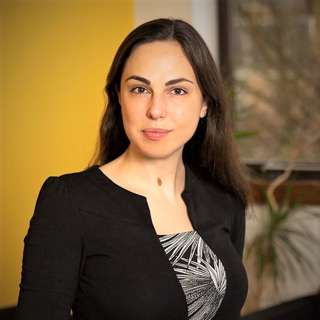

#70 - Dr Cassidy Nelson on the 12 best ways to stop the next pandemic (and limit nCoV)

#70 - Dr Cassidy Nelson on the 12 best ways to stop the next pandemic (and limit nCoV)

nCoV is alarming governments and citizens around the world. It has killed more than 1,000 people, brought the Chinese economy to a standstill, and continues to show up in more and more places. But bad though it is, it's much closer to a warning shot than a worst case scenario. The next emerging infectious disease could easily be more contagious, more fatal, or both.

Despite improvements in the last few decades, humanity is still not nearly prepared enough to contain new diseases. We identify them too slowly. We can't do enough to reduce their spread. And we lack vaccines or drugs treatments for at least a year, if they ever arrive at all.

Links to learn more, summary and full transcript.

This is a precarious situation, especially with advances in biotechnology increasing our ability to modify viruses and bacteria as we like.

In today's episode, Cassidy Nelson, a medical doctor and research scholar at Oxford University's Future of Humanity Institute, explains 12 things her research group think urgently need to happen if we're to keep the risk at acceptable levels. The ideas are:

Science

1. Roll out genetic sequencing tests that lets you test someone for all known and unknown pathogens in one go.
2. Fund research into faster ‘platform’ methods for going from pathogen to vaccine, perhaps using innovation prizes.
3. Fund R&D into broad-spectrum drugs, especially antivirals, similar to how we have generic antibiotics against multiple types of bacteria.

Response

4. Develop a national plan for responding to a severe pandemic, regardless of the cause. Have a backup plan for when things are so bad the normal processes have stopped working entirely.
5. Rigorously evaluate in what situations travel bans are warranted. (They're more often counterproductive.)
6. Coax countries into more rapidly sharing their medical data, so that during an outbreak the disease can be understood and countermeasures deployed as quickly as possible.
7. Set up genetic surveillance in hospitals, public transport and elsewhere, to detect new pathogens before an outbreak — or even before patients develop symptoms.
8. Run regular tabletop exercises within governments to simulate how a pandemic response would play out.

Oversight

9. Mandate disclosure of accidents in the biosafety labs which handle the most dangerous pathogens.
10. Figure out how to govern DNA synthesis businesses, to make it harder to mail order the DNA of a dangerous pathogen.
11. Require full cost-benefit analysis of 'dual-use' research projects that can generate global risks.

12. And finally, to maintain momentum, it's necessary to clearly assign responsibility for the above to particular individuals and organisations.

These advances can be pursued by politicians and public servants, as well as academics, entrepreneurs and doctors, opening the door for many listeners to pitch in to help solve this incredibly pressing problem.

In the episode Rob and Cassidy also talk about:

• How Cassidy went from clinical medicine to a PhD studying novel pathogens with pandemic potential.
• The pros, and significant cons, of travel restrictions.
• Whether the same policies work for natural and anthropogenic pandemics.
• Ways listeners can pursue a career in biosecurity.
• Where we stand with nCoV as of today.

Chapters:

  • Rob’s intro (00:00:00)
  • The interview begins (00:03:27)
  • Where we stand with nCov today (00:07:24)
  • Policy idea 1: A drastic change to diagnostic testing (00:34:58)
  • Policy idea 2: Vaccine platforms (00:47:08)
  • Policy idea 3: Broad-spectrum therapeutics (00:54:48)
  • Policy idea 4: Develop a national plan for responding to a severe pandemic, regardless of the cause (01:02:15)
  • Policy idea 5: A different approach to travel bans (01:15:59)
  • Policy idea 6: Data sharing (01:16:48)
  • Policy idea 7: Prevention (01:24:45)
  • Policy idea 8: transparency around lab accidents (01:33:58)
  • Policy idea 9: DNA synthesis screening (01:39:22)
  • Policy idea 10: Dual Use Research oversight (01:48:47)
  • Policy idea 11: Pandemic tabletop exercises (02:00:00)
  • Policy idea 12: Coordination (02:12:20)


Get this episode by subscribing: type 80,000 Hours into your podcasting app. Or read the linked transcript.

Producer: Keiran Harris.
Transcriptions: Zakee Ulhaq.

Episoder(332)

#73 – Phil Trammell on patient philanthropy and waiting to do good

#73 – Phil Trammell on patient philanthropy and waiting to do good

To do good, most of us look to use our time and money to affect the world around us today. But perhaps that's all wrong. If you took $1,000 you were going to donate and instead put it in the stock mar...

17 Mar 20202h 35min
#72 - Toby Ord on the precipice and humanity's potential futures

#72 - Toby Ord on the precipice and humanity's potential futures

This week Oxford academic and 80,000 Hours trustee Dr Toby Ord released his new book The Precipice: Existential Risk and the Future of Humanity. It's about how our long-term future could be better tha...

7 Mar 20203h 14min

#71 - Benjamin Todd on the key ideas of 80,000 Hours

#71 - Benjamin Todd on the key ideas of 80,000 Hours

The 80,000 Hours Podcast is about “the world’s most pressing problems and how you can use your career to solve them”, and in this episode we tackle that question in the most direct way possible. Las...

2 Mar 20202h 57min

Arden & Rob on demandingness, work-life balance & injustice (80k team chat #1)

Arden & Rob on demandingness, work-life balance & injustice (80k team chat #1)

Today's bonus episode of the podcast is a quick conversation between me and my fellow 80,000 Hours researcher Arden Koehler about a few topics, including the demandingness of morality, work-life balan...

25 Feb 202044min
#69 – Jeffrey Ding on China, its AI dream, and what we get wrong about both

#69 – Jeffrey Ding on China, its AI dream, and what we get wrong about both

The State Council of China's 2017 AI plan was the starting point of China’s AI planning; China’s approach to AI is defined by its top-down and monolithic nature; China is winning the AI arms race; and...

6 Feb 20201h 37min
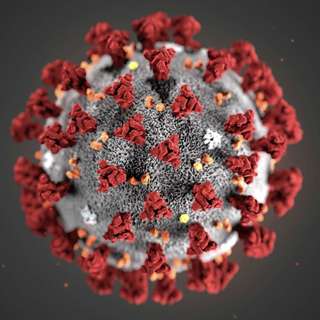
Rob & Howie on what we do and don't know about 2019-nCoV

Rob & Howie on what we do and don't know about 2019-nCoV

Two 80,000 Hours researchers, Robert Wiblin and Howie Lempel, record an experimental bonus episode about the new 2019-nCoV virus.See this list of resources, including many discussed in the episode, to...

3 Feb 20201h 18min

#68 - Will MacAskill on the paralysis argument, whether we're at the hinge of history, & his new priorities

#68 - Will MacAskill on the paralysis argument, whether we're at the hinge of history, & his new priorities

You’re given a box with a set of dice in it. If you roll an even number, a person's life is saved. If you roll an odd number, someone else will die. Each time you shake the box you get $10. Should you...

24 Jan 20203h 25min

Populært innen Fakta

fastlegen
dine-penger-pengeradet
relasjonspodden-med-dora-thorhallsdottir-kjersti-idem
mikkels-paskenotter
foreldreradet
rss-strid-de-norske-borgerkrigene
treningspodden
rss-bisarr-historie
jakt-og-fiskepodden
rss-sunn-okonomi
sinnsyn
takk-og-lov-med-anine-kierulf
ukast
hverdagspsyken
rss-bak-luftfarten
gravid-uke-for-uke
lederskap-nhhs-podkast-om-ledelse
fryktlos
level-up-med-anniken-binz
tomprat-med-gunnar-tjomlid