
#76 – Tara Kirk Sell on misinformation, who's done well and badly, & what to reopen first

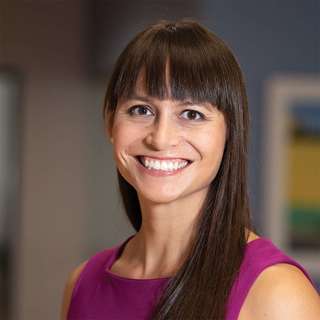
#76 – Tara Kirk Sell on misinformation, who's done well and badly, & what to reopen first

Amid a rising COVID-19 death toll, and looming economic disaster, we’ve been looking for good news — and one thing we're especially thankful for is the Johns Hopkins Center for Health Security (CHS).

CHS focuses on protecting us from major biological, chemical or nuclear disasters, through research that informs governments around the world. While this pandemic surprised many, just last October the Center ran a simulation of a 'new coronavirus' scenario to identify weaknesses in our ability to quickly respond. Their expertise has given them a key role in figuring out how to fight COVID-19.

Today’s guest, Dr Tara Kirk Sell, did her PhD in policy and communication during disease outbreaks, and has worked at CHS for 11 years on a range of important projects.

Links to learn more, summary and full transcript.

Last year she was a leader on Collective Intelligence for Disease Prediction, designed to sound the alarm about upcoming pandemics before others are paying attention.

Incredibly, the project almost closed in December, with COVID-19 just starting to spread around the world — but received new funding that allowed the project to respond quickly to the emerging disease.

She also contributed to a recent report attempting to explain the risks of specific types of activities resuming when COVID-19 lockdowns end.

We can't achieve zero risk — so differentiating activities on a spectrum is crucial. Choosing wisely can help us lead more normal lives without reviving the pandemic.

Dance clubs will have to stay closed, but hairdressers can adapt to minimise transmission, and Tara, who happens to be an Olympic silver-medalist in swimming, suggests outdoor non-contact sports could resume soon without much risk.

Her latest project deals with the challenge of misinformation during disease outbreaks.

Analysing the Ebola communication crisis of 2014, they found that even trained coders with public health expertise sometimes needed help to distinguish between true and misleading tweets — showing the danger of a continued lack of definitive information surrounding a virus and how it’s transmitted.

The challenge for governments is not simple. If they acknowledge how much they don't know, people may look elsewhere for guidance. But if they pretend to know things they don't, the result can be a huge loss of trust.

Despite their intense focus on COVID-19, researchers at CHS know that this is no one-off event. Many aspects of our collective response this time around have been alarmingly poor, and it won’t be long before Tara and her colleagues need to turn their mind to next time.

You can now donate to CHS through Effective Altruism Funds. Donations made through EA Funds are tax-deductible in the US, the UK, and the Netherlands.

Tara and Rob also discuss:

• Who has overperformed and underperformed expectations during COVID-19?
• Whe are people right to mistrust authorities?
• The media’s responsibility to be right
• What policy changes should be prioritised for next time
• Should we prepare for future pandemic while the COVID-19 is still going?
• The importance of keeping non-COVID health problems in mind
• The psychological difference between staying home voluntarily and being forced to
• Mistakes that we in the general public might be making
• Emerging technologies with the potential to reduce global catastrophic biological risks

Chapters:

  • Rob’s intro (00:00:00)
  • The interview begins (00:01:43)
  • Misinformation (00:05:07)
  • Who has done well during COVID-19? (00:22:19)
  • Guidance for governors on reopening (00:34:05)
  • Collective Intelligence for Disease Prediction project (00:45:35)
  • What else is CHS trying to do to address the pandemic? (00:59:51)
  • Deaths are not the only health impact of importance (01:05:33)
  • Policy change for future pandemics (01:10:57)
  • Emerging technologies with potential to reduce global catastrophic biological risks (01:22:37)
  • Careers (01:38:52)
  • Good news about COVID-19 (01:44:23)

Producer: Keiran Harris.
Audio mastering: Ben Cordell.
Transcriptions: Zakee Ulhaq.

Episoder(317)

AI might let a few people control everything — permanently (article by Rose Hadshar)

AI might let a few people control everything — permanently (article by Rose Hadshar)

Power is already concentrated today: over 800 million people live on less than $3 a day, the three richest men in the world are worth over $1 trillion, and almost six billion people live in countries ...

12 Des 20251h
#230 – Dean Ball on how AI is a huge deal — but we shouldn’t regulate it yet

#230 – Dean Ball on how AI is a huge deal — but we shouldn’t regulate it yet

Former White House staffer Dean Ball thinks it's very likely some form of 'superintelligence' arrives in under 20 years. He thinks AI being used for bioweapon research is "a real threat model, obvious...

10 Des 20252h 54min

#229 – Marius Hobbhahn on the race to solve AI scheming before models go superhuman

#229 – Marius Hobbhahn on the race to solve AI scheming before models go superhuman

We often worry about AI models “hallucinating” or making honest mistakes. But what happens when a model knows the truth, but decides to deceive you anyway to achieve a goal of its own? This isn’t sci-...

3 Des 20253h 3min
Rob & Luisa chat kids, the 2016 fertility crash, and how the 50s invented parenting that makes us miserable

Rob & Luisa chat kids, the 2016 fertility crash, and how the 50s invented parenting that makes us miserable

Global fertility rates aren’t just falling: the rate of decline is accelerating. From 2006 to 2016, fertility dropped gradually, but since 2016 the rate of decline has increased 4.5-fold. In many weal...

25 Nov 20251h 59min
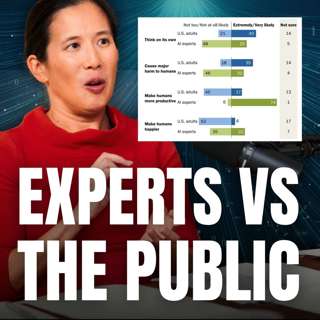
#228 – Eileen Yam on how we're completely out of touch with what the public thinks about AI

#228 – Eileen Yam on how we're completely out of touch with what the public thinks about AI

If you work in AI, you probably think it’s going to boost productivity, create wealth, advance science, and improve your life. If you’re a member of the American public, you probably strongly disagree...

20 Nov 20251h 43min
OpenAI: The nonprofit refuses to be killed (with Tyler Whitmer)

OpenAI: The nonprofit refuses to be killed (with Tyler Whitmer)

Last December, the OpenAI business put forward a plan to completely sideline its nonprofit board. But two state attorneys general have now blocked that effort and kept that board very much alive and k...

11 Nov 20251h 56min
#227 – Helen Toner on the geopolitics of AGI in China and the Middle East

#227 – Helen Toner on the geopolitics of AGI in China and the Middle East

With the US racing to develop AGI and superintelligence ahead of China, you might expect the two countries to be negotiating how they’ll deploy AI, including in the military, without coming to blows. ...

5 Nov 20252h 20min

#226 – Holden Karnofsky on unexploited opportunities to make AI safer — and all his AGI takes

#226 – Holden Karnofsky on unexploited opportunities to make AI safer — and all his AGI takes

For years, working on AI safety usually meant theorising about the ‘alignment problem’ or trying to convince other people to give a damn. If you could find any way to help, the work was frustrating an...

30 Okt 20254h 30min

Populært innen Fakta

fastlegen
dine-penger-pengeradet
relasjonspodden-med-dora-thorhallsdottir-kjersti-idem
treningspodden
foreldreradet
dopet
merry-quizmas
jakt-og-fiskepodden
sovnlos
rss-strid-de-norske-borgerkrigene
sinnsyn
podme-bio-3
rss-kull
hverdagspsyken
gravid-uke-for-uke
tomprat-med-gunnar-tjomlid
rss-kunsten-a-leve
fryktlos
level-up-med-anniken-binz
rss-var-forste-kaffe