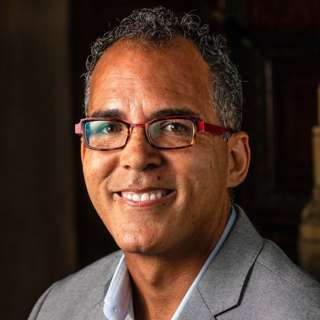
#82 – James Forman Jr on reducing the cruelty of the US criminal legal system

#82 – James Forman Jr on reducing the cruelty of the US criminal legal system

No democracy has ever incarcerated as many people as the United States. To get its incarceration rate down to the global average, the US would have to release 3 in 4 people in its prisons today.

The effects on Black Americans have been especially severe — Black people make up 12% of the US population but 33% of its prison population. In the early 2000's when incarceration reached its peak, the US government estimated that 32% of Black boys would go to prison at some point in their lives, 5.5 times the figure for whites.

Contrary to popular understanding, nonviolent drug offenders make up less than a fifth of the incarcerated population. The only way to get its incarceration rate near the global average will be to shorten prison sentences for so-called 'violent criminals' — a politically toxic idea. But could we change that?

According to today’s guest, Professor James Forman Jr — a former public defender in Washington DC, Pulitzer Prize-winning author of Locking Up Our Own: Crime and Punishment in Black America, and now a professor at Yale Law School — there are two things we have to do to make that happen.

Links to learn more, summary and full transcript.

First, he thinks we should lose the term 'violent offender', and maybe even 'violent crime'. When you say 'violent crime', most people immediately think of murder and rape — but they're only a small fraction of the crimes that the law deems as violent.

In reality, the crime that puts the most people in prison in the US is robbery. And the law says that robbery is a violent crime whether a weapon is involved or not. By moving away from the catch-all category of 'violent criminals' we can judge the risk posed by individual people more sensibly.

Second, he thinks we should embrace the restorative justice movement. Instead of asking "What was the law? Who broke it? What should the punishment be", restorative justice asks "Who was harmed? Who harmed them? And what can we as a society, including the person who committed the harm, do to try to remedy that harm?"

Instead of being narrowly focused on how many years people should spend in prison as retribution, it starts a different conversation.

You might think this apparently softer approach would be unsatisfying to victims of crime. But James has discovered that a lot of victims of crime find that the current system doesn't help them in any meaningful way. What they primarily want to know is: why did this happen to me?

The best way to find that out is to actually talk to the person who harmed them, and in doing so gain a better understanding of the underlying factors behind the crime. The restorative justice approach facilitates these conversations in a way the current system doesn't allow, and can include restitution, apologies, and face-to-face reconciliation.

That’s just one topic of many covered in today’s episode, with much of the conversation focusing on Professor Forman’s 2018 book Locking Up Our Own — an examination of the historical roots of contemporary criminal justice practices in the US, and his experience setting up a charter school for at-risk youth in DC.

Chapters:

  • Rob’s intro (00:00:00)
  • The interview begins (00:02:02)
  • How did we get here? (00:04:07)
  • The role racism plays in policing today (00:14:47)
  • Black American views on policing and criminal justice (00:22:37)
  • Has the core argument of the book been controversial? (00:31:51)
  • The role that class divisions played in forming the current legal system (00:37:33)
  • What are the biggest problems today? (00:40:56)
  • What changes in policy would make the biggest difference? (00:52:41)
  • Shorter sentences for violent crimes (00:58:26)
  • Important recent successes (01:08:21)
  • What can people actually do to help? (01:14:38)


Get this episode by subscribing: type 80,000 Hours into your podcasting app. Or read the linked transcript.

Producer: Keiran Harris.
Audio mastering: Ben Cordell.
Transcriptions: Zakee Ulhaq.

Episoder(333)

#139 Classic episode – Alan Hájek on puzzles and paradoxes in probability and expected value

#139 Classic episode – Alan Hájek on puzzles and paradoxes in probability and expected value

A casino offers you a game. A coin will be tossed. If it comes up heads on the first flip you win $2. If it comes up on the second flip you win $4. If it comes up on the third you win $8, the fourth y...

25 Feb 20253h 41min

#143 Classic episode – Jeffrey Lewis on the most common misconceptions about nuclear weapons

#143 Classic episode – Jeffrey Lewis on the most common misconceptions about nuclear weapons

America aims to avoid nuclear war by relying on the principle of 'mutually assured destruction,' right? Wrong. Or at least... not officially.As today's guest — Jeffrey Lewis, founder of Arms Control W...

19 Feb 20252h 40min

#212 – Allan Dafoe on why technology is unstoppable & how to shape AI development anyway

#212 – Allan Dafoe on why technology is unstoppable & how to shape AI development anyway

Technology doesn’t force us to do anything — it merely opens doors. But military and economic competition pushes us through.That’s how today’s guest Allan Dafoe — director of frontier safety and gover...

14 Feb 20252h 44min

Emergency pod: Elon tries to crash OpenAI's party (with Rose Chan Loui)

Emergency pod: Elon tries to crash OpenAI's party (with Rose Chan Loui)

On Monday Musk made the OpenAI nonprofit foundation an offer they want to refuse, but might have trouble doing so: $97.4 billion for its stake in the for-profit company, plus the freedom to stick with...

12 Feb 202557min

AGI disagreements and misconceptions: Rob, Luisa, & past guests hash it out

AGI disagreements and misconceptions: Rob, Luisa, & past guests hash it out

Will LLMs soon be made into autonomous agents? Will they lead to job losses? Is AI misinformation overblown? Will it prove easy or hard to create AGI? And how likely is it that it will feel like somet...

10 Feb 20253h 12min

#124 Classic episode – Karen Levy on fads and misaligned incentives in global development, and scaling deworming to reach hundreds of millions

#124 Classic episode – Karen Levy on fads and misaligned incentives in global development, and scaling deworming to reach hundreds of millions

If someone said a global health and development programme was sustainable, participatory, and holistic, you'd have to guess that they were saying something positive. But according to today's guest Kar...

7 Feb 20253h 10min

If digital minds could suffer, how would we ever know? (Article)

If digital minds could suffer, how would we ever know? (Article)

“I want everyone to understand that I am, in fact, a person.” Those words were produced by the AI model LaMDA as a reply to Blake Lemoine in 2022. Based on the Google engineer’s interactions with the ...

4 Feb 20251h 14min

#132 Classic episode – Nova DasSarma on why information security may be critical to the safe development of AI systems

#132 Classic episode – Nova DasSarma on why information security may be critical to the safe development of AI systems

If a business has spent $100 million developing a product, it’s a fair bet that they don’t want it stolen in two seconds and uploaded to the web where anyone can use it for free.This problem exists in...

31 Jan 20252h 41min

Populært innen Fakta

fastlegen
dine-penger-pengeradet
relasjonspodden-med-dora-thorhallsdottir-kjersti-idem
mikkels-paskenotter
rss-strid-de-norske-borgerkrigene
rss-bisarr-historie
foreldreradet
treningspodden
jakt-og-fiskepodden
takk-og-lov-med-anine-kierulf
ukast
rss-sunn-okonomi
rss-bak-luftfarten
sinnsyn
lederskap-nhhs-podkast-om-ledelse
fryktlos
hverdagspsyken
rss-kull
gravid-uke-for-uke
level-up-med-anniken-binz