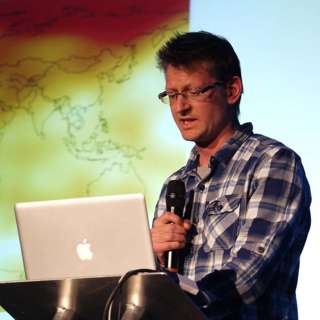
#85 - Mark Lynas on climate change, societal collapse & nuclear energy

#85 - Mark Lynas on climate change, societal collapse & nuclear energy

A golf-ball sized lump of uranium can deliver more than enough power to cover all of your lifetime energy use. To get the same energy from coal, you’d need 3,200 tonnes of black rock — a mass equivalent to 800 adult elephants, which would produce more than 11,000 tonnes of CO2. That’s about 11,000 tonnes more than the uranium.

Many people aren’t comfortable with the danger posed by nuclear power. But given the climatic stakes, it’s worth asking: Just how much more dangerous is it compared to fossil fuels?

According to today’s guest, Mark Lynas — author of Six Degrees: Our Future on a Hotter Planet (winner of the prestigious Royal Society Prizes for Science Books) and Nuclear 2.0 — it’s actually much, much safer.

Links to learn more, summary and full transcript.

Climatologists James Hansen and Pushker Kharecha calculated that the use of nuclear power between 1971 and 2009 avoided the premature deaths of 1.84 million people by avoiding air pollution from burning coal.

What about radiation or nuclear disasters? According to Our World In Data, in generating a given amount of electricity, nuclear, wind, and solar all cause about the same number of deaths — and it's a tiny number.

So what’s going on? Why isn’t everyone demanding a massive scale-up of nuclear energy to save lives and stop climate change? Mark and many other activists believe that unchecked climate change will result in the collapse of human civilization, so the stakes could not be higher.

Mark says that many environmentalists — including him — simply grew up with anti-nuclear attitudes all around them (possibly stemming from a conflation of nuclear weapons and nuclear energy) and haven't thought to question them.

But he thinks that once you believe in the climate emergency, you have to rethink your opposition to nuclear energy.

At 80,000 Hours we haven’t analysed the merits and flaws of the case for nuclear energy — especially compared to wind and solar paired with gas, hydro, or battery power to handle intermittency — but Mark is convinced.

He says it comes down to physics: Nuclear power is just so much denser.

We need to find an energy source that provides carbon-free power to ~10 billion people, and we need to do it while humanity is doubling or tripling (or more) its energy demand.

How do you do that without destroying the world's ecology? Mark thinks that nuclear is the only way.

Read a more in-depth version of the case for nuclear energy in the full blog post.

For Mark, the only argument against nuclear power is a political one -- that people won't want or accept it.

He says that he knows people in all kinds of mainstream environmental groups — such as Greenpeace — who agree that nuclear must be a vital part of any plan to solve climate change. But, because they think they'll be ostracized if they speak up, they keep their mouths shut.

Mark thinks this willingness to indulge beliefs that contradict scientific evidence stands in the way of actually fully addressing climate change, and so he’s helping to build a movement of folks who are out and proud about their support for nuclear energy.

This is only one topic of many in today’s interview. Arden, Rob, and Mark also discuss:

• At what degrees of warming does societal collapse become likely
• Whether climate change could lead to human extinction
• What environmentalists are getting wrong about climate change
• And much more.

Get this episode by subscribing: type 80,000 Hours into your podcasting app. Or read the linked transcript.

Producer: Keiran Harris.
Audio mastering: Ben Cordell.
Transcriptions: Zakee Ulhaq.

Episoder(332)

#57 – Tom Kalil on how to do the most good in government

#57 – Tom Kalil on how to do the most good in government

You’re 29 years old, and you’ve just been given a job in the White House. How do you quickly figure out how the US Executive Branch behemoth actually works, so that you can have as much impact as poss...

23 Apr 20192h 50min

#56 - Persis Eskander on wild animal welfare and what, if anything, to do about it

#56 - Persis Eskander on wild animal welfare and what, if anything, to do about it

Elephants in chains at travelling circuses; pregnant pigs trapped in coffin sized crates at factory farms; deers living in the wild. We should welcome the last as a pleasant break from the horror, rig...

15 Apr 20192h 57min

#55 – Lutter & Winter on founding charter cities with outstanding governance to end poverty

#55 – Lutter & Winter on founding charter cities with outstanding governance to end poverty

Governance matters. Policy change quickly took China from famine to fortune; Singapore from swamps to skyscrapers; and Hong Kong from fishing village to financial centre. Unfortunately, many governmen...

31 Mar 20192h 31min

#54 – OpenAI on publication norms, malicious uses of AI, and general-purpose learning algorithms

#54 – OpenAI on publication norms, malicious uses of AI, and general-purpose learning algorithms

OpenAI’s Dactyl is an AI system that can manipulate objects with a human-like robot hand. OpenAI Five is an AI system that can defeat humans at the video game Dota 2. The strange thing is they were bo...

19 Mar 20192h 53min

#53 - Kelsey Piper on the room for important advocacy within journalism

#53 - Kelsey Piper on the room for important advocacy within journalism

“Politics. Business. Opinion. Science. Sports. Animal welfare. Existential risk.” Is this a plausible future lineup for major news outlets? Funded by the Rockefeller Foundation and given very little ...

27 Feb 20192h 34min

Julia Galef and Rob Wiblin on an updated view of the best ways to help humanity

Julia Galef and Rob Wiblin on an updated view of the best ways to help humanity

This is a cross-post of an interview Rob did with Julia Galef on her podcast Rationally Speaking. Rob and Julia discuss how the career advice 80,000 Hours gives has changed over the years, and the big...

17 Feb 201956min
#52 - Glen Weyl on uprooting capitalism and democracy for a just society

#52 - Glen Weyl on uprooting capitalism and democracy for a just society

Pro-market economists love to wax rhapsodic about the capacity of markets to pull together the valuable local information spread across all of society about what people want and how to make it. But wh...

8 Feb 20192h 44min
#51 - Martin Gurri on the revolt of the public & crisis of authority in the information age

#51 - Martin Gurri on the revolt of the public & crisis of authority in the information age

Politics in rich countries seems to be going nuts. What's the explanation? Rising inequality? The decline of manufacturing jobs? Excessive immigration? Martin Gurri spent decades as a CIA analyst and...

29 Jan 20192h 31min

Populært innen Fakta

fastlegen
dine-penger-pengeradet
relasjonspodden-med-dora-thorhallsdottir-kjersti-idem
mikkels-paskenotter
foreldreradet
rss-strid-de-norske-borgerkrigene
treningspodden
rss-bisarr-historie
jakt-og-fiskepodden
takk-og-lov-med-anine-kierulf
sinnsyn
rss-sunn-okonomi
hverdagspsyken
tomprat-med-gunnar-tjomlid
gravid-uke-for-uke
fryktlos
rss-bak-luftfarten
ukast
lederskap-nhhs-podkast-om-ledelse
level-up-med-anniken-binz