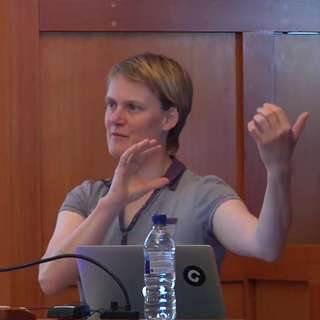

#86 – Hilary Greaves on Pascal's mugging, strong longtermism, and whether existing can be good for us

#86 – Hilary Greaves on Pascal's mugging, strong longtermism, and whether existing can be good for us

Had World War 1 never happened, you might never have existed.

It’s very unlikely that the exact chain of events that led to your conception would have happened otherwise — so perhaps you wouldn't have been born.

Would that mean that it's better for you that World War 1 happened (regardless of whether it was better for the world overall)?

On the one hand, if you're living a pretty good life, you might think the answer is yes – you get to live rather than not.

On the other hand, it sounds strange to say that it's better for you to be alive, because if you'd never existed there'd be no you to be worse off. But if you wouldn't be worse off if you hadn't existed, can you be better off because you do?

In this episode, philosophy professor Hilary Greaves – Director of Oxford University’s Global Priorities Institute – helps untangle this puzzle for us and walks me and Rob through the space of possible answers. She argues that philosophers have been too quick to conclude what she calls existence non-comparativism – i.e, that it can't be better for someone to exist vs. not.

Links to learn more, summary and full transcript.

Where we come down on this issue matters. If people are not made better off by existing and having good lives, you might conclude that bringing more people into existence isn't better for them, and thus, perhaps, that it's not better at all.

This would imply that bringing about a world in which more people live happy lives might not actually be a good thing (if the people wouldn't otherwise have existed) — which would affect how we try to make the world a better place.

Those wanting to have children in order to give them the pleasure of a good life would in some sense be mistaken. And if humanity stopped bothering to have kids and just gradually died out we would have no particular reason to be concerned.

Furthermore it might mean we should deprioritise issues that primarily affect future generations, like climate change or the risk of humanity accidentally wiping itself out.

This is our second episode with Professor Greaves. The first one was a big hit, so we thought we'd come back and dive into even more complex ethical issues.

We discuss:

• The case for different types of ‘strong longtermism’ — the idea that we ought morally to try to make the very long run future go as well as possible
• What it means for us to be 'clueless' about the consequences of our actions
• Moral uncertainty -- what we should do when we don't know which moral theory is correct
• Whether we should take a bet on a really small probability of a really great outcome
• The field of global priorities research at the Global Priorities Institute and beyond

Chapters:

  • The interview begins (00:02:53)
  • The Case for Strong Longtermism (00:05:49)
  • Compatible moral views (00:20:03)
  • Defining cluelessness (00:39:26)
  • Why cluelessness isn’t an objection to longtermism (00:51:05)
  • Theories of what to do under moral uncertainty (01:07:42)
  • Pascal’s mugging (01:16:37)
  • Comparing Existence and Non-Existence (01:30:58)
  • Philosophers who reject existence comparativism (01:48:56)
  • Lives framework (02:01:52)
  • Global priorities research (02:09:25)


Get this episode by subscribing: type 80,000 Hours into your podcasting app. Or read the linked transcript.

Producer: Keiran Harris.
Audio mastering: Ben Cordell.
Transcriptions: Zakee Ulhaq.

Episoder(321)

#61 - Helen Toner on emerging technology, national security, and China

#61 - Helen Toner on emerging technology, national security, and China

From 1870 to 1950, the introduction of electricity transformed life in the US and UK, as people gained access to lighting, radio and a wide range of household appliances for the first time. Electricit...

17 Jul 20191h 54min

#60 - Phil Tetlock on why accurate forecasting matters for everything, and how you can do it better

#60 - Phil Tetlock on why accurate forecasting matters for everything, and how you can do it better

Have you ever been infuriated by a doctor's unwillingness to give you an honest, probabilistic estimate about what to expect? Or a lawyer who won't tell you the chances you'll win your case? Their beh...

28 Jun 20192h 11min

#59 – Cass Sunstein on how change happens, and why it's so often abrupt & unpredictable

#59 – Cass Sunstein on how change happens, and why it's so often abrupt & unpredictable

It can often feel hopeless to be an activist seeking social change on an obscure issue where most people seem opposed or at best indifferent to you. But according to a new book by Professor Cass Sunst...

17 Jun 20191h 43min

#58 – Pushmeet Kohli of DeepMind on designing robust & reliable AI systems and how to succeed in AI

#58 – Pushmeet Kohli of DeepMind on designing robust & reliable AI systems and how to succeed in AI

When you're building a bridge, responsibility for making sure it won't fall over isn't handed over to a few 'bridge not falling down engineers'. Making sure a bridge is safe to use and remains standin...

3 Jun 20191h 30min

Rob Wiblin on human nature, new technology, and living a happy, healthy & ethical life

Rob Wiblin on human nature, new technology, and living a happy, healthy & ethical life

This is a cross-post of some interviews Rob did recently on two other podcasts — Mission Daily (from 2m) and The Good Life (from 1h13m). Some of the content will be familiar to regular listeners — bu...

13 Mai 20192h 18min
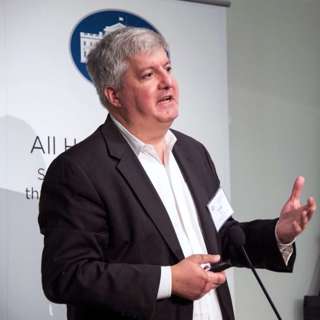
#57 – Tom Kalil on how to do the most good in government

#57 – Tom Kalil on how to do the most good in government

You’re 29 years old, and you’ve just been given a job in the White House. How do you quickly figure out how the US Executive Branch behemoth actually works, so that you can have as much impact as poss...

23 Apr 20192h 50min

#56 - Persis Eskander on wild animal welfare and what, if anything, to do about it

#56 - Persis Eskander on wild animal welfare and what, if anything, to do about it

Elephants in chains at travelling circuses; pregnant pigs trapped in coffin sized crates at factory farms; deers living in the wild. We should welcome the last as a pleasant break from the horror, rig...

15 Apr 20192h 57min

#55 – Lutter & Winter on founding charter cities with outstanding governance to end poverty

#55 – Lutter & Winter on founding charter cities with outstanding governance to end poverty

Governance matters. Policy change quickly took China from famine to fortune; Singapore from swamps to skyscrapers; and Hong Kong from fishing village to financial centre. Unfortunately, many governmen...

31 Mar 20192h 31min

Populært innen Fakta

fastlegen
dine-penger-pengeradet
relasjonspodden-med-dora-thorhallsdottir-kjersti-idem
treningspodden
rss-strid-de-norske-borgerkrigene
foreldreradet
jakt-og-fiskepodden
rss-sunn-okonomi
merry-quizmas
hverdagspsyken
gravid-uke-for-uke
sinnsyn
rss-mann-i-krise-med-sagen
rss-impressions-2
rss-kunsten-a-leve
hagespiren-podcast
fryktlos
babyverden
level-up-med-anniken-binz
nevropodden