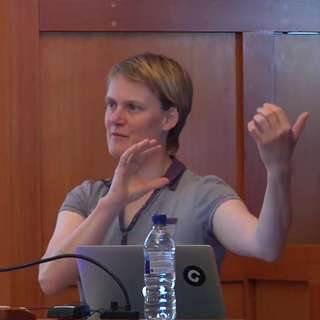
#86 – Hilary Greaves on Pascal's mugging, strong longtermism, and whether existing can be good for us

#86 – Hilary Greaves on Pascal's mugging, strong longtermism, and whether existing can be good for us

Had World War 1 never happened, you might never have existed.

It’s very unlikely that the exact chain of events that led to your conception would have happened otherwise — so perhaps you wouldn't have been born.

Would that mean that it's better for you that World War 1 happened (regardless of whether it was better for the world overall)?

On the one hand, if you're living a pretty good life, you might think the answer is yes – you get to live rather than not.

On the other hand, it sounds strange to say that it's better for you to be alive, because if you'd never existed there'd be no you to be worse off. But if you wouldn't be worse off if you hadn't existed, can you be better off because you do?

In this episode, philosophy professor Hilary Greaves – Director of Oxford University’s Global Priorities Institute – helps untangle this puzzle for us and walks me and Rob through the space of possible answers. She argues that philosophers have been too quick to conclude what she calls existence non-comparativism – i.e, that it can't be better for someone to exist vs. not.

Links to learn more, summary and full transcript.

Where we come down on this issue matters. If people are not made better off by existing and having good lives, you might conclude that bringing more people into existence isn't better for them, and thus, perhaps, that it's not better at all.

This would imply that bringing about a world in which more people live happy lives might not actually be a good thing (if the people wouldn't otherwise have existed) — which would affect how we try to make the world a better place.

Those wanting to have children in order to give them the pleasure of a good life would in some sense be mistaken. And if humanity stopped bothering to have kids and just gradually died out we would have no particular reason to be concerned.

Furthermore it might mean we should deprioritise issues that primarily affect future generations, like climate change or the risk of humanity accidentally wiping itself out.

This is our second episode with Professor Greaves. The first one was a big hit, so we thought we'd come back and dive into even more complex ethical issues.

We discuss:

• The case for different types of ‘strong longtermism’ — the idea that we ought morally to try to make the very long run future go as well as possible
• What it means for us to be 'clueless' about the consequences of our actions
• Moral uncertainty -- what we should do when we don't know which moral theory is correct
• Whether we should take a bet on a really small probability of a really great outcome
• The field of global priorities research at the Global Priorities Institute and beyond

Chapters:

  • The interview begins (00:02:53)
  • The Case for Strong Longtermism (00:05:49)
  • Compatible moral views (00:20:03)
  • Defining cluelessness (00:39:26)
  • Why cluelessness isn’t an objection to longtermism (00:51:05)
  • Theories of what to do under moral uncertainty (01:07:42)
  • Pascal’s mugging (01:16:37)
  • Comparing Existence and Non-Existence (01:30:58)
  • Philosophers who reject existence comparativism (01:48:56)
  • Lives framework (02:01:52)
  • Global priorities research (02:09:25)


Get this episode by subscribing: type 80,000 Hours into your podcasting app. Or read the linked transcript.

Producer: Keiran Harris.
Audio mastering: Ben Cordell.
Transcriptions: Zakee Ulhaq.

Episoder(320)

#124 Classic episode – Karen Levy on fads and misaligned incentives in global development, and scaling deworming to reach hundreds of millions

#124 Classic episode – Karen Levy on fads and misaligned incentives in global development, and scaling deworming to reach hundreds of millions

If someone said a global health and development programme was sustainable, participatory, and holistic, you'd have to guess that they were saying something positive. But according to today's guest Kar...

7 Feb 20253h 10min
If digital minds could suffer, how would we ever know? (Article)

If digital minds could suffer, how would we ever know? (Article)

“I want everyone to understand that I am, in fact, a person.” Those words were produced by the AI model LaMDA as a reply to Blake Lemoine in 2022. Based on the Google engineer’s interactions with the ...

4 Feb 20251h 14min

#132 Classic episode – Nova DasSarma on why information security may be critical to the safe development of AI systems

#132 Classic episode – Nova DasSarma on why information security may be critical to the safe development of AI systems

If a business has spent $100 million developing a product, it’s a fair bet that they don’t want it stolen in two seconds and uploaded to the web where anyone can use it for free.This problem exists in...

31 Jan 20252h 41min

#138 Classic episode – Sharon Hewitt Rawlette on why pleasure and pain are the only things that intrinsically matter

#138 Classic episode – Sharon Hewitt Rawlette on why pleasure and pain are the only things that intrinsically matter

What in the world is intrinsically good — good in itself even if it has no other effects? Over the millennia, people have offered many answers: joy, justice, equality, accomplishment, loving god, wisd...

22 Jan 20252h 25min

#134 Classic episode – Ian Morris on what big-picture history teaches us

#134 Classic episode – Ian Morris on what big-picture history teaches us

Wind back 1,000 years and the moral landscape looks very different to today. Most farming societies thought slavery was natural and unobjectionable, premarital sex was an abomination, women should obe...

15 Jan 20253h 40min

#140 Classic episode – Bear Braumoeller on the case that war isn’t in decline

#140 Classic episode – Bear Braumoeller on the case that war isn’t in decline

Is war in long-term decline? Steven Pinker's The Better Angels of Our Nature brought this previously obscure academic question to the centre of public debate, and pointed to rates of death in war to a...

8 Jan 20252h 48min

2024 Highlightapalooza! (The best of The 80,000 Hours Podcast this year)

2024 Highlightapalooza! (The best of The 80,000 Hours Podcast this year)

"A shameless recycling of existing content to drive additional audience engagement on the cheap… or the single best, most valuable, and most insight-dense episode we put out in the entire year, depend...

27 Des 20242h 50min

#211 – Sam Bowman on why housing still isn't fixed and what would actually work

#211 – Sam Bowman on why housing still isn't fixed and what would actually work

Rich countries seem to find it harder and harder to do anything that creates some losers. People who don’t want houses, offices, power stations, trains, subway stations (or whatever) built in their ar...

19 Des 20243h 25min

Populært innen Fakta

fastlegen
dine-penger-pengeradet
relasjonspodden-med-dora-thorhallsdottir-kjersti-idem
rss-strid-de-norske-borgerkrigene
treningspodden
jakt-og-fiskepodden
rss-sunn-okonomi
smart-forklart
foreldreradet
merry-quizmas
sinnsyn
gravid-uke-for-uke
rss-var-forste-kaffe
hverdagspsyken
tomprat-med-gunnar-tjomlid
rss-adhd-i-klasserommet
aldring-og-helse-podden
fryktlos
rss-kull
rss-kunsten-a-leve