
Benjamin Todd on what the effective altruism community most needs (80k team chat #4)

Benjamin Todd on what the effective altruism community most needs (80k team chat #4)

In the last '80k team chat' with Ben Todd and Arden Koehler, we discussed what effective altruism is and isn't, and how to argue for it. In this episode we turn now to what the effective altruism community most needs.

Links to learn more, summary and full transcript
• The 2020 Effective Altruism Survey just opened. If you're involved with the effective altruism community, or sympathetic to its ideas, it's would be wonderful if you could fill it out: https://www.surveymonkey.co.uk/r/EAS80K2

According to Ben, we can think of the effective altruism movement as having gone through several stages, categorised by what kind of resource has been most able to unlock more progress on important issues (i.e. by what's the 'bottleneck'). Plausibly, these stages are common for other social movements as well.

• Needing money: In the first stage, when effective altruism was just getting going, more money (to do things like pay staff and put on events) was the main bottleneck to making progress.
• Needing talent: In the second stage, we especially needed more talented people being willing to work on whatever seemed most pressing.
• Needing specific skills and capacity: In the third stage, which Ben thinks we're in now, the main bottlenecks are organizational capacity, infrastructure, and management to help train people up, as well as specialist skills that people can put to work now.

What's next? Perhaps needing coordination -- the ability to make sure people keep working efficiently and effectively together as the community grows.

Ben and I also cover the career implications of those stages, as well as the ability to save money and the possibility that someone else would do your job in your absence.

If you’d like to learn more about these topics, you should check out a couple of articles on our site:

Think twice before talking about ‘talent gaps’ – clarifying nine misconceptions
How replaceable are the top candidates in large hiring rounds? Why the answer flips depending on the distribution of applicant ability

Get this episode by subscribing: type 80,000 Hours into your podcasting app. Or read the linked transcript.

Producer: Keiran Harris.
Audio mastering: Ben Cordell.
Transcriptions: Zakee Ulhaq.

Episoder(324)

#145 Classic episode – Christopher Brown on why slavery abolition wasn't inevitable

#145 Classic episode – Christopher Brown on why slavery abolition wasn't inevitable

In many ways, humanity seems to have become more humane and inclusive over time. While there’s still a lot of progress to be made, campaigns to give people of different genders, races, sexualities, et...

20 Jan 2h 56min
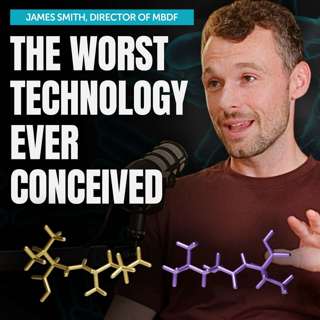
#233 – James Smith on how to prevent a mirror life catastrophe

#233 – James Smith on how to prevent a mirror life catastrophe

When James Smith first heard about mirror bacteria, he was sceptical. But within two weeks, he’d dropped everything to work on it full time, considering it the worst biothreat that he’d seen described...

13 Jan 2h 9min
#144 Classic episode – Athena Aktipis on why cancer is a fundamental universal phenomena

#144 Classic episode – Athena Aktipis on why cancer is a fundamental universal phenomena

What’s the opposite of cancer? If you answered “cure,” “antidote,” or “antivenom” — you’ve obviously been reading the antonym section at www.merriam-webster.com/thesaurus/cancer.But today’s guest Athe...

9 Jan 3h 30min
#142 Classic episode – John McWhorter on why the optimal number of languages might be one, and other provocative claims about language

#142 Classic episode – John McWhorter on why the optimal number of languages might be one, and other provocative claims about language

John McWhorter is a linguistics professor at Columbia University specialising in research on creole languages. He's also a content-producing machine, never afraid to give his frank opinion on anything...

6 Jan 1h 35min
2025 Highlight-o-thon: Oops! All Bests

2025 Highlight-o-thon: Oops! All Bests

It’s that magical time of year once again — highlightapalooza! Stick around for one top bit from each episode we recorded this year, including:Kyle Fish explaining how Anthropic’s AI Claude descends i...

29 Des 20251h 40min

#232 – Andreas Mogensen on what we owe 'philosophical Vulcans' and unconscious beings

#232 – Andreas Mogensen on what we owe 'philosophical Vulcans' and unconscious beings

Most debates about the moral status of AI systems circle the same question: is there something that it feels like to be them? But what if that’s the wrong question to ask? Andreas Mogensen — a senior ...

19 Des 20252h 37min
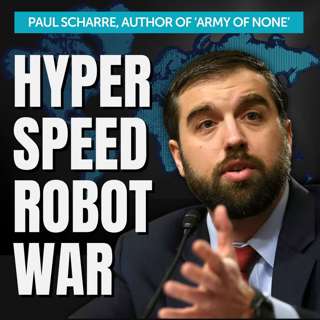
#231 – Paul Scharre on how AI-controlled robots will and won't change war

#231 – Paul Scharre on how AI-controlled robots will and won't change war

In 1983, Stanislav Petrov, a Soviet lieutenant colonel, sat in a bunker watching a red screen flash “MISSILE LAUNCH.” Protocol demanded he report it to superiors, which would very likely trigger a ret...

17 Des 20252h 45min

AI might let a few people control everything — permanently (article by Rose Hadshar)

AI might let a few people control everything — permanently (article by Rose Hadshar)

Power is already concentrated today: over 800 million people live on less than $3 a day, the three richest men in the world are worth over $1 trillion, and almost six billion people live in countries ...

12 Des 20251h

Populært innen Fakta

fastlegen
dine-penger-pengeradet
relasjonspodden-med-dora-thorhallsdottir-kjersti-idem
treningspodden
rss-strid-de-norske-borgerkrigene
foreldreradet
rss-sunn-okonomi
jakt-og-fiskepodden
sinnsyn
hverdagspsyken
merry-quizmas
gravid-uke-for-uke
smart-forklart
takk-og-lov-med-anine-kierulf
tomprat-med-gunnar-tjomlid
rss-kunsten-a-leve
fryktlos
lederskap-nhhs-podkast-om-ledelse
level-up-med-anniken-binz
rss-kull