#89 – Owen Cotton-Barratt on epistemic systems and layers of defense against potential global catastrophes

#89 – Owen Cotton-Barratt on epistemic systems and layers of defense against potential global catastrophes

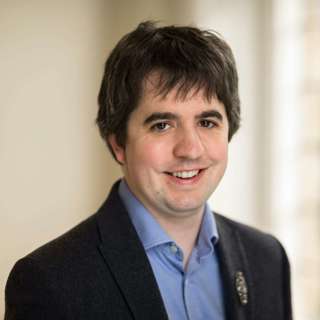
From one point of view academia forms one big 'epistemic' system — a process which directs attention, generates ideas, and judges which are good. Traditional print media is another such system, and we can think of society as a whole as a huge epistemic system, made up of these and many other subsystems.

How these systems absorb, process, combine and organise information will have a big impact on what humanity as a whole ends up doing with itself — in fact, at a broad level it basically entirely determines the direction of the future.

With that in mind, today’s guest Owen Cotton-Barratt has founded the Research Scholars Programme (RSP) at the Future of Humanity Institute at Oxford University, which gives early-stage researchers leeway to try to understand how the world works.

Links to learn more, summary and full transcript.

Instead of you having to pay for a masters degree, the RSP pays *you* to spend significant amounts of time thinking about high-level questions, like "What is important to do?” and “How can I usefully contribute?"

Participants get to practice their research skills, while also thinking about research as a process and how research communities can function as epistemic systems that plug into the rest of society as productively as possible.

The programme attracts people with several years of experience who are looking to take their existing knowledge — whether that’s in physics, medicine, policy work, or something else — and apply it to what they determine to be the most important topics.

It also attracts people without much experience, but who have a lot of ideas. If you went directly into a PhD programme, you might have to narrow your focus quickly. But the RSP gives you time to explore the possibilities, and to figure out the answer to the question “What’s the topic that really matters, and that I’d be happy to spend several years of my life on?”

Owen thinks one of the most useful things about the two-year programme is being around other people — other RSP participants, as well as other researchers at the Future of Humanity Institute — who are trying to think seriously about where our civilisation is headed and how to have a positive impact on this trajectory.

Instead of being isolated in a PhD, you’re surrounded by folks with similar goals who can push back on your ideas and point out where you’re making mistakes. Saving years not pursuing an unproductive path could mean that you will ultimately have a much bigger impact with your career.

RSP applications are set to open in the Spring of 2021 — but Owen thinks it’s helpful for people to think about it in advance.

In today’s episode, Arden and Owen mostly talk about Owen’s own research. They cover:

• Extinction risk classification and reduction strategies
• Preventing small disasters from becoming large disasters
• How likely we are to go from being in a collapsed state to going extinct
• What most people should do if longtermism is true
• Advice for mathematically-minded people
• And much more

Chapters:
• Rob’s intro (00:00:00)
• The interview begins (00:02:22)
• Extinction risk classification and reduction strategies (00:06:02)
• Defense layers (00:16:37)
• Preventing small disasters from becoming large disasters (00:23:31)
• Risk factors (00:38:57)
• How likely are we to go from being in a collapsed state to going extinct? (00:48:02)
• Estimating total levels of existential risk (00:54:35)
• Everyday longtermism (01:01:35)
• What should most people do if longtermism is true? (01:12:18)
• 80,000 Hours’ issue with promoting career paths (01:24:12)
• The existential risk of making a lot of really bad decisions (01:29:27)
• What should longtermists do differently today (01:39:08)
• Biggest concerns with this framework (01:51:28)
• Research careers (02:04:04)
• Being a mathematician (02:13:33)
• Advice for mathematically minded people (02:24:30)
• Rob’s outro (02:37:32)

Producer: Keiran Harris
Audio mastering: Ben Cordell
Transcript: Zakee Ulhaq

Episoder(318)

#179 Classic episode – Randy Nesse on why evolution left us so vulnerable to depression and anxiety

#179 Classic episode – Randy Nesse on why evolution left us so vulnerable to depression and anxiety

Mental health problems like depression and anxiety affect enormous numbers of people and severely interfere with their lives. By contrast, we don’t see similar levels of physical ill health in young p...

3 Feb 2h 51min

Why 'Aligned AI' Would Still Kill Democracy | David Duvenaud, ex-Anthropic team lead

Why 'Aligned AI' Would Still Kill Democracy | David Duvenaud, ex-Anthropic team lead

Democracy might be a brief historical blip. That’s the unsettling thesis of a recent paper, which argues AI that can do all the work a human can do inevitably leads to the “gradual disempowerment” of ...

27 Jan 2h 31min

#145 Classic episode – Christopher Brown on why slavery abolition wasn't inevitable

#145 Classic episode – Christopher Brown on why slavery abolition wasn't inevitable

In many ways, humanity seems to have become more humane and inclusive over time. While there’s still a lot of progress to be made, campaigns to give people of different genders, races, sexualities, et...

20 Jan 2h 56min

#233 – James Smith on how to prevent a mirror life catastrophe

#233 – James Smith on how to prevent a mirror life catastrophe

When James Smith first heard about mirror bacteria, he was sceptical. But within two weeks, he’d dropped everything to work on it full time, considering it the worst biothreat that he’d seen described...

13 Jan 2h 9min

#144 Classic episode – Athena Aktipis on why cancer is a fundamental universal phenomena

#144 Classic episode – Athena Aktipis on why cancer is a fundamental universal phenomena

What’s the opposite of cancer? If you answered “cure,” “antidote,” or “antivenom” — you’ve obviously been reading the antonym section at www.merriam-webster.com/thesaurus/cancer.But today’s guest Athe...

9 Jan 3h 30min

#142 Classic episode – John McWhorter on why the optimal number of languages might be one, and other provocative claims about language

#142 Classic episode – John McWhorter on why the optimal number of languages might be one, and other provocative claims about language

John McWhorter is a linguistics professor at Columbia University specialising in research on creole languages. He's also a content-producing machine, never afraid to give his frank opinion on anything...

6 Jan 1h 35min

2025 Highlight-o-thon: Oops! All Bests

2025 Highlight-o-thon: Oops! All Bests

It’s that magical time of year once again — highlightapalooza! Stick around for one top bit from each episode we recorded this year, including:Kyle Fish explaining how Anthropic’s AI Claude descends i...

29 Des 20251h 40min

#232 – Andreas Mogensen on what we owe 'philosophical Vulcans' and unconscious beings

#232 – Andreas Mogensen on what we owe 'philosophical Vulcans' and unconscious beings

Most debates about the moral status of AI systems circle the same question: is there something that it feels like to be them? But what if that’s the wrong question to ask? Andreas Mogensen — a senior ...

19 Des 20252h 37min

Populært innen Fakta

fastlegen
dine-penger-pengeradet
relasjonspodden-med-dora-thorhallsdottir-kjersti-idem
treningspodden
foreldreradet
jakt-og-fiskepodden
merry-quizmas
dopet
podme-bio-3
rss-strid-de-norske-borgerkrigene
sovnlos
rss-kull
sinnsyn
gravid-uke-for-uke
rss-var-forste-kaffe
hverdagspsyken
fryktlos
rss-kunsten-a-leve
dypdykk
rss-impressions-2